

Spring lawn care in Ontario is not about rushing outside the first warm day and doing everything at once. It is about timing the work properly so your lawn, garden beds, soil, and drainage can recover from winter and handle the growing season ahead.
For homeowners in Burlington, Oakville, Hamilton, Dundas, Ancaster, and surrounding areas, spring is the best time to reset your property after snow, ice, salt, freeze-thaw cycles, and months of heavy moisture.
This guide walks through a practical spring lawn care Ontario schedule, including cleanup, raking, aeration, overseeding, fertilizing, weed control, mowing, watering, and garden preparation.
Article Summary
A strong spring lawn care routine starts with cleanup and inspection. From there, focus on soil health, light raking, aeration where needed, overseeding thin areas, careful fertilizing, high mowing, deep watering, and early weed control. If your lawn problems are really grading, drainage, soil, or landscape layout issues, spring is also a smart time to think beyond lawn care and look at the full property.

Why spring lawn care matters in Ontario
Ontario lawns deal with a tough winter cycle. Snow cover, ice, road salt, standing water, compacted soil, and late spring cold snaps can all leave grass thin, matted, or patchy by April.
Good spring lawn care helps your lawn recover before summer heat arrives. It also gives you a chance to spot bigger landscape problems early, such as poor drainage, compacted soil, low spots, failing garden edges, or damaged walkways.
A healthy lawn can improve curb appeal, reduce bare soil, soften outdoor living areas, and support a more finished-looking property. If you are planning a larger exterior upgrade, spring is also a natural time to think about landscape design, planting layouts, patios, drainage, and long-term maintenance.
The best spring lawn care routine is patient. Let the ground firm up, inspect the lawn, and do the right work in the right order.
Spring lawn care schedule for Ontario
Every property is different, but this general schedule works well for many Ontario lawns.
Late March to early April
- Stay off very wet or soft lawn areas.
- Remove branches, garbage, leaves, and winter debris.
- Check for snow mold, salt damage, bare patches, and standing water.
- Book professional spring cleanup services if the property needs a full reset.
Mid to late April
- Lightly rake matted grass once the lawn is dry enough.
- Edge garden beds and walkways.
- Start repairing small bare patches with seed when soil conditions are right.
- Consider aeration if the lawn is compacted.
May
- Begin regular mowing once the grass is actively growing.
- Apply a suitable spring fertilizer if the lawn needs feeding.
- Keep new seed consistently moist.
- Start weeding before weeds spread and flower.
June
- Shift into a summer mowing and watering routine.
- Watch for drought stress, pests, and compacted high-traffic areas.
- Review drainage issues after heavy rain.
- Plan larger improvements before the busy summer construction season fills up.
1. Start with winter cleanup
Before you fertilize, seed, or mow, start with cleanup. Remove fallen branches, sticks, leaves, dead plant material, garbage, and any debris that collected over the winter.
This helps sunlight and air reach the grass. It also lets you see what is actually happening across the property.
Look for these common spring issues:
- Grey, white, or pink patches that may indicate snow mold.
- Thin grass near driveways and walkways from winter salt.
- Low areas that stay wet after rain.
- Heavy thatch or matted grass.
- Compacted areas where kids, pets, or foot traffic cross the yard.
- Garden beds that need fresh edges, mulch, or pruning.
If your lawn is still soaked, wait. Raking or walking heavily on wet soil can create more compaction and damage the grass crowns.
2. Inspect your lawn before treating it
A lot of spring lawn problems look similar at first. Bare patches, thinning turf, weeds, moss, and yellow areas can all have different causes.
Before choosing a treatment, inspect the lawn carefully. Ask what the problem is telling you.
- Bare soil may need seed, topdressing, or better protection from foot traffic.
- Thin grass may need overseeding, better mowing, and improved soil health.
- Moss may point to shade, compaction, acidic soil, or poor drainage.
- Yellow strips near hard surfaces may be caused by salt damage.
- Wet spots may need proper grading or a drainage solution.
If water is pooling in the same place every spring, the lawn may not be the real problem. You may need to review grading, soil, downspout locations, or deeper yard drainage solutions.
For larger property improvements, a proper landscape construction plan can help solve lawn, garden, drainage, patio, walkway, and grading issues together instead of treating each problem separately.
3. Rake, dethatch, and aerate only when needed
Light raking is helpful in spring when the lawn is dry enough. It removes loose debris, lifts matted grass, and helps air reach the soil surface.
Heavy dethatching is different. It can stress the lawn if done too aggressively or too early. If the thatch layer is minor, a gentle rake is usually enough.
When aeration helps
Aeration can help when the soil is compacted. It creates small openings that allow air, water, and nutrients to move down toward the root zone.
Aeration is especially useful in high-traffic yards, compacted clay soil, and lawns that struggle with water penetration. Many Ontario properties have clay-heavy soils, which is why understanding soil types in Ontario matters before you invest too much into surface-level lawn treatments.
Aeration is not always needed every spring. If the lawn is healthy, drains well, and does not feel hard underfoot, you may be able to skip it.
4. Overseed thin or bare areas
Spring is a good time to repair winter damage, thin areas, and small bare patches. Overseeding helps thicken the lawn and gives grass more chance to compete with weeds.
Start by loosening the surface soil with a rake. Add quality topsoil or compost where needed, spread seed evenly, and keep the area consistently moist until germination.
Choose grass seed suited to your property. Sun, shade, soil type, foot traffic, and moisture all matter. The Ontario government has helpful information on lawn establishment and grass seed selection if you want to compare seed types and site conditions.
Do not treat a freshly seeded area the same way you treat an established lawn. New seed needs gentle watering, protection from heavy traffic, and time to root.
5. Use spring fertilizer carefully
Fertilizer can help a lawn recover in spring, but more is not always better. Applying too much fertilizer can push soft top growth before the root system is ready.
Choose a slow-release fertilizer suited to your lawn and follow the product label. If you are not sure what your lawn needs, a soil test can help you avoid guessing.
A balanced spring feeding program should support root growth, not just a fast green-up. This is especially important before summer heat, when shallow-rooted lawns struggle more quickly.
What about weed and feed products?
Be careful with weed and feed products in Ontario. Many cosmetic lawn pesticide uses are restricted, and weed control should follow provincial rules, product labels, and site conditions.
In many cases, the best long-term weed control is a thicker lawn. Proper mowing height, overseeding, aeration where needed, and healthy soil can reduce open space where weeds take hold.
You can also use the OMAFRA weed gallery to identify what is growing before deciding how to manage it.
6. Mow high and follow the one-third rule
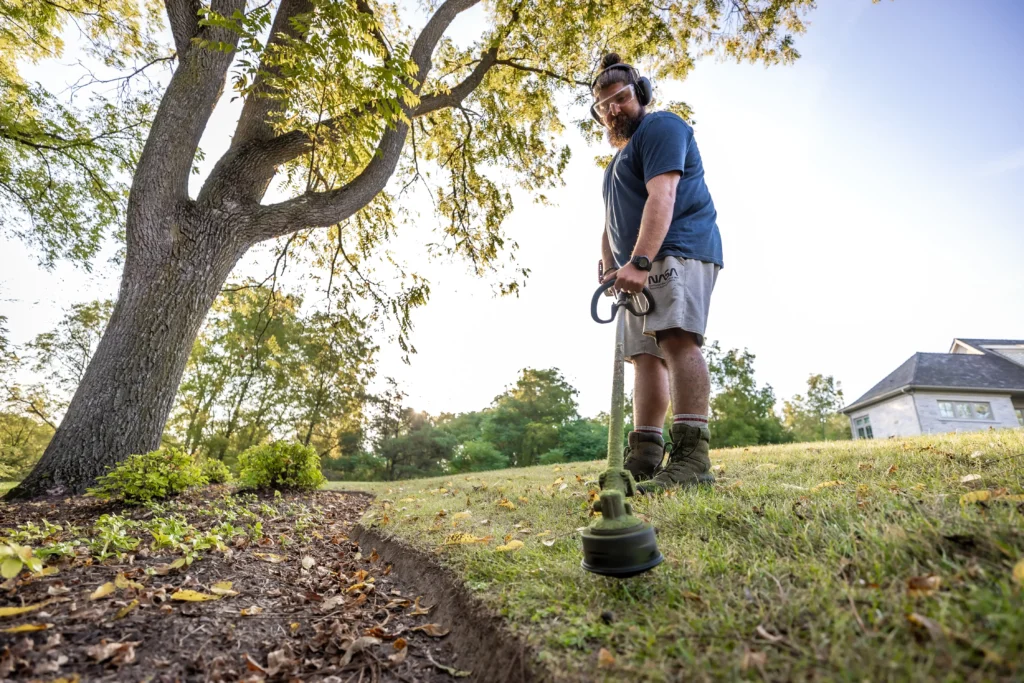
The first mow of spring should be gentle. Wait until the ground is firm and the grass is actively growing.
Follow the one-third rule. Do not remove more than one-third of the grass blade in one cut.
Cutting too short can stress the lawn, expose soil, invite weeds, and weaken root growth. For many Ontario lawns, keeping grass a little taller through spring and early summer helps shade the soil and protect the roots.
Keep your mower blades sharp. Dull blades tear grass instead of cutting it cleanly, which can leave brown tips and make the lawn more vulnerable to stress.
The Ontario government also provides guidance on lawn maintenance, mowing frequency, and watering for homeowners who want more technical detail.
Edging makes the whole property look cleaner
Edging is a small task with a big visual impact. Clean edges along walkways, patios, driveways, and garden beds make a lawn look maintained even before the rest of the landscape fills in.
It also keeps grass from creeping into beds and hardscape joints. If your front yard is due for a larger curb appeal update, this is a good time to review front yard landscaping ideas and plan beyond basic maintenance.

7. Water deeply, not constantly
Spring watering depends on rainfall, soil type, and whether you have new seed. Established lawns usually do better with deeper, less frequent watering than daily shallow watering.
Deep watering encourages deeper roots. Shallow watering can keep roots near the surface, where they dry out faster when summer heat arrives.
A simple footprint test can help. If footprints stay visible after you walk across the grass, the lawn may need water.
Morning is usually the best time to water. It gives moisture time to reach the soil while allowing grass blades to dry during the day.
For larger properties, irrigation can make watering more consistent. It should still be designed around sun exposure, soil type, plant material, slopes, drainage, and local watering rules.
Spring garden care matters too
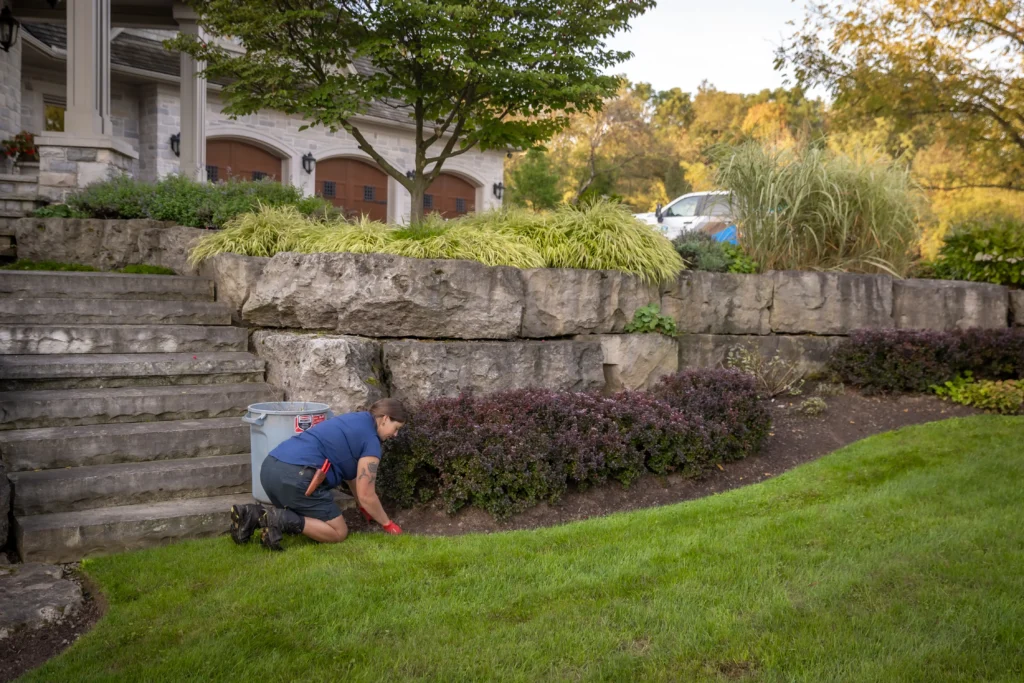
Spring lawn care is only one part of getting your property ready. Garden beds, shrubs, trees, mulch, edging, and soil health all affect how the yard looks and performs.
Start by removing dead plant material and weeds. Then check bed edges, mulch depth, soil condition, and plant spacing.
Fresh mulch can help retain moisture, reduce weed pressure, and make beds look more finished. Learn more in our guide to the benefits of mulch.
If the garden beds feel disconnected from the lawn, patio, pool area, or walkways, the issue may be layout. A full residential landscaping plan can help connect the lawn, planting, hardscaping, lighting, and outdoor living areas into one clear design.
Common spring lawn care mistakes to avoid
Spring lawn care mistakes are usually caused by doing the right thing at the wrong time.
- Raking too early when the soil is wet and soft.
- Mowing too short on the first cut of the season.
- Over-fertilizing before the lawn is actively growing.
- Watering lightly every day instead of deeply when needed.
- Seeding without loosening the soil first.
- Ignoring drainage problems and blaming the grass.
- Using weed control products without checking Ontario rules and label directions.
- Forgetting to sharpen mower blades.
Another mistake is treating lawn care as separate from the rest of the property. If the lawn keeps failing in the same places, look at shade, soil, traffic, grading, drainage, and design.
When to call a professional landscaper
Some lawn care tasks are simple enough for homeowners to handle. Others are worth bringing in help for, especially if the property is large, uneven, heavily planted, or part of a larger landscape plan.
Professional help may make sense if:
- Your lawn has major bare patches every spring.
- Water pools near patios, foundations, or walkways.
- You are dealing with compacted clay soil.
- You want the lawn, gardens, patio, and planting to feel more connected.
- You are preparing for a backyard, front yard, or pool-area renovation.
- You need ongoing estate or commercial property maintenance.
Creative Concepts Landscapes works with homeowners and commercial properties across Burlington, Oakville, Hamilton, Dundas, Ancaster, Brantford, Milton, and surrounding areas. For larger properties, our estate landscape maintenance and commercial landscaping services can help keep outdoor spaces clean, functional, and seasonally ready.
If you are thinking beyond routine maintenance, browse our landscaping projects to see how design, construction, planting, stonework, grading, and outdoor living features can work together.
FAQ about spring lawn care in Ontario
When should I start spring lawn care in Ontario?
Start with light cleanup once snow has melted and the ground is firm enough to walk on. Avoid heavy raking, aeration, or mowing while the soil is still wet and soft.
When is the best time to cut grass in Ontario in spring?
Wait until the grass is actively growing and the lawn is dry enough for the mower. For the first few cuts, keep the mower set higher and avoid removing more than one-third of the grass blade.
Should I aerate my lawn every spring?
Not always. Aeration is useful for compacted lawns, high-traffic areas, and heavy clay soils. If your lawn drains well and feels healthy, yearly aeration may not be necessary.
Can I overseed my lawn in spring?
Yes, spring overseeding can help repair winter damage and thin areas. Keep the seed moist, protect it from foot traffic, and avoid applying products that could prevent seed germination.
How often should I water my lawn in spring?
Established lawns usually need deep, occasional watering when rainfall is not enough. New seed needs more frequent light watering until it germinates and starts to establish.
What is the biggest spring lawn care mistake?
The biggest mistake is starting too early. Working on wet soil, cutting grass too short, or fertilizing before the lawn is ready can slow recovery and create problems later in the season.
Key takeaways for spring lawn care in Ontario
- Start with cleanup and inspection before adding seed, fertilizer, or treatments.
- Wait until the lawn is dry and firm before raking, aerating, or mowing.
- Use overseeding to repair thin and bare areas.
- Aerate only when compaction is actually a problem.
- Fertilize carefully and follow product directions.
- Mow high and follow the one-third rule.
- Water deeply when needed instead of lightly every day.
- Look at drainage, soil, and design if the same lawn problems return every year.
- Use spring as a chance to plan larger landscape improvements before summer.
Ready to get your Ontario property cleaned up for spring?
A healthier lawn starts with timing, soil, drainage, and a clear plan. Whether you need seasonal cleanup, garden care, maintenance, or a larger landscape design-build conversation, Creative Concepts Landscapes can help you understand the right next step.
We provide spring lawn care, garden cleanup, property maintenance, and landscape planning support for homeowners and commercial properties across Burlington, Oakville, Hamilton, Dundas, Ancaster, Brantford, Milton, and nearby communities.
Contact Creative Concepts Landscapes to talk about your spring property goals.