
Article Summary
Landscaping is the planning, construction, planting and ongoing care of an outdoor space. It can include patios, walkways, retaining walls, grading, drainage, lighting, lawns, trees, gardens and outdoor living features.
For Ontario homeowners, good landscaping must also respond to freeze-thaw cycles, heavy rain, winter salt, local permit rules and the long-term needs of plants. The best results come from treating the property as one connected system rather than choosing features one at a time.
What is landscaping? In practical terms, landscaping is the process of changing and organizing the visible and usable parts of a property so they work better for the people who live there.
That may mean creating a patio for family dinners, improving a front entrance, solving drainage problems, adding privacy, reshaping a slope or building a complete backyard around a pool. Plants are part of landscaping, but they are only one part.
Good landscaping is not a collection of separate features. It is one plan for how the property should look, drain, function and age.
What Does Landscaping Include?
A complete landscape combines living elements, built features and site preparation. The right mix depends on the property, the homeowner’s goals and the amount of construction involved.
Softscaping
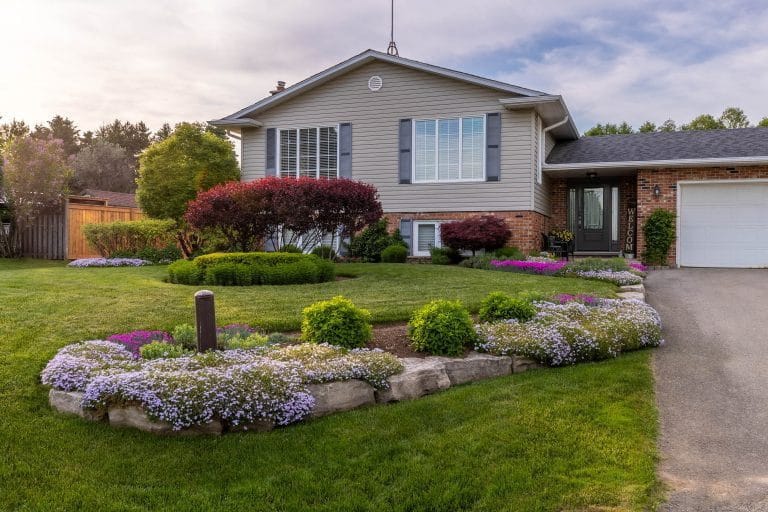
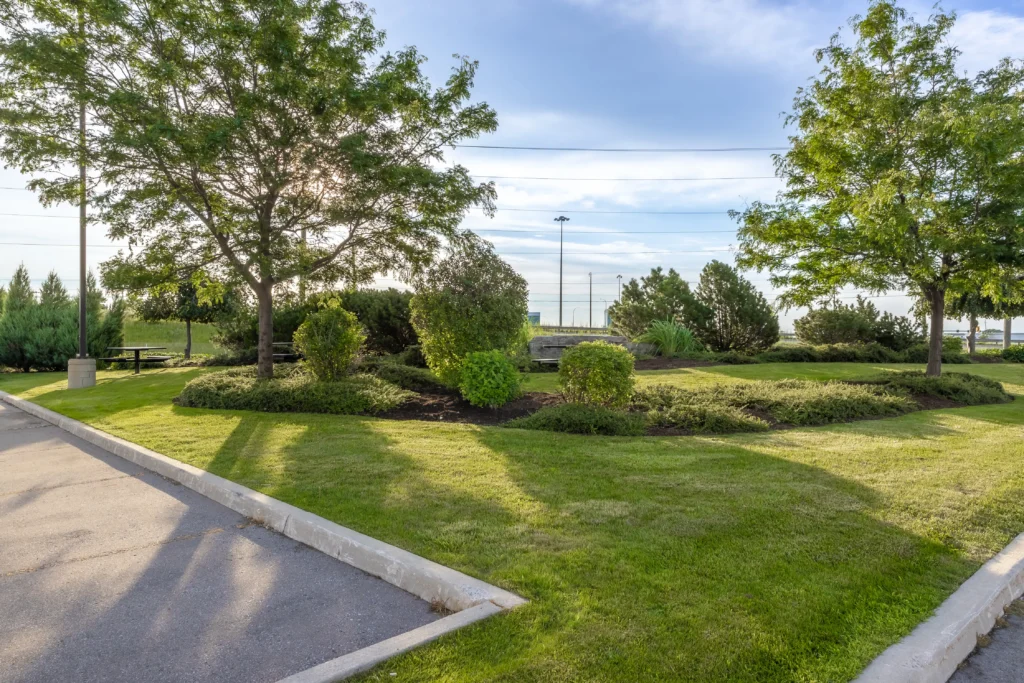
Softscaping includes the living parts of the landscape, such as trees, shrubs, perennials, ornamental grasses, lawns and groundcovers. Soil, compost and mulch also support the health of these planted areas.
Plant selection should account for sunlight, soil, moisture, mature size and the amount of maintenance the homeowner wants. A plant that looks small at the garden centre may need much more room after several years of growth.
Hardscaping
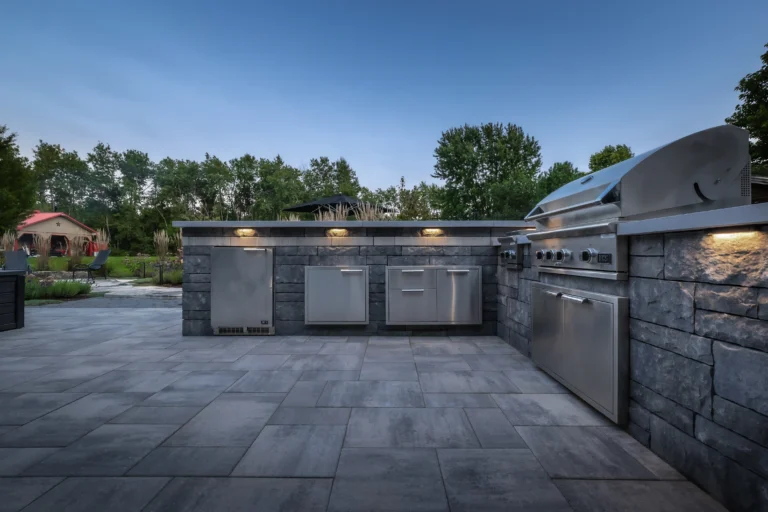
Hardscaping includes the non-living features that give an outdoor space structure and function. Common examples include patios, walkways, driveways, steps, retaining walls, pool decks, garden walls and stone edging.
Hardscape decisions affect how people move through the property, where furniture fits and how water travels across finished surfaces. Material choice matters, but proper excavation, base preparation and drainage usually matter more to long-term performance.
Grading and Drainage
Landscaping often changes the shape and elevation of the land. Grading can direct water away from the house, create usable levels, connect doors to patios and manage transitions between neighbouring properties.
Drainage should be planned before patios, gardens and structures are installed. Homeowners dealing with standing water or wet areas can review common yard drainage solutions before deciding how to improve the space.
Outdoor Features and Systems
Landscaping may also include outdoor kitchens, fire features, pergolas, fences, privacy screens, irrigation, landscape lighting and water features. Larger projects often require several trades and careful construction sequencing.
These features should not be placed only where they look good on a sketch. They also need safe access, suitable clearances, useful circulation and practical connections to utilities.
Ongoing Landscape Care
Landscaping is not finished the day construction ends. Plants need time to establish, joints and surfaces need routine care, and irrigation or lighting systems may need seasonal service.
Maintenance requirements should influence the original design. A low-maintenance property still needs care, but thoughtful plant choices, accessible beds and durable materials can make that care more manageable.
Landscaping, Lawn Care, Landscape Design and Landscape Construction
These terms are related, but they do not mean the same thing.
| Term | What It Usually Means |
|---|---|
| Landscaping | The broad process of planning, building, planting and caring for an outdoor property. |
| Lawn care | Work focused mainly on turf, such as mowing, fertilizing, aerating and weed control. |
| Landscape design | Planning the layout, grades, materials, features, planting and overall appearance before construction. |
| Landscape construction | Building the permanent or large-scale parts of the plan, such as patios, retaining walls, steps, driveways and outdoor living areas. |
For a larger renovation, professional landscape design helps turn ideas into a coordinated plan. The approved plan can then guide pricing, permits, material selection and landscape construction.
Some homeowners need only planting or a small improvement. Others need complete residential landscaping that brings together several outdoor areas and construction elements.
How a Landscaping Project Usually Works
The process varies by project, but larger residential landscapes generally move through the following stages.
- Goals and site review: The homeowner identifies how the property should be used. The team reviews access, sunlight, grades, drainage, existing trees, utilities and nearby structures.
- Concept and design: The layout is developed around function, scale, movement and priorities. Materials, planting and major features are coordinated instead of selected separately.
- Scope, budget and approvals: The design becomes detailed enough to estimate. Required permits, engineering, municipal approvals and utility locates are identified.
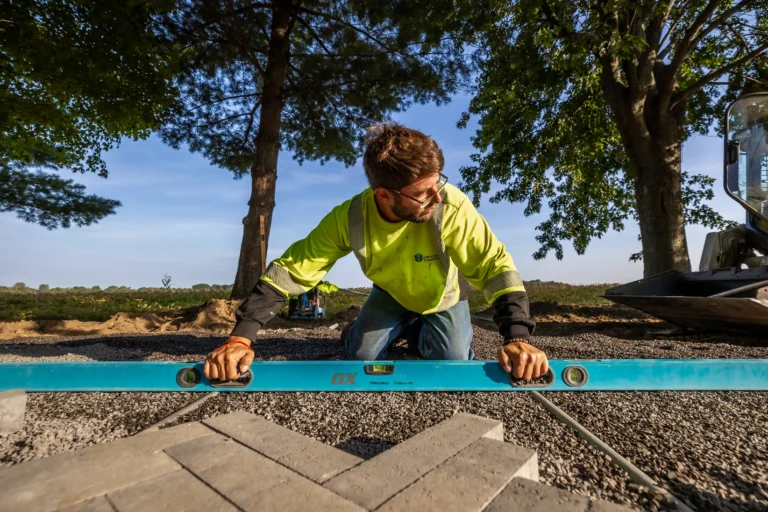
- Site preparation: Crews complete demolition, excavation, grading, drainage work and below-grade services before finished surfaces are installed.
- Construction: Hardscape, walls, steps, structures and other built features are installed in the proper sequence.
- Planting and finishing: Soil, trees, shrubs, perennials, lawn, mulch, lighting adjustments and final details complete the landscape.
- Handover and care: The homeowner receives guidance for watering, maintenance and seasonal operation.
A clear landscape design-build process reduces assumptions and helps the homeowner, designer, project manager and construction crew work from the same plan.
What Landscaping in Ontario Needs to Account For
Freeze-Thaw Conditions
Ontario landscapes move through repeated freezing and thawing. Water held in poorly prepared soil or base material can contribute to movement, settlement and surface damage.
Durable construction depends on proper excavation, suitable base materials, compaction and drainage. The visible paver or stone is only the top layer of a much larger system.
Rain, Snow and Neighbouring Grades
Water does not stop at the edge of a patio. A landscape plan needs to consider roof runoff, spring melt, low areas, neighbouring grades and where water can safely discharge.
In developed neighbourhoods, including many properties needing landscaping in Burlington, tight access and established grades can limit the available solutions. Drainage changes should be reviewed carefully so an improvement in one area does not create a problem elsewhere.
Plants Suited to the Site
Ontario has a wide range of soil, moisture and exposure conditions. Plant selection should be based on the actual property rather than a general list of popular species.
Native plants can support local ecosystems, but native does not automatically mean maintenance-free or suitable for every yard. The Ontario Invasive Plant Council provides resources for choosing alternatives to invasive plants.
Winter Use and Salt Exposure
Front entrances, driveways and walkways need space for snow storage and safe winter access. Plants placed near roads, sidewalks and parking areas may also face salt spray and compacted snow.
These conditions should influence plant choice, bed layout and the placement of delicate materials. A landscape that works only in summer is not fully planned for Ontario.
Permits, Approvals and Utility Locates
Not every landscaping project needs a building permit, but some structures, decks, pools, fences, grading changes and retaining walls may trigger municipal requirements. Ontario’s building permit guide explains the general role of permits, but homeowners should confirm requirements with their municipality.
Before excavation, homeowners and contractors must also arrange utility locates. Ontario One Call provides the locate request process for digging projects.
Common Types of Residential Landscaping
Front Yard Landscaping
Front yard projects often focus on safe access, curb appeal and a clearer connection between the driveway, walkway and entrance. They may include steps, lighting, planting, drainage and driveway improvements.
Backyard Landscaping
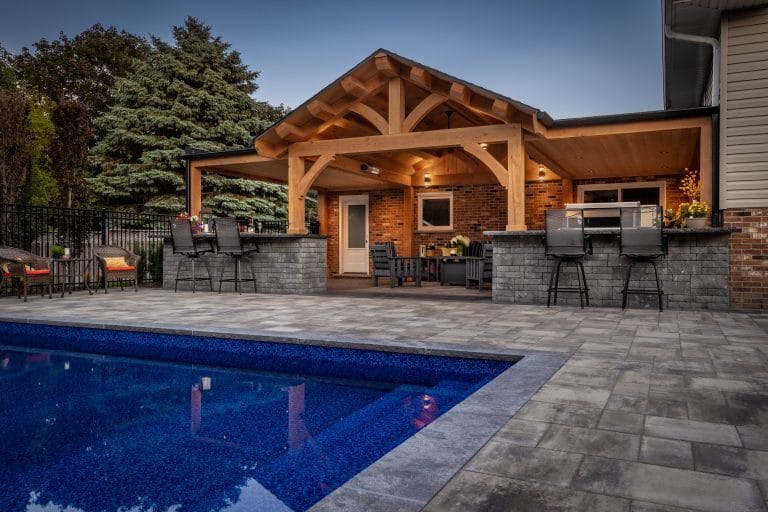
Backyard landscaping can create areas for dining, cooking, play, swimming, gardening and quiet time. The best layouts give each use enough space while keeping movement through the yard simple.
Pool Landscaping
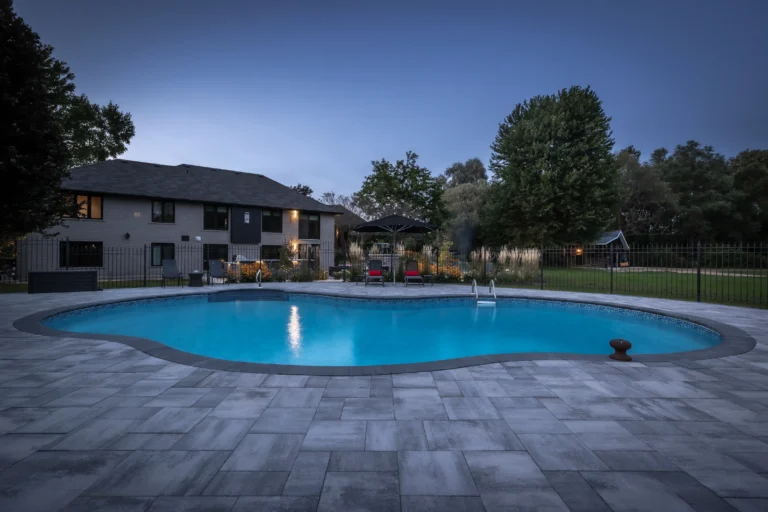
Pool areas need more than attractive paving. The design should coordinate access, drainage, fencing, privacy, shade, planting, equipment and space for furniture.
Slope and Drainage Landscaping
Properties with grade changes may need retaining walls, steps, terracing, swales or drainage systems. These are functional construction decisions first and visual decisions second.
Small Property Landscaping
A small yard can still support several uses, but every dimension matters. Built-in seating, compact planting, carefully placed privacy screens and one strong focal feature can help the space feel organized rather than crowded.
What Landscaping Is Not
- It is not only planting: Plants are important, but grading, drainage, circulation and construction often determine whether the finished property works.
- It is not the same as lawn care: Lawn care focuses on turf. Landscaping can reshape and rebuild the entire outdoor property.
- It is not always a complete rebuild: A focused project can improve one problem area while respecting useful existing features.
- It is not automatically low maintenance: Every landscape needs some care. The goal is to match the design to the homeowner’s realistic level of time and interest.
- It is not only about appearance: A visually attractive yard can still fail if it drains poorly, feels cramped or is difficult to use.
Can You Do Landscaping Yourself?
Many homeowners can handle small planting beds, mulch, simple edging and routine garden improvements. These projects have limited construction risk and can be adjusted over time.
Professional help becomes more valuable when the work involves grading, drainage, retaining walls, patios, pools, structures, buried utilities or several connected features. A qualified team can also coordinate design decisions with construction methods and municipal requirements.
When comparing contractors, review relevant project experience, insurance, written scope, payment terms, warranty information and communication practices. Landscape Ontario offers a useful guide to selecting a landscape contractor.
Questions to Answer Before Starting a Landscape Project
- How do you want to use the property every week?
- Which problems need to be solved before adding new features?
- What should remain, and what should be removed?
- How much ongoing maintenance are you prepared to manage?
- Does the project need to be completed at once or planned in phases?
- Are drainage, access, utilities or municipal approvals likely to affect the design?
- Which features matter most if the scope needs to be adjusted?
Frequently Asked Questions About Landscaping
Does landscaping include hardscaping?
Yes. Landscaping is the broader category, while hardscaping refers to built, non-living features such as patios, walkways, retaining walls, steps and driveways.
Is landscaping the same as gardening?
No. Gardening focuses mainly on growing and caring for plants. Landscaping can include gardening, but it also covers design, grading, drainage, construction, lighting and outdoor living features.
Do I need a permit for landscaping in Ontario?
It depends on the municipality and the work involved. Basic planting usually does not need a permit, while pools, decks, certain structures, grading changes and some retaining walls may require permits or approvals.
When is the best time to start planning a landscape project?
Planning can begin at any time of year. Starting design and budgeting before the desired construction season gives more time to review options, confirm approvals and schedule materials and trades.
How long should a landscape last?
Different elements have different service lives. Good construction, proper drainage, suitable materials and routine maintenance help hardscape and planting perform well for many years.
Key Takeaways
- Landscaping includes design, site work, construction, planting and ongoing care.
- Hardscape and softscape should be planned together.
- Drainage, grading and base preparation often matter more than visible finishes.
- Ontario projects must account for freeze-thaw cycles, snow, salt and spring runoff.
- Permits and approvals depend on the municipality and project scope.
- Utility locates are required before excavation.
- Larger projects benefit from a coordinated design-build process.
Plan Your Landscaping as One Complete System
The most successful landscapes connect practical needs with a clear design. A patio, planting bed, retaining wall or outdoor kitchen should support the way the entire property works, not compete with it.
Creative Concepts’ modern luxury backyard design-build project in Dundas shows how hardscape, drainage, outdoor cooking and family space can be coordinated within one plan. Homeowners preparing a larger outdoor project can discuss their landscape project with the Creative Concepts team.