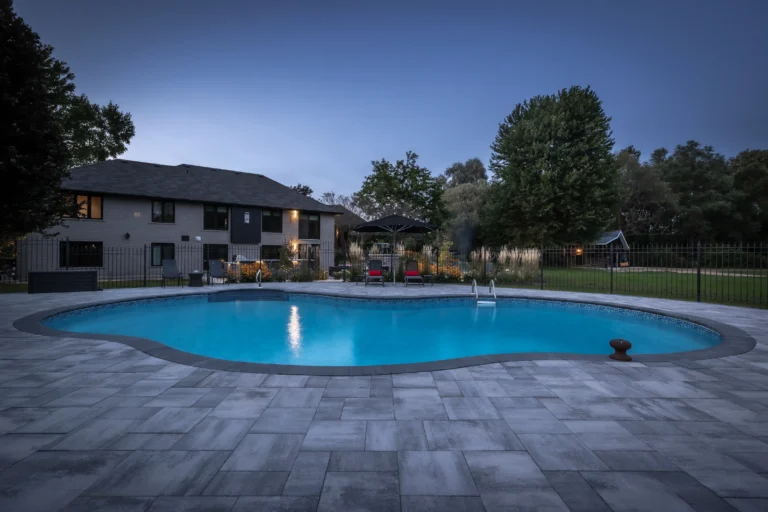

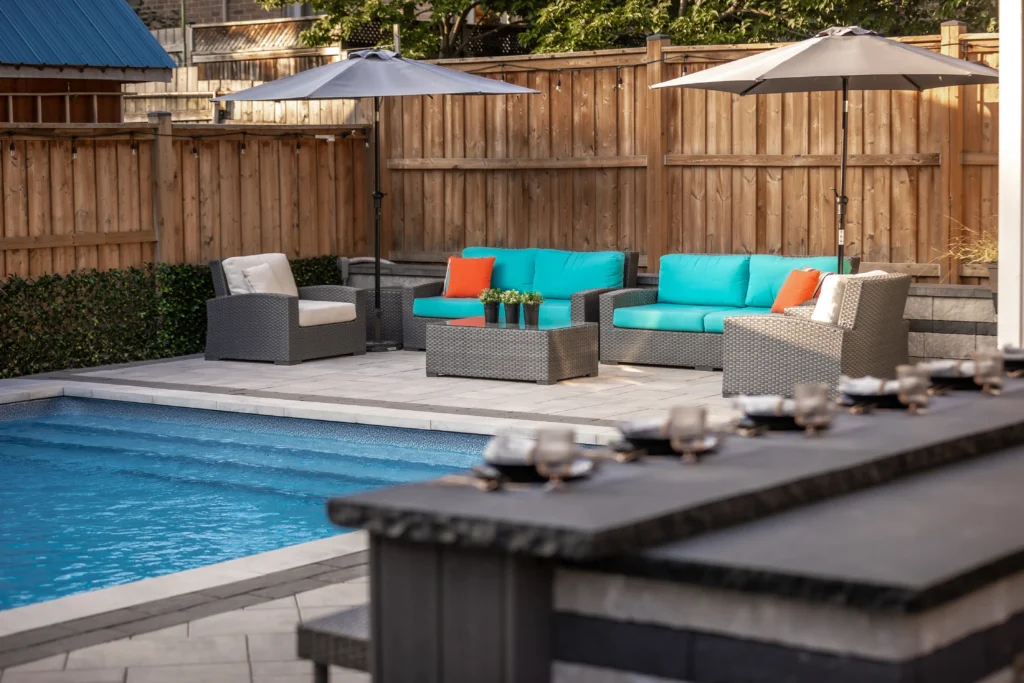
Small yards can be tricky, but they are not a design problem. They are a planning problem. The best landscaping ideas for small backyards use every square foot with purpose, from the patio layout to the planting plan, privacy, lighting, and storage.
If your backyard feels too narrow, too shaded, too exposed, or too awkward, the right design can make it feel more usable, more private, and more connected to your home.
Article Summary: This guide walks through practical landscaping ideas for small backyards, including layout planning, patios, privacy, planting, lighting, drainage, materials, furniture, and design choices that make a compact outdoor space feel intentional.
Whether you want a quiet morning coffee spot, a small dining area, a garden, a play space, or a more complete outdoor living area, the goal is the same: make the space work harder without making it feel crowded.
For homeowners planning a larger project, working with a professional landscaping company can help connect the design, construction details, budget, materials, and long-term maintenance plan.
Understanding Your Small Backyard Before You Start
Before choosing plants, patio stones, furniture, or features, take a careful look at the existing space. A small backyard needs a tighter plan than a large property because every mistake is easier to notice.
Start with the basics:
- Size and shape: Measure the yard and sketch a basic layout. A narrow rectangle needs a different plan than a square courtyard-style yard.
- Sun exposure: Track where the sun hits in the morning, afternoon, and evening. This affects seating, shade, plant selection, and patio comfort.
- Privacy: Look at neighbours, windows, fences, and road exposure. Privacy screens, planting, and structures can help without closing the space in.
- Drainage: Watch where water collects after rain. Drainage issues should be fixed before installing patios, turf, planting beds, or retaining walls.
- Access: Think about how people move from the house to the yard, seating area, barbecue, gate, shed, and garden.
This is where landscape design matters. A proper design helps you understand spacing, sightlines, grading, drainage, material transitions, and budget before construction starts.
Quick Ideas by Backyard Goal
Every small backyard should start with a goal. Once you know what the space needs to do, the design choices become much easier.
| Small Backyard Goal | Best Design Idea | Why It Works |
|---|---|---|
| More privacy | Layered planting, privacy screens, or a pergola with side screening | Blocks key views without making the yard feel boxed in. |
| More entertaining space | A compact patio with built-in seating | Creates a usable gathering area without bulky furniture taking over. |
| Less maintenance | More hardscaping, structured planting beds, and fewer lawn areas | Reduces weekly upkeep while keeping the yard polished. |
| Better drainage | Proper grading, drainage planning, and permeable pavers where appropriate | Protects patios, planting beds, foundations, and neighbouring properties. |
| A larger visual feel | Simple materials, layered planting, vertical features, and subtle lighting | Creates depth and keeps the space from feeling cluttered. |
| A modern look | Clean lines, fewer materials, strong edges, and intentional planting | Helps a small backyard feel calm, organized, and high-end. |
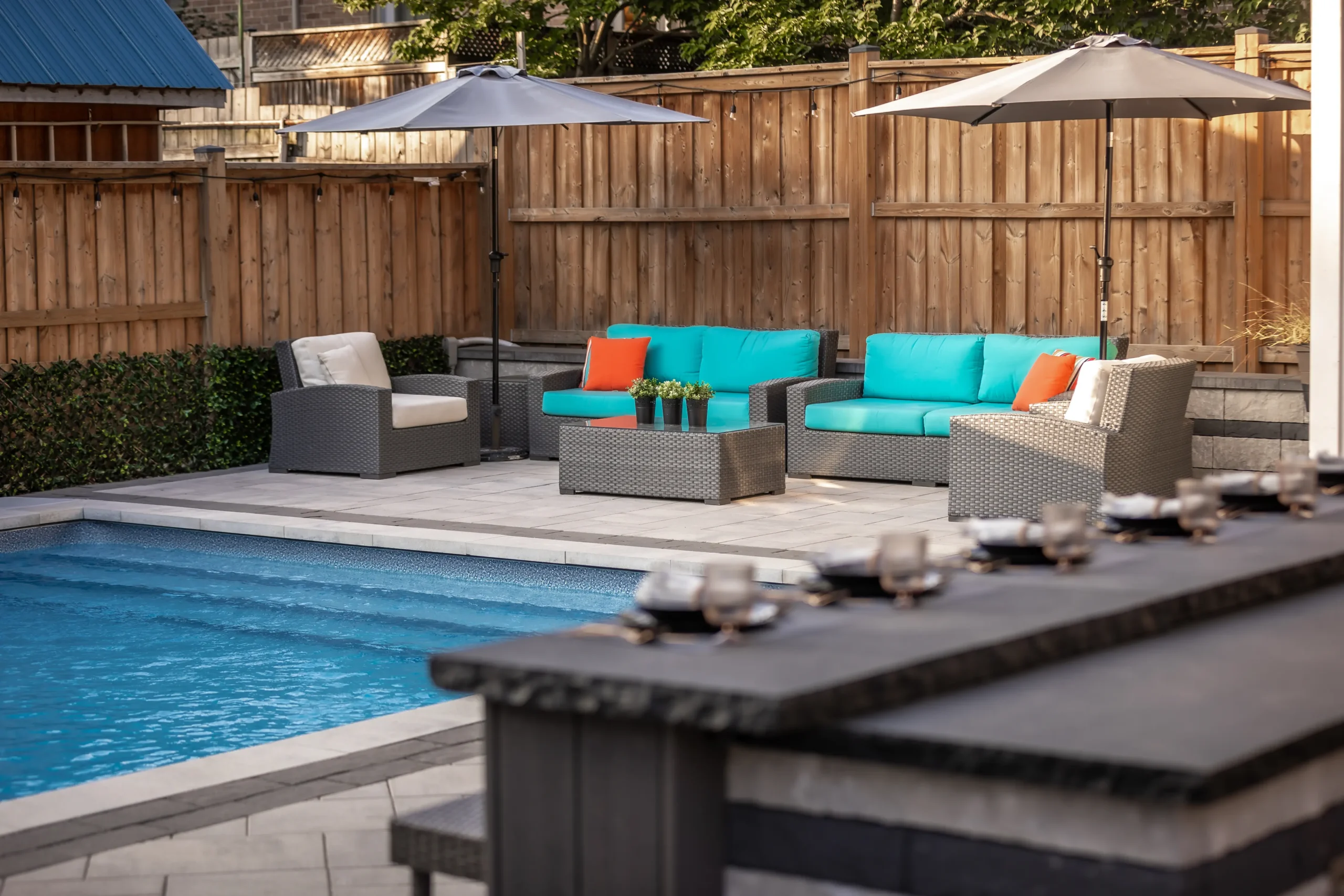
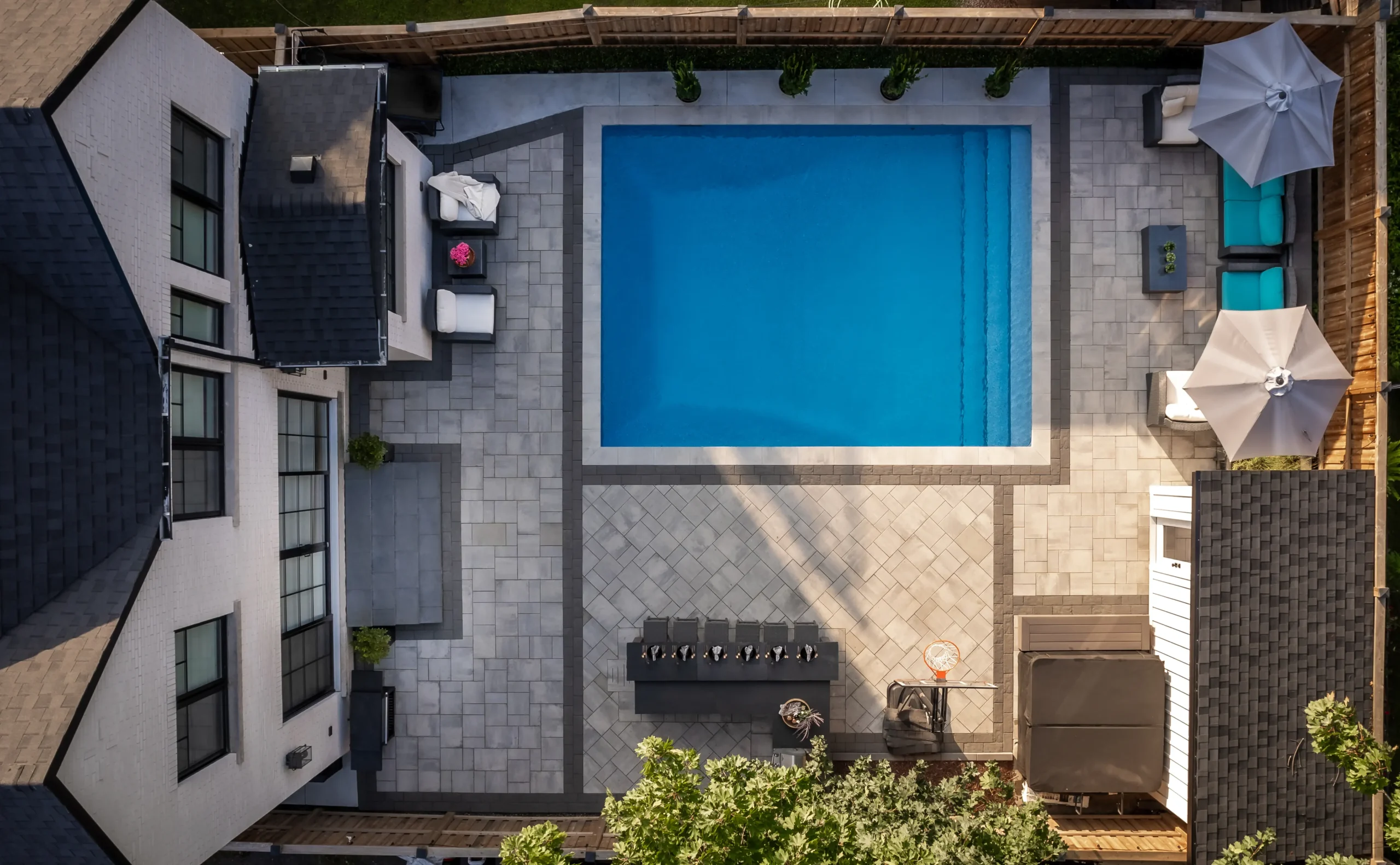

Crafting Your Backyard Landscaping Vision
Functionality and Style
Before you start looking for a landscaping contractor, think about how you actually want to use the backyard.
Do you want to relax with a book? Entertain friends around a barbecue? Grow vegetables? Create a safe area for kids? Add a small patio, fire feature, or outdoor kitchen?
Small backyards can still do a lot, but they work best when the design has priorities.
Ask yourself these questions:
- Desired feeling: Do you want a calm space, a social space, a family space, or a polished outdoor entertaining area?
- Design style: Do you lean toward modern landscaping, natural stone, rustic textures, traditional gardens, or a clean low-maintenance layout?
- Focal points: Would you like a fire feature, outdoor kitchen, water feature, raised planter, privacy screen, or small dining area?
- Maintenance level: Do you want a garden-heavy design, a hardscape-heavy design, or a balance of both?
- Budget range: Are you planning a simple refresh or a full design-build transformation?
Landscaping Ideas for Small Backyards
Once you understand the space and the goal, you can start choosing the ideas that make the most sense. The best landscaping ideas for small backyards are practical, attractive, and realistic for the size of the property.
1. Create One Main Purpose for the Backyard
A small backyard gets messy when it tries to do too much. Before choosing features, decide what the space is really for.
Is it mostly for dining? Sitting? Kids? Gardening? A fire feature? A small pool? A quiet evening space?
Once you know the main purpose, every design decision becomes easier. The patio size, plant choices, walkway location, lighting, furniture, and privacy features can all support that one goal.
A small backyard works best when it has a clear job.
2. Divide the Yard Into Simple Zones
Even a tiny backyard can have zones. The trick is to keep them simple and connected.
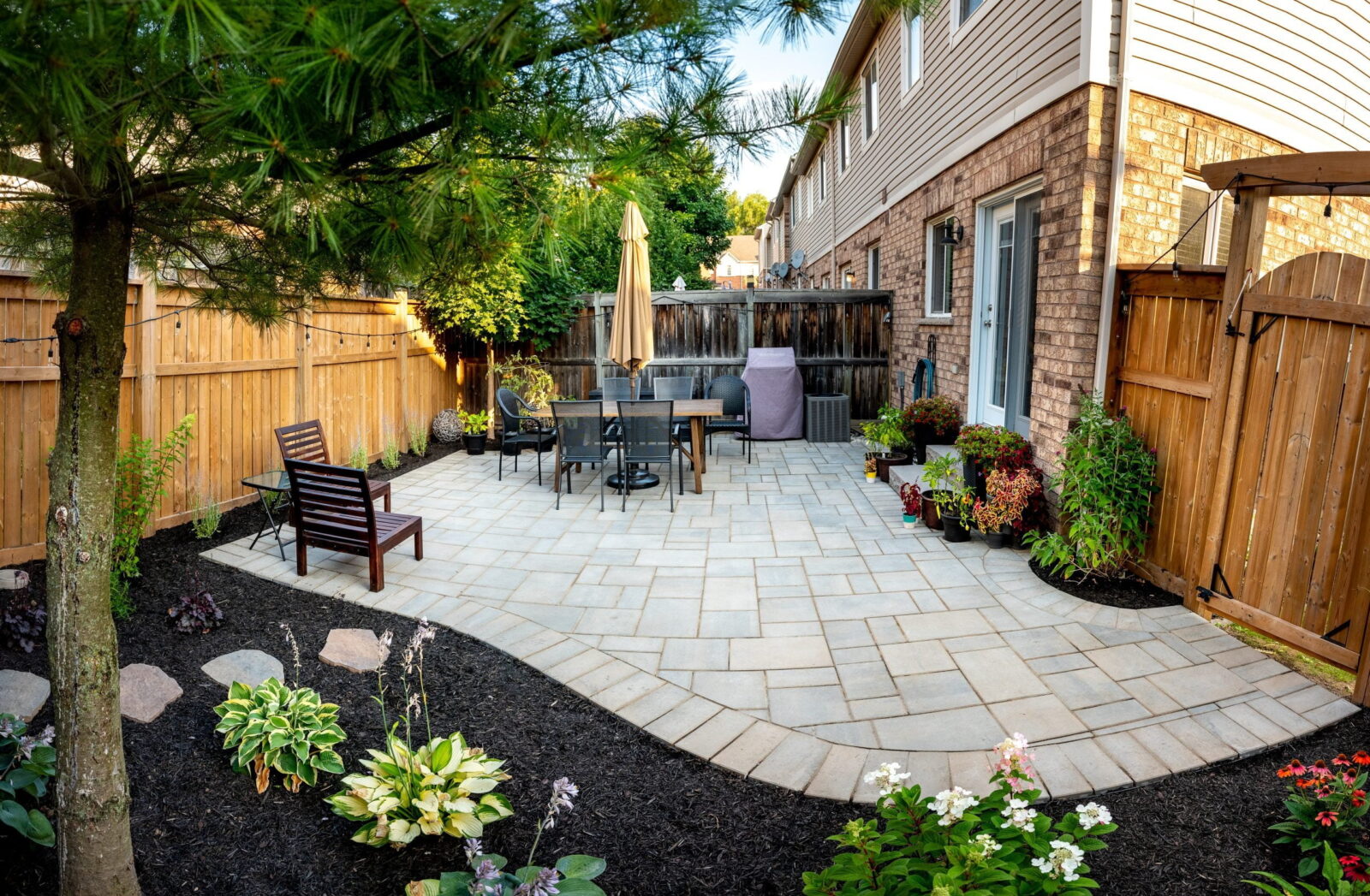
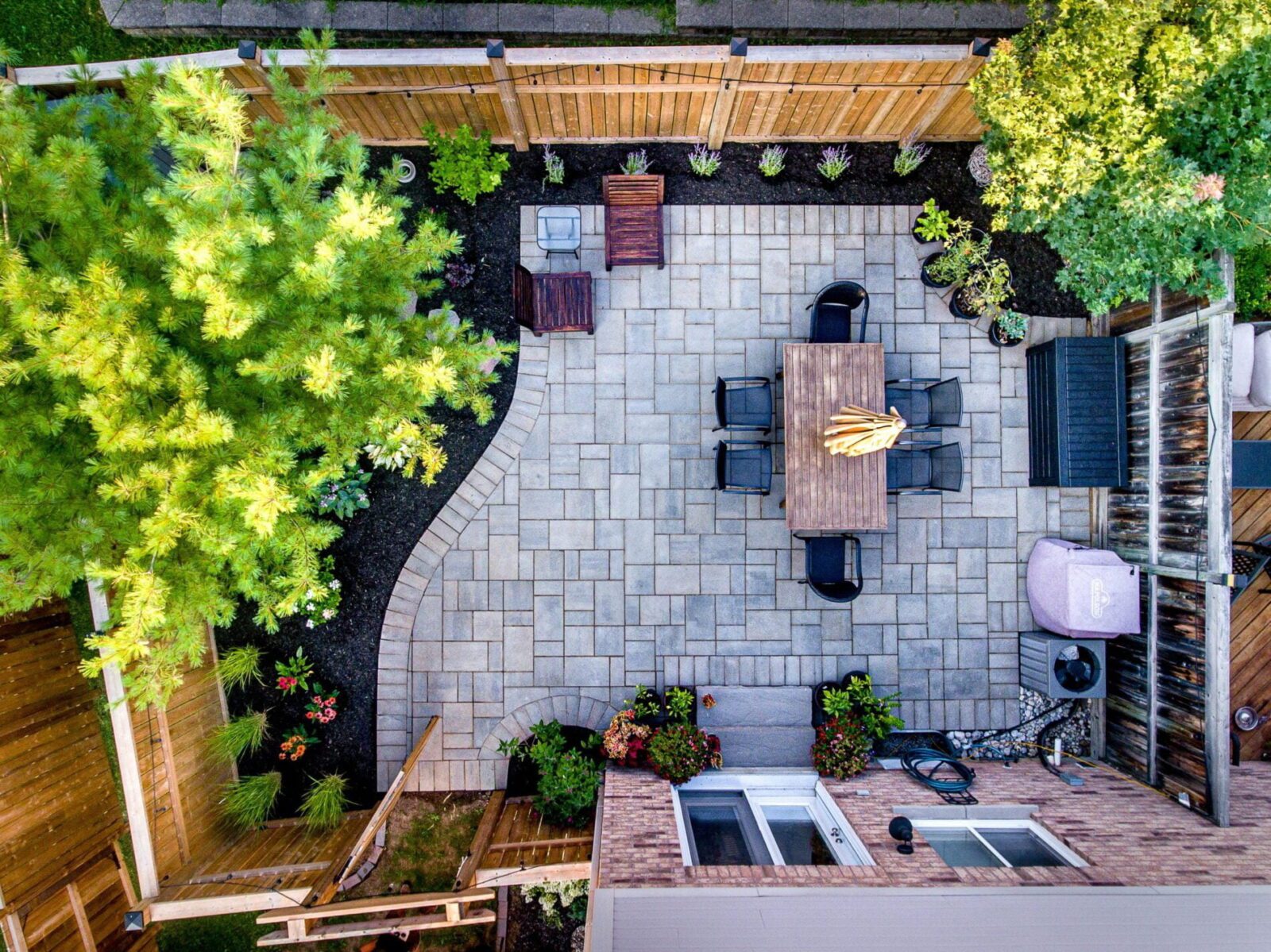
You might have a patio near the house, a planting bed along the fence, a compact lounge area in the best sun, a narrow path to the gate, and a privacy screen in one exposed corner.
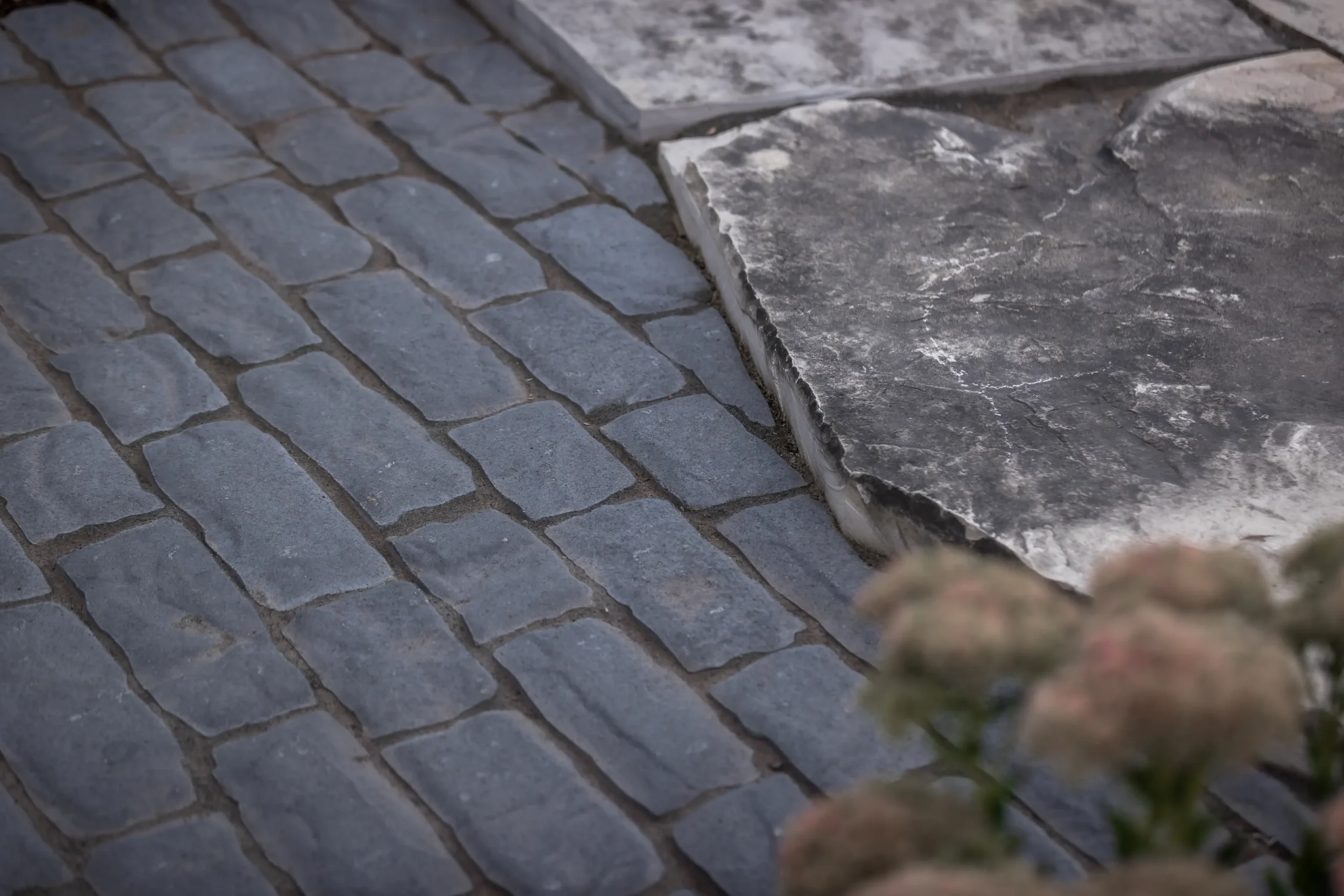
Use changes in material to define these zones. For example, a stone patio can transition into a garden bed, then into a small gravel path or stepping-stone route.
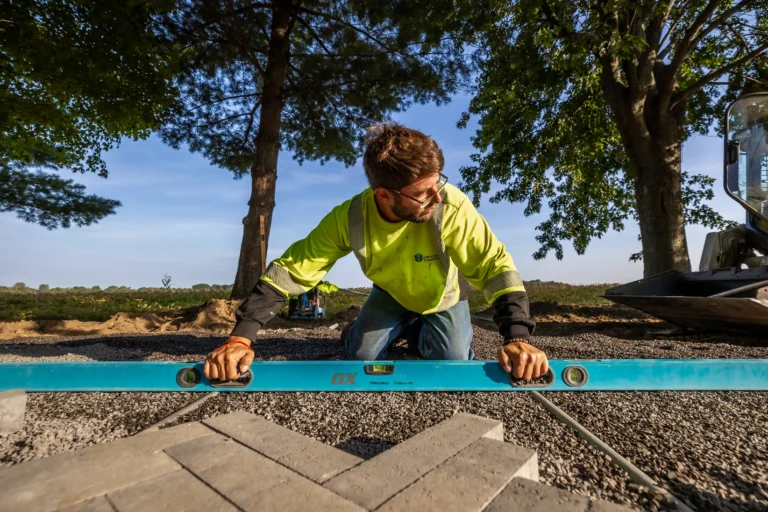
For larger backyard upgrades, professional landscape construction helps make sure the base, grading, drainage, edge restraints, and hardscape details are built properly from the start.
3. Embrace Vertical Space
When you do not have much ground area, build the design upward. Vertical elements can add privacy, greenery, shade, and structure without taking away too much floor space.
Good vertical landscaping ideas for small backyards include:
- Trellises with climbing plants
- Columnar trees
- Tall ornamental grasses
- Privacy screens
- Raised planters
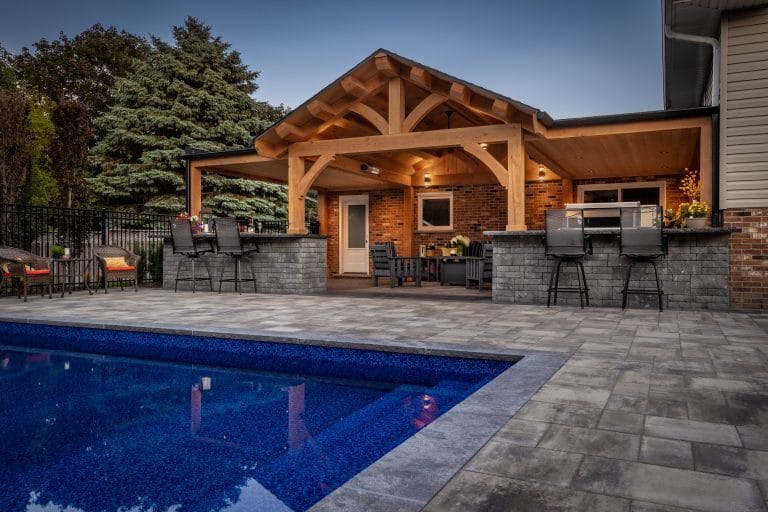
- Pergolas or compact shade structures
- Fence-mounted planters
This works especially well in urban and suburban yards where neighbouring homes feel close. The goal is not to block everything. It is to soften the view and create a better sense of enclosure.
4. Choose a Patio Size That Fits the Furniture
Many small backyard patios are either too small to use or too large for the yard. Both are problems.
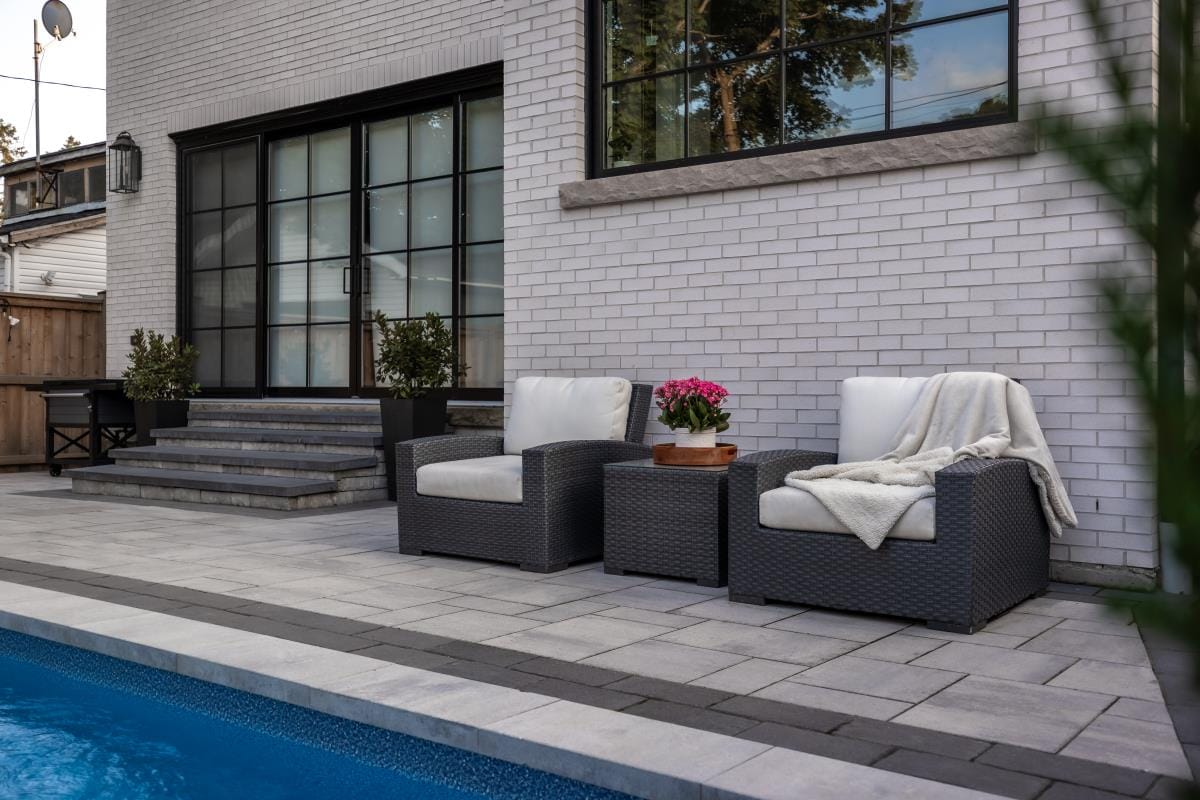
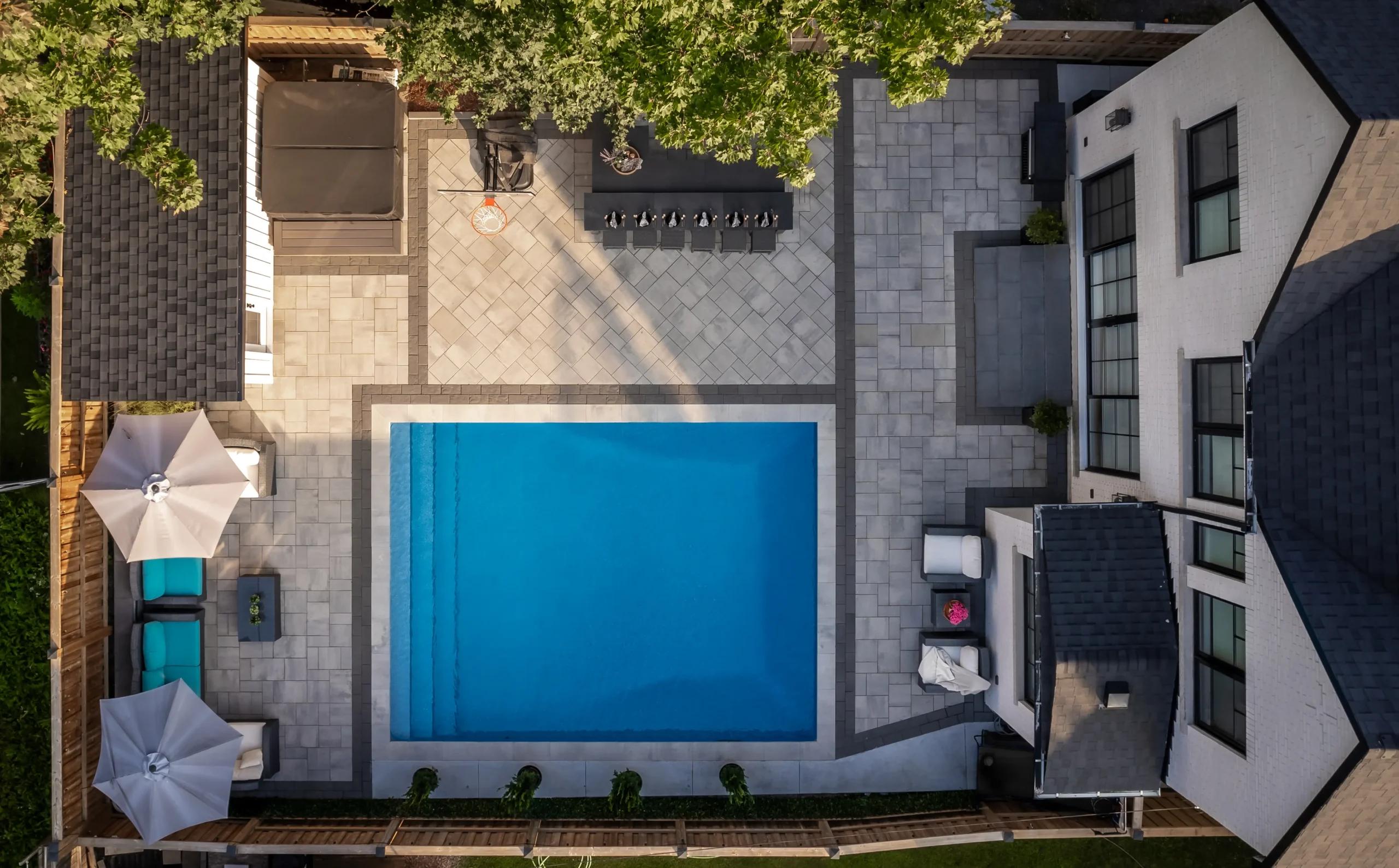
Before you choose the patio shape, choose the furniture. A small bistro table needs far less space than a six-person dining set. Lounge chairs need more space than they seem to need on paper.
Leave enough room to pull out chairs, walk around furniture, open doors, and move between the house and yard. This is one of the biggest advantages of designing the space before building it.
5. Keep the Material Palette Tight
Small spaces can feel busy quickly. Too many materials, colours, borders, and patterns can make the yard feel smaller than it is.
A good rule is to choose two or three main materials and repeat them. For example:
- Natural stone patio with cedar privacy screening
- Concrete pavers with dark metal edging and simple planting
- Flagstone with pea gravel joints and layered garden beds
- Large-format pavers with ornamental grasses and low shrubs
Repeating materials helps the yard feel designed, not pieced together.
6. Add Privacy Without Building a Box
Privacy matters in small backyards. The challenge is creating privacy without making the yard feel closed in.
Instead of building one tall solid wall around the entire yard, consider selective screening. Screen the seating area, the hot tub, the dining corner, or the view from a neighbour’s window.
Good options include:
- Horizontal wood screens
- Layered shrubs
- Columnar evergreens
- Decorative privacy panels
- Pergolas with side screening
- Tall grasses near patio edges
Privacy should feel natural to the design. It should not feel like an afterthought.
7. Use Planting to Add Depth
Planting can make a small backyard feel deeper. The key is layering.
Use lower plants near the patio, medium-height plants in the middle, and taller plants toward the fence or back of the bed. This creates a sense of depth without using much space.
For Ontario backyards, consider a mix of:
- Ornamental grasses
- Hydrangeas
- Hostas for shade
- Boxwood or yew for structure
- Coneflower or black-eyed Susan for colour
- Serviceberry or columnar trees for height
- Native or adaptive perennials for seasonal interest
For local plant guidance, the Government of Ontario’s native plant resources can help homeowners understand how native plants support pollinators, biodiversity, and resilient landscapes.
8. Think About Drainage Early
Drainage is easy to ignore during the idea stage, but it can make or break a small backyard project.
In a compact yard, there is less room for water to spread out. Poor grading can send water toward the house, patio, fence, or neighbouring property.
Before installing hardscaping, turf, retaining walls, or planting beds, think about:
- Where downspouts discharge
- Where water pools after rain
- Whether the yard slopes toward the house
- How patio runoff will be handled
- Whether permeable materials make sense
For small yards with stormwater concerns, permeable paver installation can be worth considering. It can help manage water while still creating a clean patio, walkway, or driveway surface.
9. Use Lighting to Make the Yard Feel Bigger at Night
Lighting is one of the most useful upgrades for a small backyard. It makes the space safer, more comfortable, and more usable after dark.
Good small-yard lighting is subtle. You do not need bright floodlights.
Use lighting to highlight steps, walkways, feature trees, garden beds, seating areas, fence lines, and privacy screens.
When lighting is placed well, it extends the visual edge of the yard. That can make a compact space feel larger and more finished.
10. Choose One Strong Feature
In a small backyard, one strong feature is usually better than five small ones competing for attention.
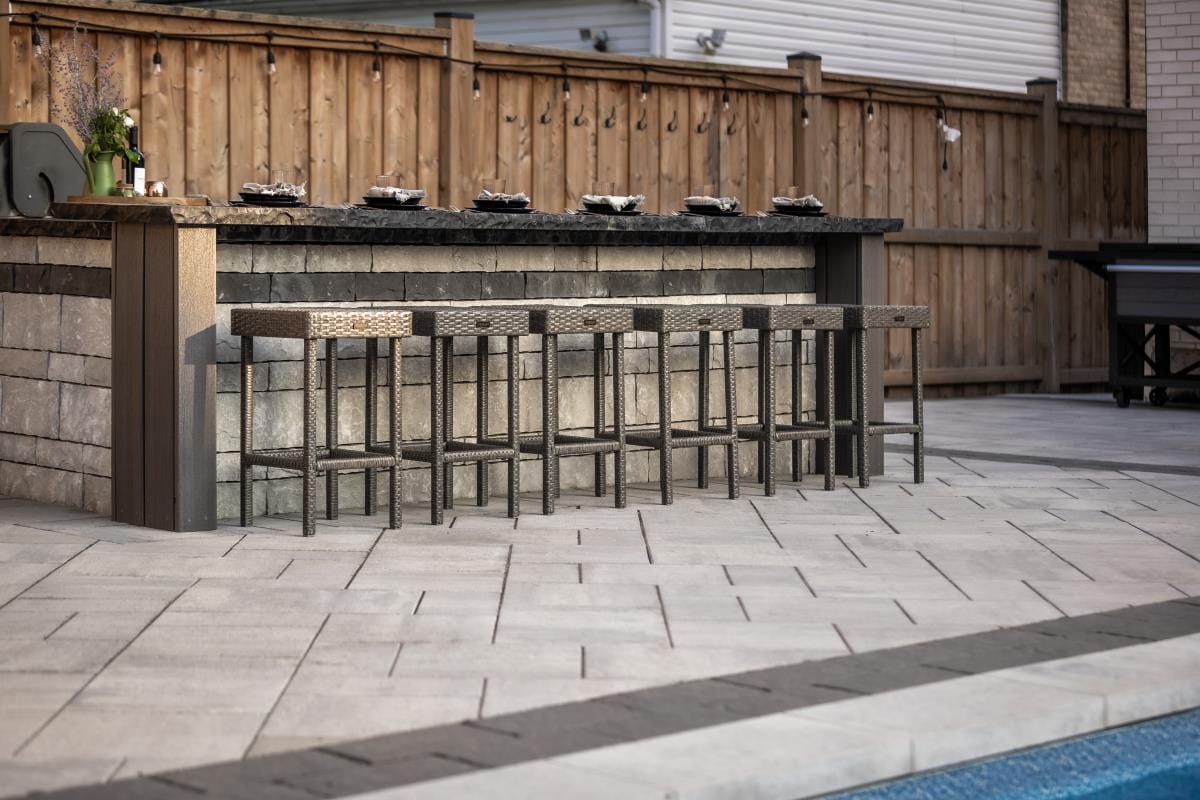
That feature could be a beautiful stone patio, a small fire feature, a built-in bench, a compact pergola, a specimen tree, a water feature, a raised planter wall, or a privacy screen with lighting.
This gives the eye a place to land. It also helps the yard feel designed rather than filled.
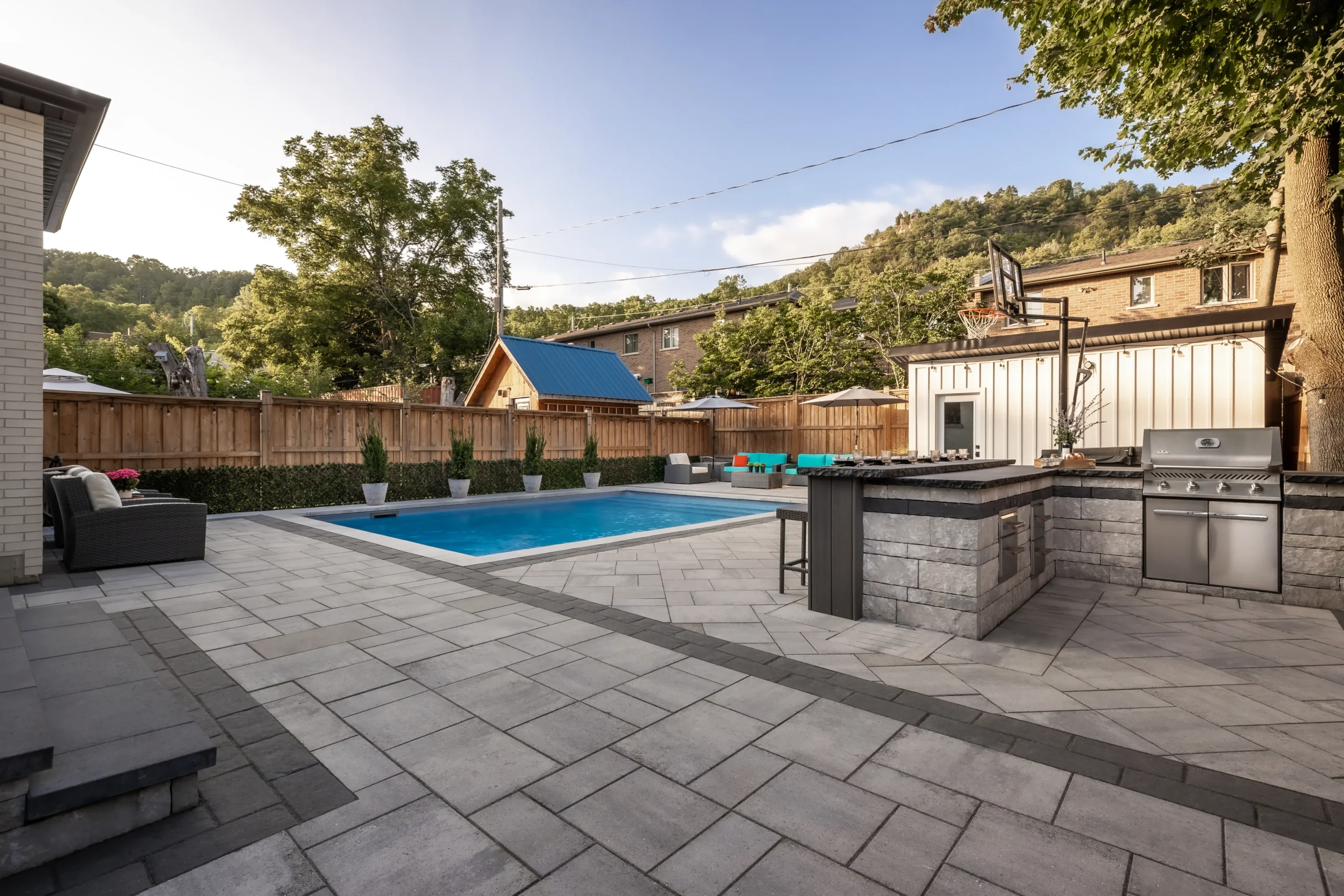
If you are drawn to more refined outdoor spaces, luxury landscaping in a small backyard is less about size and more about proportion, materials, craftsmanship, and restraint.



11. Consider Built-In Seating
Freestanding furniture can eat up a lot of room. Built-in seating can save space and make the backyard feel more organized.
A seat wall, bench, or corner seating area can define the patio edge while leaving more open floor space. It can also reduce the need for bulky outdoor furniture.
Built-in seating works especially well near fire features, garden walls, or compact dining spaces.
12. Make the Yard Low Maintenance, Not Lifeless
Low maintenance does not mean plain. It means choosing the right materials and plants for the space.
For small backyards, low-maintenance design might include more patio and less lawn, drip irrigation for planters and beds, durable pavers or natural stone, repeating perennials, mulched garden beds, evergreens, and proper drainage.
The best low-maintenance yards are planned, not stripped down. They still have texture, shade, colour, and seasonal interest.
13. Use Multifunctional Furniture
In a small backyard, furniture should earn its space. Choose pieces that can do more than one job.
Look for ottomans with storage, benches that double as seating and storage, foldable bistro tables, nesting side tables, or lightweight chairs that can be moved around when needed.
This gives you flexibility without crowding the yard.
14. Use Mirrors Carefully
Mirrors can make a small backyard feel larger by reflecting light, planting, and open sky. They work best in sheltered areas, on privacy walls, or in covered spaces where they feel intentional.
Use them carefully. A mirror should reflect something attractive, not a blank fence, storage area, or neighbour’s window.
15. Add Patio and Interlocking Stone
Patios and interlocking stones are strong choices for small backyards because they create useful, low-maintenance outdoor living space.
They can define dining areas, walkways, fire features, sitting zones, and garden edges. A well-built patio can also make a small yard feel more complete than a patch of lawn that is too small to use well.
Asking yourself “how much does a backyard interlock patio cost?” We have a full article on that topic.
Permeable paver installation is also worth considering when water management is part of the project. It gives you the function of a stone patio while helping manage stormwater more responsibly.
16. Add Paths and Stepping Stones
Paths and stepping stones guide movement through a small backyard. They also help protect lawn and garden areas from wear.
A narrow stone path can connect the patio to the gate, shed, garden, side yard, or fire feature. This is useful in both backyard landscaping and front yard landscaping, where compact spaces need clear circulation.
17. Use Planters for Flexibility
Gardening in planters gives you flexibility. You can move pots, change seasonal colour, grow herbs, or soften hard edges without committing to a permanent planting bed.
Group planters near seating areas, doors, steps, or privacy screens. Use different heights to create depth without taking over the whole yard.


18. Add a Small Water Feature
A small fountain, bubbling rock, or birdbath can add movement and sound without taking up much space.
Keep the feature simple. In a small yard, a water feature should support the design, not dominate it.
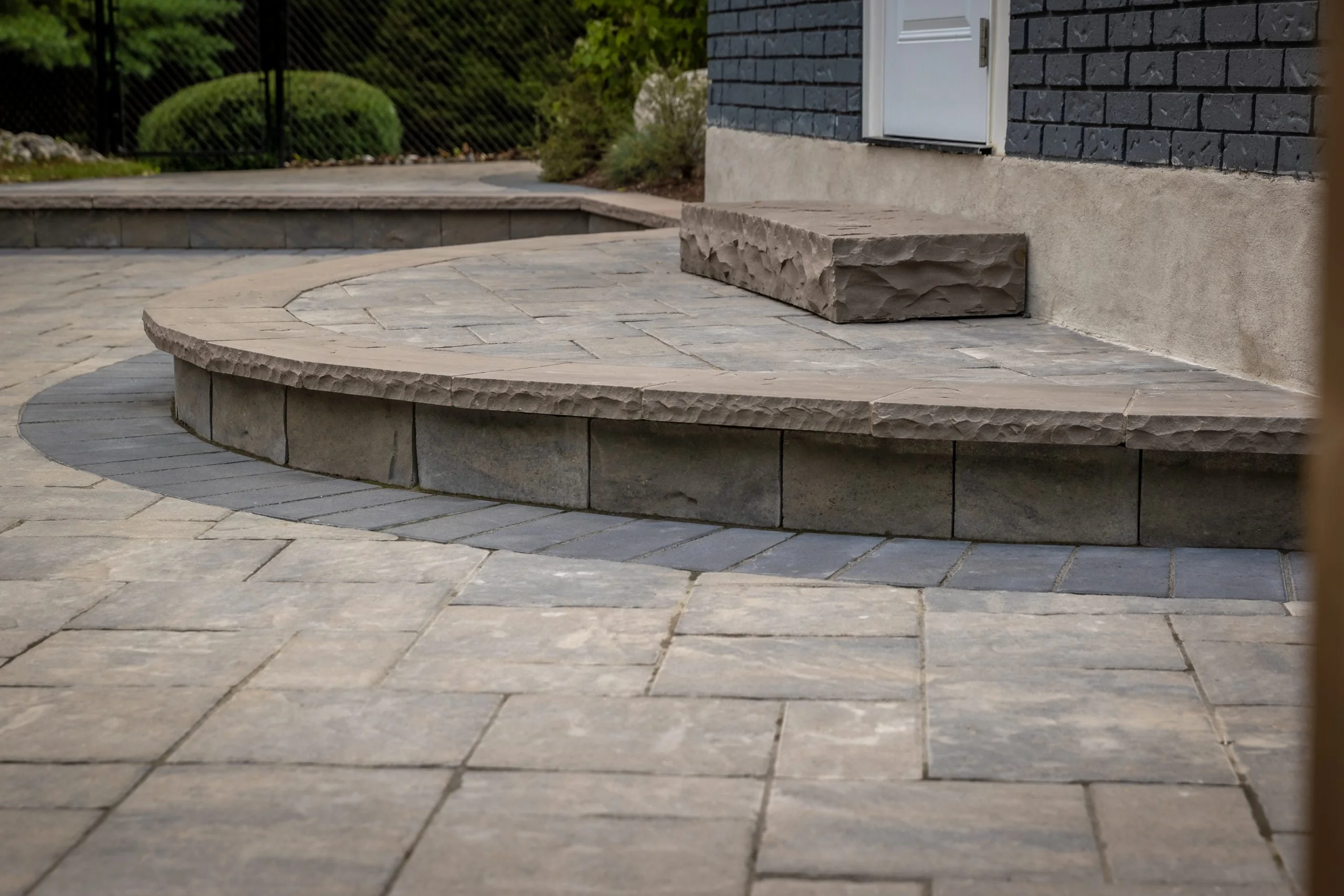
19. Use Curves Where They Make Sense
Straight lines can make some small spaces feel tight. Curved pathways, planting beds, or patio edges can soften the space and create a more natural flow.
On the other hand, clean straight lines can work beautifully in a modern backyard. The best choice depends on the home, the yard shape, and the style you want.
20. Remember That Less Is More
Avoid filling a small backyard with too many elements. A few well-chosen features will usually look better than a crowded mix of furniture, planters, lighting, decor, lawn, garden beds, and structures.
Small backyards reward restraint. Choose the features that matter most, then give them room to work.
A Real Small Backyard Project That Feels Modern
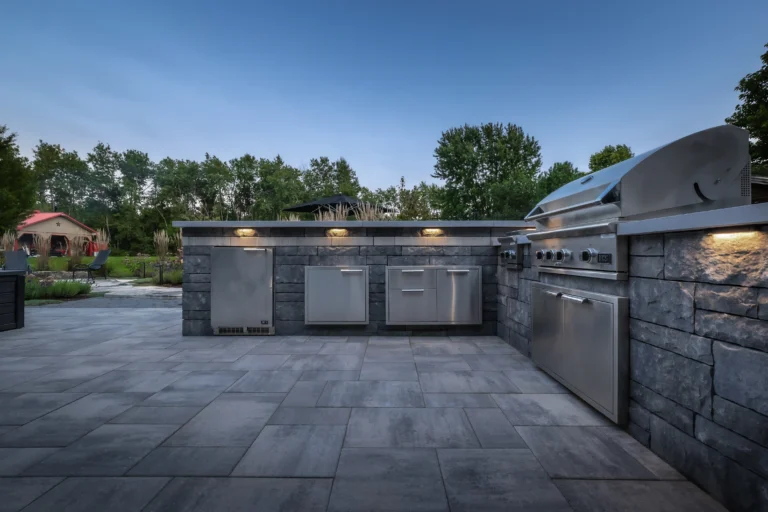
A strong local example is the Modern Luxury Backyard Living project in Dundas. This was a smaller backyard, but the design made it feel modern, practical, and family-friendly.
The project used a clear outdoor kitchen focal point, modern stone steps, careful grading, integrated drainage, and open play space for three young children. It also required a hidden exfiltration system and a large catch basin that had to be worked into the stonework without disrupting the overall look.
That project shows an important lesson for small backyards: the best result is not always about adding more features. It is about making the right features work together.
For homeowners considering luxury landscaping on a smaller property, this is the right mindset. Luxury does not have to mean oversized. It can mean better planning, better proportions, better materials, and better execution.
Bringing Your Small Backyard Vision to Life
With a plan in place, it becomes much easier to move from ideas to action. Here are the practical steps to take before you start building.
- Set a budget: Decide how much you are comfortable spending on design, materials, plants, construction, lighting, drainage, and professional help.
- Create a wishlist: List the landscaping ideas for small backyards that matter most to you. Then separate must-haves from nice-to-haves.
- Decide whether to DIY or hire a pro: Small planting and decor projects may be manageable yourself. Hardscaping, grading, drainage, lighting, retaining walls, and full backyard builds are usually better handled by professionals.
- Start with the most important zone: Do not try to do everything at once. Begin with the patio, privacy, drainage, or main gathering area.
- Check local rules: Review any municipal, condominium, or homeowner association restrictions before adding structures, drainage changes, fences, or major hardscaping.
The Creative Concepts landscaping process is built to help homeowners move from ideas to design, budget, planning, and construction with fewer surprises.
Choosing the Right Plants for Your Small Backyard
When it comes to landscaping ideas for small backyards, plant selection is crucial. The wrong plant can outgrow the space, block light, create too much maintenance, or make the yard feel smaller.
Use these plant selection rules:
- Mature size: Do not plant trees or shrubs that will eventually outgrow your space. Choose compact species or varieties that can be maintained at the right size.
- Sun exposure: Choose plants that match the actual sunlight in the yard. Full-sun plants will struggle in shade, and shade plants may burn in hot afternoon sun.
- Maintenance needs: Busy homeowners often benefit from durable, lower-maintenance planting plans.
- Seasonal interest: Choose a mix of plants with blooms, foliage colour, structure, texture, and winter interest.
- Layering: Use low, medium, and tall plants to create depth without crowding the space.
For plant ideas suited to small spaces, you can review compact plant options or look at dwarf plants for small spaces.
Good categories to consider include:
- Trees: Compact ornamental trees, serviceberry, smaller Japanese maples, or columnar trees where appropriate.
- Shrubs: Boxwood, hydrangeas, yews, compact rhododendrons, and other shrubs that can be managed at the right size.
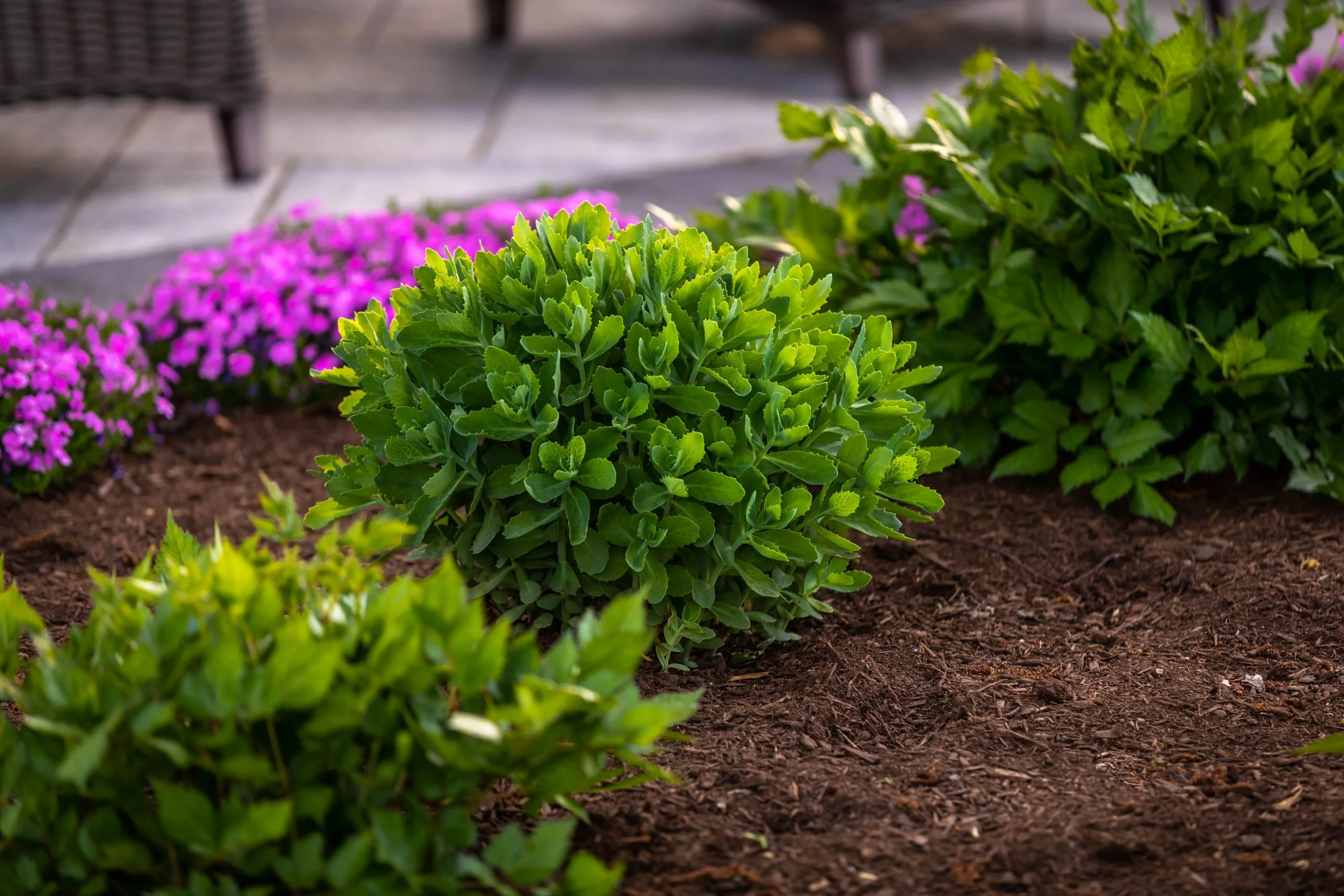
- Perennials: Hostas, coral bells, coneflower, black-eyed Susan, sedum, and other dependable plants for Ontario conditions.
- Vines: Clematis or climbing roses to soften fences, trellises, and walls.
- Grasses: Ornamental grasses for movement, softness, and texture.
Maintaining Your Small Backyard
These are not necessarily design ideas, but a well-maintained backyard will always feel more comfortable and usable.
Once your backyard is designed and planted, proper maintenance is key to keeping it looking its best. Here are a few simple tips:
- Water regularly: Water plants according to their needs, especially during the first year while they establish.
- Use mulch: A proper layer of mulch can help suppress weeds, retain moisture, and regulate soil temperature.
- Keep up with seasonal maintenance: Prune trees and shrubs as needed, remove dead growth, and keep beds clean.
- Protect sensitive plants: Some plants may need protection from harsh winter weather.
- Check drainage: Watch for pooling water, sinking patio areas, or erosion after heavy rain.
By following these tips, you can keep your small backyard looking clean, healthy, and ready to use.
Common Small Backyard Mistakes to Avoid
A small backyard does not need to be complicated, but a few common mistakes can make it feel smaller or harder to use.
- Choosing furniture before measuring the space
- Using too many different materials
- Ignoring drainage until after the patio is installed
- Planting trees that will outgrow the yard
- Forgetting privacy from second-storey windows
- Adding too many features
- Making the patio too small to function
- Using lighting that is too harsh
- Skipping a real design plan for a major project
Key Takeaways for Small Backyard Landscaping
- Small backyards need a clear purpose before features are chosen.
- Use zones to organize seating, planting, pathways, privacy, and outdoor living.
- Vertical elements can add privacy and greenery without using much ground space.
- Drainage, grading, and patio base preparation are critical in compact yards.
- Use fewer materials and repeat them for a cleaner design.
- One strong feature usually works better than many small features.
- Lighting can make the yard safer, more useful, and more spacious at night.
- A proper design helps protect your budget before construction begins.
FAQs About Landscaping Ideas for Small Backyards
What is the best way to landscape a small backyard?
The best way to landscape a small backyard is to start with a clear layout. Decide where people will sit, walk, cook, garden, and relax. Then choose materials, plants, privacy features, and lighting that support that layout.
How do you make a small backyard look bigger?
Use simple materials, layered planting, vertical elements, good lighting, and clear sightlines. Avoid clutter. A small yard feels bigger when the design has fewer distractions and a better flow.
Should a small backyard have grass?
It depends on how you use the yard. Grass can work well for kids and pets, but small patches of lawn can be hard to maintain. Many small backyards work better with a patio, planting beds, stepping stones, gravel, or a mix of surfaces.
What plants work well in small Ontario backyards?
Good options include hydrangeas, hostas, ornamental grasses, serviceberry, boxwood, yew, coneflower, black-eyed Susan, sedum, and shade-tolerant perennials where needed. The best plant choice depends on sun, soil, drainage, and winter exposure.
Is landscape design worth it for a small backyard?
Yes, especially if the project includes hardscaping, drainage, retaining walls, lighting, carpentry, or a larger budget. A design helps prevent mistakes with spacing, budget, material choices, and construction sequencing.
Can a small backyard still feel modern?
Yes. A small backyard can feel modern when the design uses clean lines, simple materials, strong edges, intentional planting, and one clear focal point. The key is restraint. Too many features can make the space feel crowded.
How do you add privacy to a small backyard?
Add privacy by screening the most exposed views instead of enclosing the whole yard. Layered planting, privacy panels, pergolas, columnar evergreens, and tall grasses can all help create privacy without making the yard feel boxed in.
Ready to Plan Your Small Backyard?
The best landscaping ideas for small backyards are not about squeezing in more. They are about choosing the right things, placing them well, and building them properly.
If you are planning a backyard project in Burlington, Oakville, Hamilton, Dundas, Ancaster, Milton, Brantford, or the surrounding area, Creative Concepts Landscapes can help you move from rough ideas to a thoughtful design and a well-built outdoor space.
Creative Concepts is happy to provide more landscaping ideas for small backyards in Burlington, Oakville, Dundas, Hamilton, Brantford, Ancaster, Milton, and the surrounding areas.
If you are looking for backyard landscapers for a compact outdoor space, it helps to work with a team that understands both design and construction. Small spaces leave very little room for guesswork.
When you are ready to talk through your project, you can contact Creative Concepts Landscapes to start the conversation.
For more inspiration, visit our landscape design gallery.