

When you are planning a major landscape construction project, choosing the lowest cost landscaping company can feel like the responsible decision. Sometimes the lowest quote is fair and complete. The risk begins when the price is lower because the proposal includes less planning, preparation, material, management or support.
The goal is not to avoid an affordable contractor. It is to compare the full value of each proposal so you understand what you are buying, what is excluded and what may cost more later.
Article Summary
The lowest landscaping quote is not automatically the wrong choice, but it should be examined carefully. Compare design, scope, site preparation, drainage, materials, permits, warranty, schedule, cleanup and post-project support before deciding which contractor offers the best total value.
Prefer to Listen to This Article?
Listen to the audio version:
Why the Lowest Cost Landscaping Company May Not Have the Lowest Total Cost
A landscaping proposal is not a price tag on a standard product. Two companies may appear to quote the same patio, pool area or backyard project while making very different assumptions about excavation, base preparation, drainage, materials, supervision and warranty.
A useful comparison asks a simple question: are the contractors pricing the same result, built to the same standard, with the same responsibilities included?
15 Hidden Costs to Compare Before Choosing a Landscaper
1. A Project That Does Not Match How You Want to Use the Property
A low estimate may be based on a quick conversation rather than a clear understanding of how your family wants to use the space. Important details such as seating capacity, traffic flow, privacy, shade, storage, lighting or future features may be missing.
A defined landscape design-build process gives the contractor time to understand the property and turn your priorities into a coordinated plan. Without that work, the finished project may look acceptable but function poorly.
2. Missing Work Hidden by a Lower Total
One proposal may include demolition, disposal, grading, drainage, electrical coordination and final restoration. Another may only include the visible patio or planting work.
Ontario consumer guidance says home renovation contracts worth more than $50 should be in writing and warns that work not included in the contract may cost extra. Review Ontario’s guidance for home renovations and repairs, and make sure the written scope reflects the complete project you expect.
3. Change Orders Caused by Assumptions and Exclusions
Change orders are normal when a homeowner requests new work or a concealed site condition is discovered. They become a problem when predictable work was left vague in the original proposal.
Look for clearly stated quantities, material selections, allowances, exclusions and assumptions. A lower estimate may grow quickly if excavation, access, disposal, utility work or restoration is priced only after construction starts.

4. Permit, Grading and Approval Surprises
Permit requirements depend on the municipality and the features being built. The City of Burlington notes that many basic landscaping activities do not require a building permit, while permanent features such as some retaining walls, decks and gazebos may require one.
Grading and fill can also trigger separate requirements. Burlington has a site alteration permit process, and its building permit guidance recommends confirming requirements before work begins.
Homeowners planning landscaping in Burlington or another Ontario municipality should make sure the proposal states who will investigate, apply for and pay for any required approvals.
5. An Unclear Warranty or No Practical Support
A warranty is only useful when it explains what is covered, how long coverage lasts, what maintenance the homeowner must complete and how a claim will be handled. A vague promise to “take care of it” is not the same as written terms.
Also consider whether the company is organized to respond after the final payment. Ask who receives warranty requests, how deficiencies are documented and what happens if a manufacturer warranty applies to a product.

6. Less Preparation Beneath Patios, Driveways and Walls
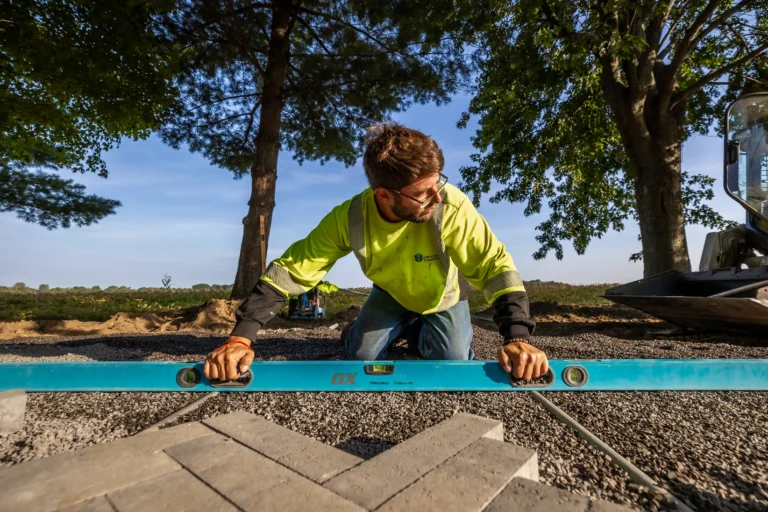
Much of the value in landscape construction is buried after the project is finished. Excavation depth, base material, compaction, edge restraint, geotextile, drainage and wall construction all affect long-term performance.
Ask each contractor to explain the proposed preparation, not just the finished surface. This is especially important for interlock, natural stone, driveways and retaining walls, where movement below grade can lead to settlement, cracking or leaning later.
7. Drainage Problems That Appear After the Work Is Complete
A new patio, wall, driveway or pool area changes how water moves across a property. If drainage is not considered early, the project may direct water toward the house, a neighbour or a low area that becomes difficult to use.
Compare whether each proposal includes grading plans, drainage structures, outlet locations and restoration. Our guide to yard drainage solutions explains why the right approach depends on the source of the water and the conditions on the property.
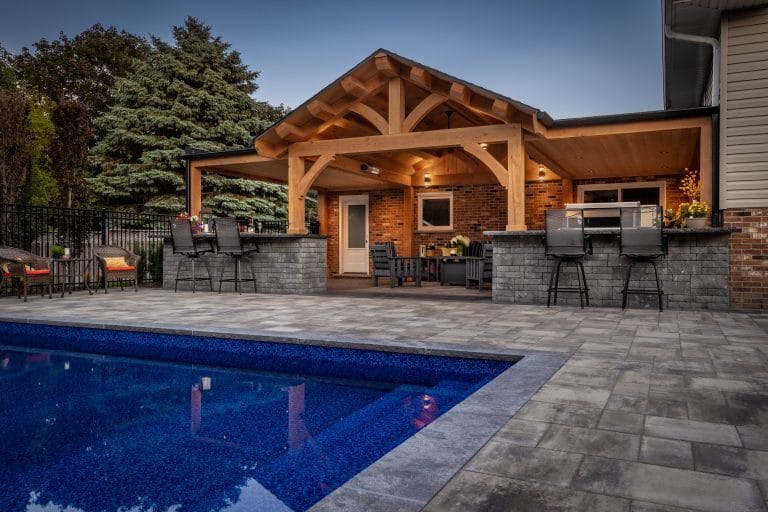
Built projects also show why this matters. An award-winning Dundas backyard project combined a pool, patio, retaining wall and drainage system as one coordinated design rather than treating drainage as an afterthought.

8. Materials Chosen Only for Their Purchase Price
A less expensive material can be a smart choice when it suits the design, installation method and expected use. Problems occur when a product is selected only because it lowers the quote.
Compare product names, colours, sizes, finishes, thicknesses and installation requirements. Ask how the material performs through Southern Ontario freeze-thaw cycles, winter maintenance and regular use, and confirm whether substitutions require your written approval.
9. Limited Project Management and Inconsistent Communication
Large landscape projects involve deliveries, equipment, crews, subcontractors, inspections, decisions and changing weather. Without clear project management, small questions can turn into delays or rework.
Ask who will manage the project, how often you will receive updates and who can approve changes. The lowest labour number may not include the coordination needed to keep a complex project moving.

10. An Unrealistic Schedule or Poor Construction Phasing
A fast schedule can be valuable, but only when it reflects the project’s scope, approvals, material lead times and crew availability. A promised start date means little if the crew is moved between several projects.
Ask for the anticipated start window, major phases, expected duration and factors that could change the schedule. Good phasing also protects access, limits disruption and prevents finished work from being damaged by later trades.
11. Cleanup, Disposal and Property Restoration That Are Not Included
Excavated soil, broken concrete, old fencing, packaging and unused material all need to go somewhere. A quote may look lower when disposal fees, street cleaning, final grading, sod repair or driveway protection are excluded.
The contract should explain what will be removed, what will remain on site and how disturbed areas will be restored. Also confirm whether permits, bins, trucking and disposal charges are included or treated as allowances.
12. Safety, Insurance and Responsibility Gaps
Ask for proof of commercial liability insurance and confirm who is responsible for workers, subcontractors, equipment and damage to neighbouring property. The answer should be clear before anyone arrives on site.
WSIB requirements can be more nuanced than a simple request for a clearance certificate. WSIB states that a clearance is not required when a contractor is hired directly by a home’s resident for home repairs or renovations, while other coverage and registration rules may still apply. Review the WSIB clearance guidance and ask the contractor to explain what applies to the company and your project.
13. Plants That Do Not Suit the Site
Planting decisions should account for sunlight, drainage, soil, mature size, winter exposure and the amount of maintenance you want to provide. A lower plant allowance may use smaller quantities, smaller sizes or species that are easy to source but poorly suited to the site.
Compare plant schedules rather than broad descriptions such as “assorted shrubs.” Confirm species, sizes, quantities, soil preparation, mulch, watering responsibilities and replacement terms.

14. Earlier Repairs and Replacement
The real cost of an outdoor project includes maintenance, repairs and replacement over time. A less expensive installation that needs to be rebuilt sooner may have a higher total cost than a properly planned project with a higher initial price.
Ask what maintenance each material needs, what commonly fails and what the expected repair process looks like. This helps you compare long-term ownership rather than only the construction invoice.
15. Your Time, Stress and Loss of Use
Delays, unclear decisions, repeated corrections and poor communication have a cost even when they do not appear on an invoice. A backyard that remains under construction for longer than expected can affect family plans, pets, parking, access and relationships with neighbours.
Reliable communication and realistic expectations reduce that burden. The best proposal should explain not only what will be built, but how the company will manage the experience of building it.

How to Compare Landscaping Quotes Fairly
Start by giving each contractor the same drawings, priorities and project information. Then compare the details below instead of ranking proposals by the final number alone.
| What to Compare | Questions to Ask |
|---|---|
| Design and scope | Are the layout, dimensions, quantities and responsibilities clearly defined? |
| Site preparation | What excavation, base, compaction, grading and protection are included? |
| Materials | Are products, sizes, finishes, quantities and substitutions identified? |
| Drainage and permits | Who investigates requirements, prepares documents and pays fees? |
| Schedule | What is the start window, duration, crew plan and weather allowance? |
| Price and changes | What is fixed, what is an allowance and how are change orders approved? |
| Warranty and support | What is covered, for how long and how are concerns reported? |
| Insurance and responsibility | Who is insured, who uses subcontractors and who is responsible for damage? |
Landscape Ontario also recommends a detailed written contract that identifies materials, labour, project phases, payment schedules and responsibility for permits. Its guidance on choosing a contractor and reviewing contract details is written for irrigation work, but the contract principles apply broadly to landscape projects.
For a broader evaluation process, use our guide to choosing a landscape contractor. It includes questions about experience, insurance, references, similar projects, warranties, subcontractors and contracts.
Frequently Asked Questions
Is the lowest landscaping quote always a bad choice?
No. A lower quote may reflect an efficient design, simpler materials, better access, lower overhead or a contractor who is a strong fit for the work. The important question is whether the quote includes the scope, preparation and support you expect.
How can I tell whether landscaping quotes are comparable?
Use the same design and written project requirements for every contractor. Compare quantities, material specifications, site preparation, drainage, permits, exclusions, allowances, schedule, payment terms and warranty.
What should be included in a landscaping contract?
A useful contract should identify the parties, project address, scope, materials, price, allowances, exclusions, payment schedule, expected timing, permit responsibilities, cleanup, warranty and the process for approving changes.
Who should obtain landscaping permits?
That depends on the project and municipality. The contract should clearly state who will confirm requirements, prepare applications, coordinate drawings or engineering and pay the related fees.
Should I ask a landscaper for insurance and WSIB information?
Yes, ask for proof of commercial liability insurance and an explanation of the company’s WSIB status. A WSIB clearance is not required in every direct residential arrangement, so the contractor should explain which rules apply rather than relying on a vague claim.
Key Takeaways
- The lowest quote can be a good choice when the scope and construction standard are complete.
- Compare what is included, excluded and assumed before comparing final prices.
- Pay close attention to preparation, grading, drainage and other work that will be hidden after construction.
- Confirm material specifications, permit responsibilities, schedule, cleanup and warranty in writing.
- Ask how the contractor will manage communication, changes, subcontractors and post-project support.
- Choose the proposal that offers the best total value for your property, goals and expected service life.
Choose the Best Total Value, Not Only the Lowest Landscaping Quote
Choosing a landscaper should not become a contest to find the highest price. It should be a careful comparison of design, scope, construction quality, project management and long-term value.
If you are planning a substantial outdoor project, you can discuss your landscape project with Creative Concepts Landscapes. A clear conversation about goals, budget and property conditions is the best place to start.