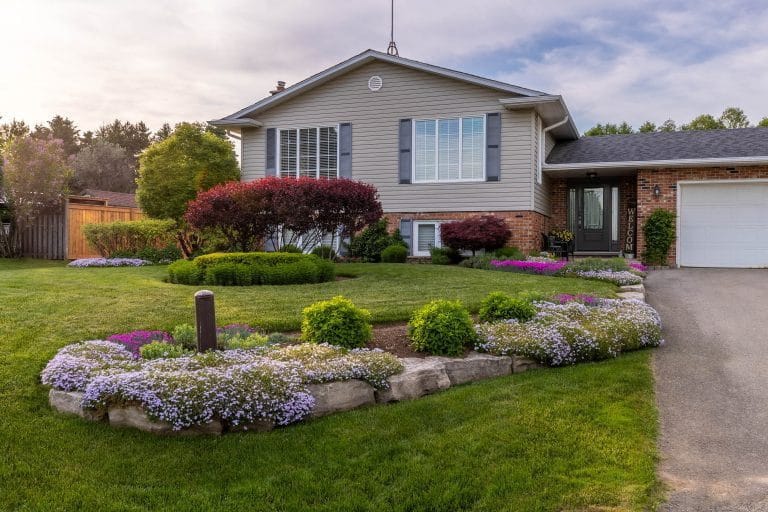


Small front yard landscaping ideas work best when every part of the space has a purpose. In a compact front yard, the walkway, planting, steps, lighting and even the space beside the driveway all compete for a limited amount of room.
The goal is not to fit as much landscaping as possible into a small space. It is to create a front yard that feels organized, welcoming and proportional to the house.
Article Summary: This guide covers practical small front yard landscaping ideas for Ontario homes, including planting, walkways, raised gardens, steps, lighting, drainage, low-maintenance design and ways to make a compact entrance feel more spacious.
Small Front Yard Landscaping Ideas That Make Limited Space Work Harder
Small yards often benefit more from careful planning than large ones. Every plant, material and feature is easier to notice, which means scale and placement matter.
If you are looking for inspiration for a larger property as well, our broader guide to front yard landscaping covers driveways, larger entrances, retaining walls, gardens and complete curb-appeal projects.
1. Start With a Clear Route to the Front Door
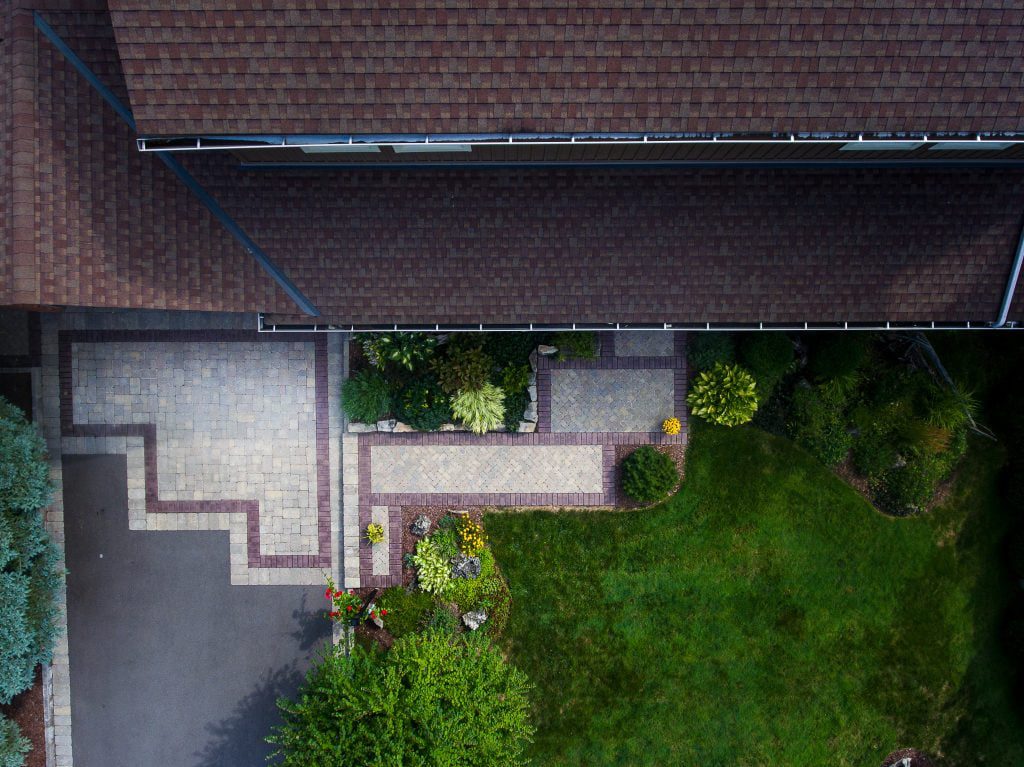
Before choosing plants, decide how people should move through the yard. A clear front walkway can make a small property feel more organized because it gives the space an obvious direction.
Avoid squeezing the path between oversized planting beds. In many compact front yards, one comfortable walkway with clean edges works better than several small paths or decorative stepping-stone routes.
The stone walkway and driveway connection in The Welcoming Walkway project in Ancaster is a useful example of making the arrival sequence part of the overall landscape rather than treating the walkway as a separate feature.
2. Layer Plants Instead of Filling Every Open Space
Layering plants creates depth without requiring a large garden bed. Keep shorter plants near the walkway, place medium-height perennials and shrubs behind them, and use taller plants selectively closer to the house or at the back of the bed.
Repetition is especially useful in small front yards. Repeating a few well-chosen plants usually looks calmer and more intentional than planting one of everything.

3. Choose Plants for Their Mature Size
A plant that looks small at the garden centre may eventually block a window, crowd the walkway or overwhelm the entrance. Check mature height and spread before planting, especially beside steps, doors and narrow pathways.
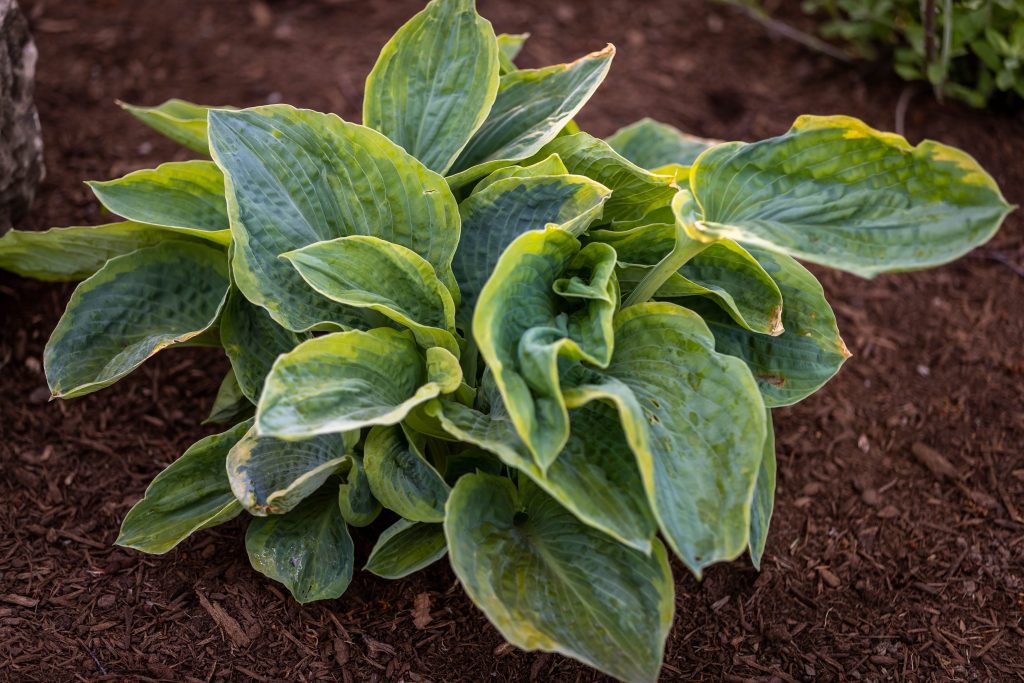
Sun exposure matters too. Coneflowers, black-eyed Susans and some ornamental grasses can work well in sunny Southern Ontario gardens, while hostas, ferns, heuchera and other shade-tolerant plants can suit protected or north-facing areas.
Ontario also encourages gardeners to consider native plants that support pollinators, and the Ontario Invasive Plant Council maintains its Grow Me Instead guide to help homeowners avoid problematic invasive garden species.

4. Use One Strong Focal Point
Trying to create several focal points in a small yard can make the space feel cluttered. Instead, decide what you want people to notice first.
That might be the front door, a small ornamental tree, a specimen shrub, an address marker, a large planter or a feature stone. Everything around it can then support that main element.
A contrasting front door can work particularly well because it already occupies an important position in the composition. Planting and hardscaping can help frame it rather than competing for attention.

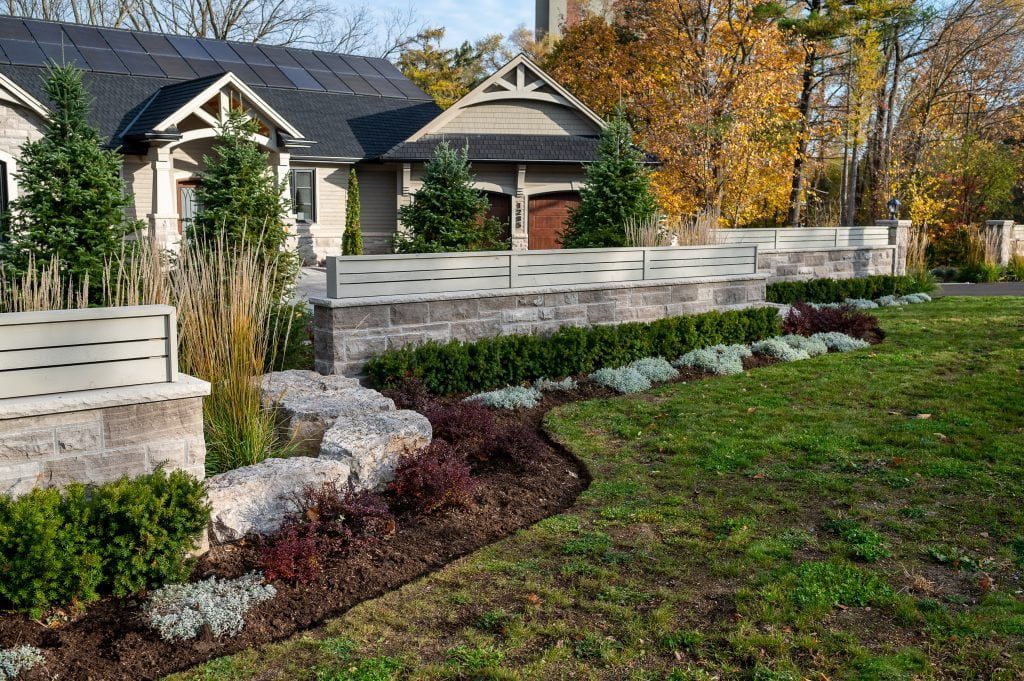
5. Use Raised Gardens and Low Walls to Create Structure
A small change in elevation can make a compact front yard feel more defined. Raised garden beds, low stone walls and carefully placed retaining features can separate planting from walkways without requiring much additional space.
They are particularly helpful when the existing yard has a slope. However, changes to grades and retaining walls should be planned as part of the property drainage system rather than added only for appearance.
6. Use Vertical Space Carefully
Vertical elements can add planting without consuming valuable ground area. A narrow trellis, climbing plant, tall planter or slim privacy screen may fit where a broad shrub would not.
Keep the design restrained. Covering every wall and fence with vertical planting can make a small entrance feel tighter rather than larger.
Vertical elements also need to leave enough room for doors, windows, utilities and routine maintenance.
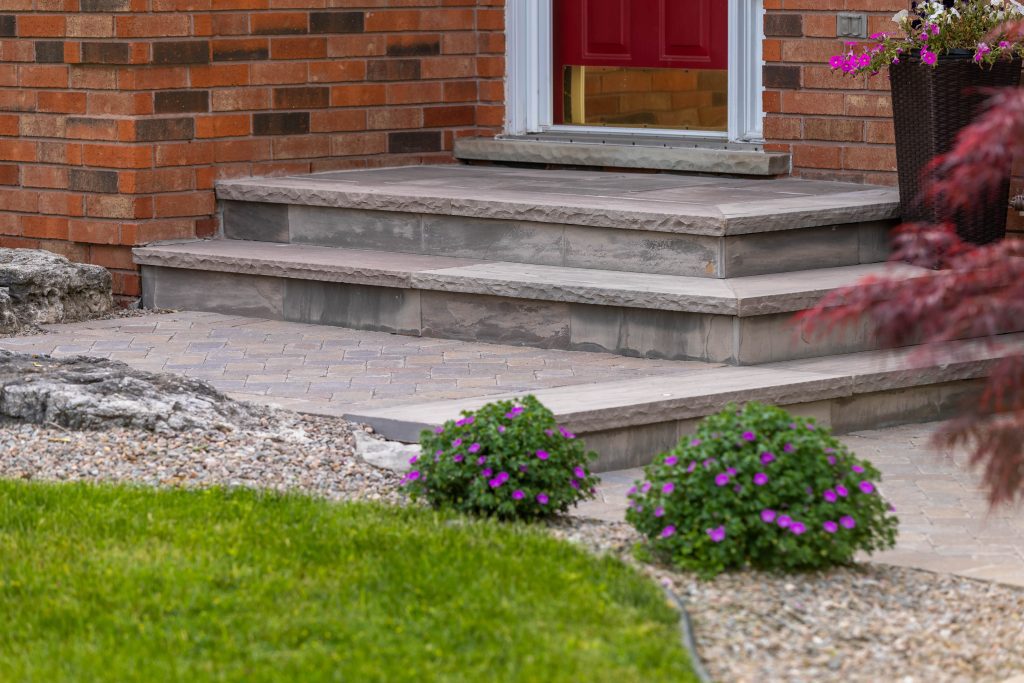
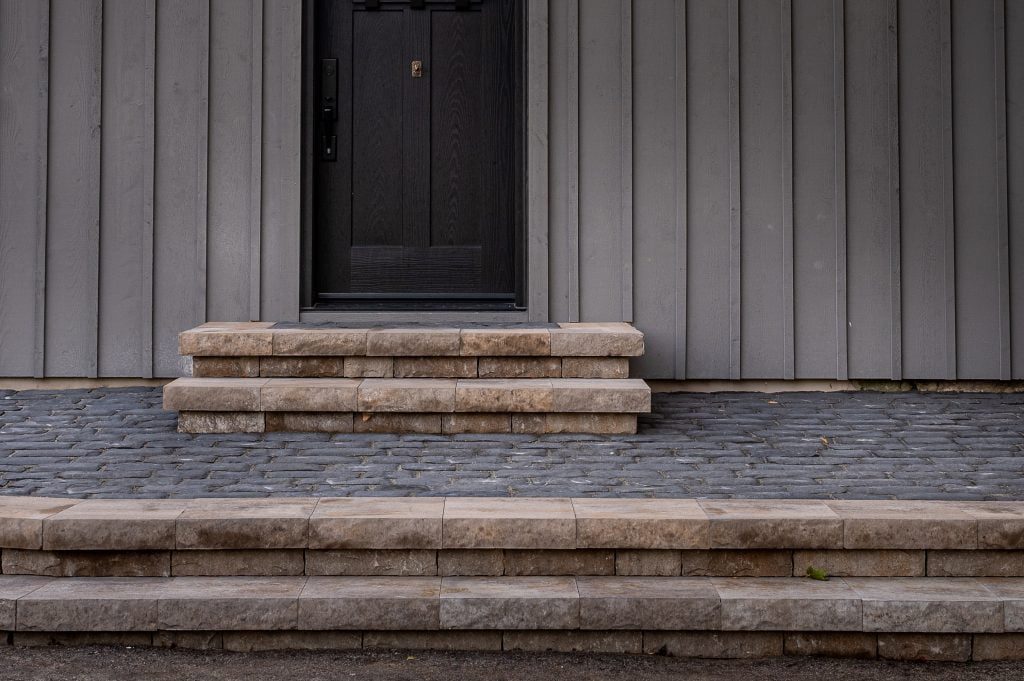
7. Make the Front Steps Feel Like Part of the Landscape
Steps often occupy a surprisingly large percentage of a small front yard. That makes them an important design feature, not simply a way to change elevation.
Stone, precast materials and other durable finishes can connect the steps visually to the walkway, garden walls or porch. Wider landings can also make a tight entrance feel more comfortable when the property allows for them.
The Elegant Entrance in Flamborough shows how flagstone, steps, walkway space and planting can work together to create a stronger front entrance.
8. Treat Railings as Part of the Design
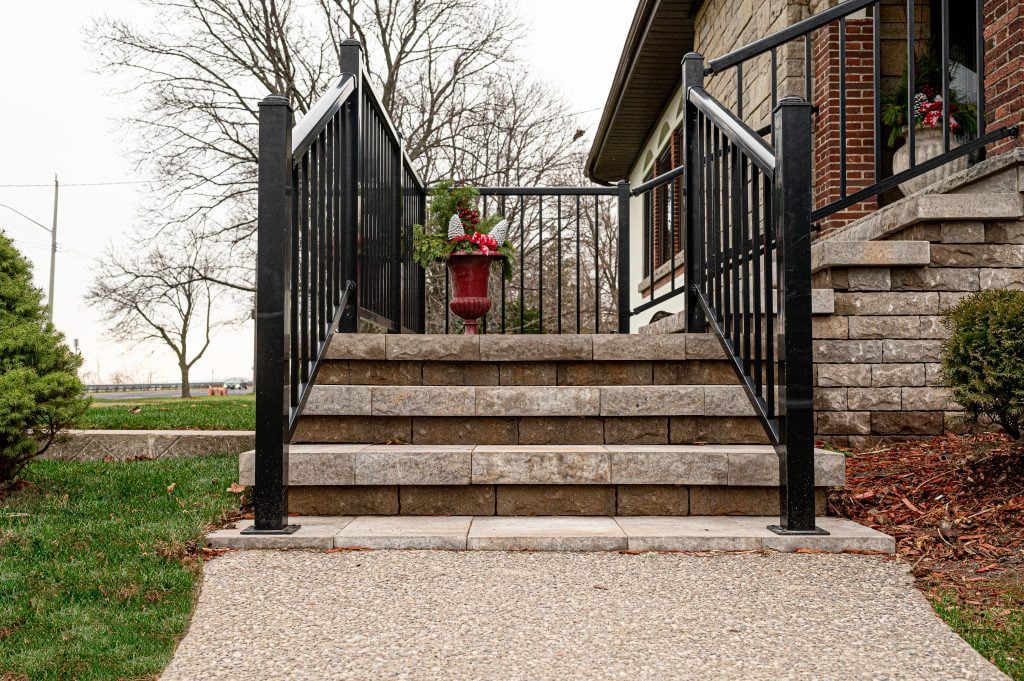
Where guards or railings are required, they become one of the strongest visual lines in the front yard. Their style should work with the steps, house and surrounding landscape.
A simple black metal railing can create definition without visually filling the space. More decorative designs can work too, but small entrances usually benefit from restraint.
Projects involving significant steps, retaining walls, grading or hardscape changes may be better approached as coordinated landscape construction rather than a collection of separate improvements.
9. Add Lighting Without Overlighting the Yard
Small front yards do not need many fixtures. A few carefully positioned lights can define the walkway, make steps easier to see and highlight an important tree, garden or architectural feature.
Low-voltage fixtures usually create a more deliberate result than filling the garden with many small solar lights. The goal is to guide people toward the entrance and add useful light without making the front yard feel busy.

10. Consider a Low-Lawn or No-Lawn Front Yard
A tiny patch of lawn is not automatically the best use of a compact front yard. In some properties, expanding the garden beds or using groundcovers, stone and planting can create a more intentional landscape with less mowing.
That does not mean covering the entire yard in decorative stone. A successful low-lawn design still needs planting, seasonal interest and enough permeable area to help the yard feel like a landscape rather than another paved surface.
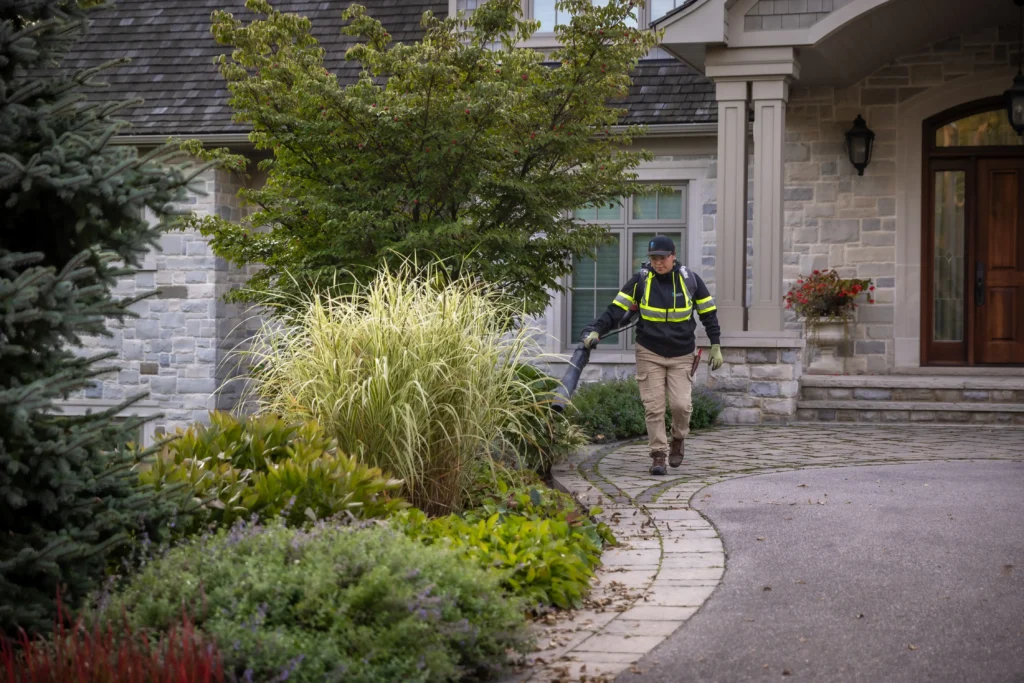
Keep practical maintenance in mind too. Leaves still collect, plants still need pruning, and snow needs somewhere to go during an Ontario winter.
Planning Small Front Yard Landscaping in Ontario
The best small front yard landscaping ideas still have to work with the actual property. Before choosing materials or plants, measure the space and identify the house, property edges, driveway, walkway, stairs, utilities, downspouts, trees and existing grades.
A professional landscape design becomes especially useful when a compact property includes several competing requirements. A few feet can determine whether a walkway feels comfortable, a planting bed works, or a retaining feature creates an unnecessary drainage problem.
Think About Drainage Before Adding Hardscape
Do not assume that water should simply be redirected toward the street. Existing grading, neighbouring properties, municipal requirements and the location of hard surfaces all matter.
Our guide to yard drainage solutions explains some common landscape drainage problems. If you are changing grades, adding fill, constructing retaining walls or building new hard surfaces, check the requirements of your municipality before starting.
For example, the City of Burlington notes that some landscaping, patio, retaining-wall, grading and excavation projects can require review under its Site Alteration By-law. Requirements vary between municipalities and projects.
Locate Underground Utilities Before You Dig
Planting a tree, installing a fence, reshaping a garden or building landscape features can involve excavation. Ontario One Call says homeowners or contractors must request public utility locates before digging.
Private infrastructure can require separate locating. That may include privately owned landscape lighting, irrigation, gas lines to outdoor equipment and electrical lines to detached structures.
Remember Snow, Salt and Winter Access
A front yard has to work in February as well as July. Leave room to clear the walkway and store snow without blocking the entrance or repeatedly burying sensitive plants.
Plants immediately beside driveways, roads and sidewalks may also experience more salt exposure. Choose planting and materials with the actual conditions in mind rather than designing only for summer photographs.
Common Mistakes in Small Front Yard Design
Small yards tend to magnify design mistakes because there is less room for them to disappear.
- Using too many different paving materials in a limited area
- Choosing shrubs or trees without considering their mature size
- Making the walkway too narrow so garden beds can be larger
- Creating several competing focal points
- Covering most of the yard with decorative stone and very little planting
- Changing grades without understanding where water will go
- Blocking access to utilities, meters, windows or maintenance areas
- Forgetting where snow will be stored in winter
- Using many one-off plants instead of repeating a smaller plant palette
A small front yard usually feels larger when the design becomes simpler, not when more features are added.
Key Takeaways
- Start with a comfortable route from the driveway or sidewalk to the front door.
- Choose plants based on mature size, sun, soil and exposure rather than how they look at the garden centre.
- Repeat a smaller number of plants and materials to keep the space visually calm.
- Use one strong focal point instead of several competing features.
- Integrate steps, railings, lighting and planting into one overall design.
- Consider low-lawn landscaping when a tiny lawn does not serve a useful purpose.
- Plan drainage, utility locates, snow storage and municipal requirements before construction begins.
Frequently Asked Questions About Small Front Yard Landscaping
How can I make a small front yard look bigger?
Use a simple layout, repeat a limited number of plants and materials, and keep a clear route to the entrance. Avoid filling every open area with a different feature. One generous walkway or strong planting composition can make the yard feel more spacious than many small elements.
What are good plants for a small front yard in Ontario?
The best plants depend on sunlight, soil, moisture, salt exposure and available space. Look for plants with a mature size that suits the yard and combine year-round structure with perennials or seasonal colour. Native and non-invasive species are worth considering where they suit the site.
Should I remove the lawn from a small front yard?
Sometimes. If the lawn is only a small strip that is difficult to mow or does not contribute much visually, garden beds, groundcovers and carefully planned hardscape may make better use of the space. You do not need to eliminate lawn simply because the yard is small.
Can I use a tree in a small front yard?
Yes, but mature size matters. A properly selected small tree can become an excellent focal point and add shade, seasonal interest and vertical structure. Make sure there is enough room for the canopy and roots without interfering with buildings, overhead lines or walkways.
Do I need professional landscape design for a small front yard?
Not for every project. Simple planting and container changes can often be handled by a homeowner. Design becomes more valuable when the project includes new walkways, steps, retaining walls, drainage, grading, lighting, driveway changes or several features that need to fit into a very limited space.
Making a Small Front Yard Feel Complete
The most successful small front yard landscaping ideas are usually the ones that solve several problems at once. A walkway can improve access and organize the design. A raised bed can address grade while creating planting space. A carefully positioned tree can add structure without filling the yard with smaller features.
This matters throughout Southern Ontario, including compact properties in Burlington, Oakville, Hamilton, Dundas and Ancaster. Homeowners considering a more substantial project can also explore our work and approach to landscaping in Burlington and surrounding communities.
If your project involves a new front entrance, walkway, steps, retaining walls, driveway details, lighting or a complete redesign, you can start planning your project with Creative Concepts Landscapes.