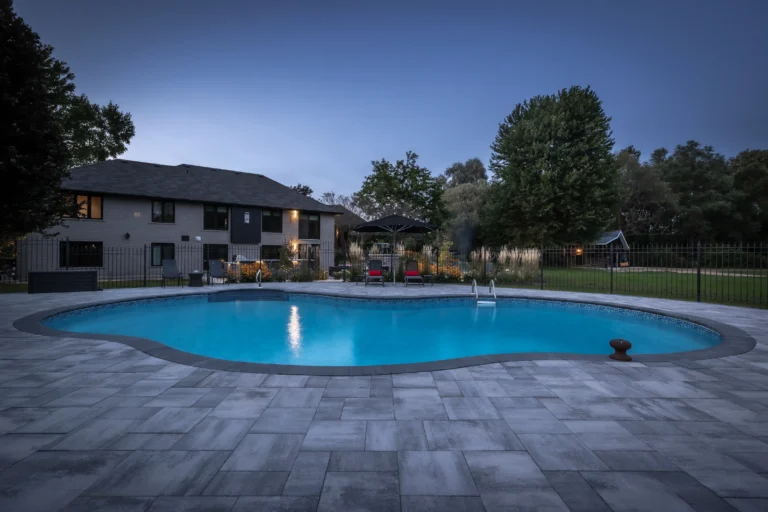


TLDR: Landscaping for sloped properties is not about fighting the hill. It is about working with it. With the right planning, drainage, and structure, a sloped yard can become one of the most functional and visually interesting outdoor spaces on your property.
If your backyard slopes sharply or your home sits on a hill, you have probably wondered if a major landscape construction project is even worth it. The short answer is yes. Landscaping for sloped properties is very achievable, but it requires a different approach than flat lots.
This guide explains how homeowners can plan landscaping for hills, what to consider before construction starts, and which design strategies work best for long term success.
Why landscaping for sloped properties needs a different mindset
Landscaping for sloped properties introduces challenges that flat yards do not have. Gravity is always working against you. Water moves faster. Soil shifts more easily. Access can be limited.
On the other hand, slopes also offer opportunities.
- Walk-out landscaping with multiple usable levels
- Strong visual interest from terracing and elevation changes
- Better sightlines and views from patios and decks
Callout: The biggest mistake homeowners make is treating a sloped yard like a flat one.
Start with a site assessment, not design ideas
Before choosing materials or features, take time to understand your slope.
Important factors include:
- Degree of slope
- Soil type and stability
- Drainage patterns during heavy rain
- Sun exposure across the hill
If you are unfamiliar with these factors, reviewing the landscaping process can help you understand how professionals approach complex sites. Understanding your property’s grading is also the first step toward an effective landscape design that works with—not against—the slope.
Slopes often magnify small problems. Poor grading or drainage can lead to erosion, pooling water, or shifting structures over time.
Landscaping for hills starts with drainage control
Water management is the foundation of landscaping for sloped properties. Without it, even the best design will fail.
Common drainage strategies include:
- Subsurface drainage systems
- Swales that guide water safely downhill
- Proper base preparation under hardscape
- Retaining structures designed to handle hydrostatic pressure
If you want to go deeper into this topic, this guide on yard drainage solutions is a helpful resource.
Another option for managing runoff is permeable surfaces, which allow water to pass through rather than flow across the slope. Learn more about permeable paver installation.
Terracing creates usable space on steep slopes
Terracing is one of the most effective ways to make landscaping for hills functional. Instead of one steep grade, the slope is broken into a series of flat or gently sloped levels.
Benefits of terracing include:
- Reduced erosion
- More usable outdoor living areas
- Easier access and movement through the yard
- Clear separation of spaces for different uses
Terraces often rely on retaining walls. These structures must be engineered correctly to handle soil pressure and water movement. For a deeper look, explore retaining walls in Ontario.
Walk-out landscaping connects the home to the slope
Walk-out landscaping is common when the lower level of a home opens directly onto the yard. This layout works especially well for sloped properties.
Good walk-out landscaping often includes:
- Level patios directly outside the home
- Integrated steps and landings between elevations
- Planting beds that soften grade changes
- Lighting for safety and nighttime use
Walk-out landscaping should feel intentional, not like an afterthought. For sloped lots, thoughtful luxury landscaping design can turn elevation changes into standout features that complement upscale homes. The transition from indoor to outdoor space matters just as much as what happens farther down the hill.
See how elevation changes come to life in our landscape design gallery.
Choosing the right materials for sloped construction
Materials behave differently on slopes. What works on flat ground may shift or fail on an incline.
When planning landscaping for sloped properties, prioritize:
- Natural stone or concrete retaining systems
- Interlock with proper base preparation
- Steps with deep treads and consistent riser heights
- Plants with strong root systems for erosion control
Avoid lightweight materials that rely on surface anchoring alone. Over time, gravity will expose weak construction choices.
Planting strategies for landscaping for hills
Plants play a functional role on slopes, not just a visual one.
Good planting strategies include:
- Groundcovers that spread and hold soil
- Shrubs with fibrous root systems
- Layered planting to slow water movement
- Mulch applied correctly to avoid washout
Plant selection should match sun exposure and soil conditions. Learn more about soil types in Ontario.
Maintaining a complex slope requires ongoing care. For larger properties, estate landscape maintenance ensures that drainage systems, retaining structures, and plantings continue to perform at their best.
Phasing construction on sloped properties
Large sloped projects do not always need to happen all at once. Phasing can make sense, especially when budgets or timelines are tight.
A smart phased approach might include:
- Grading, drainage, and retaining walls
- Hardscape and access routes
- Planting and finishing details
Starting with the structural elements protects future investments. Decorative features come later.
Before committing to any contractor, review this landscape contractor checklist to help you ask the right questions.
Landscaping for sloped properties requires planning, not shortcuts
Landscaping for sloped properties rewards patience and good decisions. Hills are unforgiving when mistakes are made, but incredibly rewarding when designed well.
A thoughtful plan can turn a difficult slope into the most memorable part of your property. With the right drainage, structure, and materials, landscaping for hills becomes an asset, not a limitation.
Key takeaways
- Landscaping for sloped properties requires a different approach than flat yards
- Drainage is the most critical factor for long term success
- Terracing and retaining walls create usable space on hills
- Walk-out landscaping improves flow between home and yard
- Proper materials and planting prevent erosion and movement
- Phasing construction helps manage cost and complexity