

Article Summary
Outdoor kitchen cost in Ontario usually ranges from $10,000 to $50,000+, depending on size, materials, appliances, utilities, and how custom the project is. A simple built-in grill station may stay closer to the lower end, while a complete outdoor cooking and dining area with plumbing, electrical, gas, lighting, stonework, shade, and storage can cost much more.
The best way to control cost is to plan the layout, utilities, materials, and surrounding landscaping before construction starts. A proper design helps you understand what is possible, what is worth spending on, and where the budget can get stretched too thin.
If you are researching outdoor kitchen cost, you are probably trying to answer one important question: what does it actually take to build this properly?
The honest answer is that most outdoor kitchens are not just a grill and a few cabinets. They often become part of a larger backyard plan that includes patios, seating, lighting, planting, drainage, privacy, shade, and circulation.
For Ontario homeowners, a realistic professionally built outdoor kitchen often falls between $10,000 and $50,000+. Larger custom projects with premium appliances, stone counters, natural gas, plumbing, electrical, and a covered structure can go beyond that.
That does not mean every backyard needs the biggest version. It means the budget should match how you plan to cook, host, clean, store, and use the space over time.
What Is Included in an Outdoor Kitchen?
An outdoor kitchen is a strong addition to a backyard landscape because it brings cooking, dining, and hosting into one practical outdoor space. It can also reduce the back-and-forth between the house and patio when you are entertaining.
In a well-planned landscape design, the kitchen should not feel like a random add-on. It should connect naturally to the house, patio, pool area, dining space, and overall flow of the backyard.
Typical Features in an Outdoor Kitchen
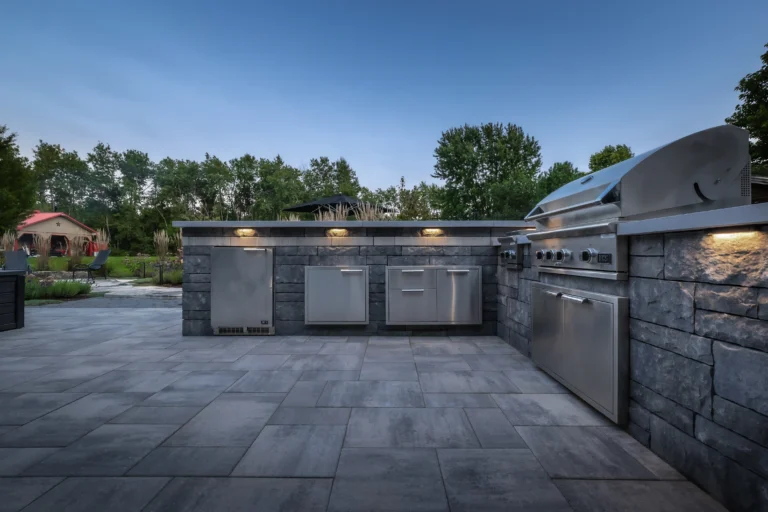
- Grill or cooking station
- The grill is usually the centre of the kitchen. Some homeowners choose a simple built-in grill, while others add side burners, griddles, smokers, or pizza ovens.
- Countertops
- Counter space is essential for prep, serving, and setting down trays. Popular materials include natural stone, concrete, porcelain, and other outdoor-rated surfaces.
- Storage
- Cabinets, drawers, and sealed storage help protect tools, serving pieces, and supplies from weather and pests.
- Refrigeration
- An outdoor-rated fridge can be helpful for drinks, ingredients, and entertaining. It also adds electrical requirements that need to be planned early.
- Sink and plumbing
- A sink makes cleanup easier, but it can also add plumbing, drainage, winterization, and permit considerations.
- Seating and dining areas
- Many outdoor kitchens include bar seating, nearby dining areas, or lounge spaces so the cook can stay part of the conversation.
- Lighting
- Task lighting helps with cooking, while ambient lighting makes the space more comfortable after dark.
- Shade or weather protection
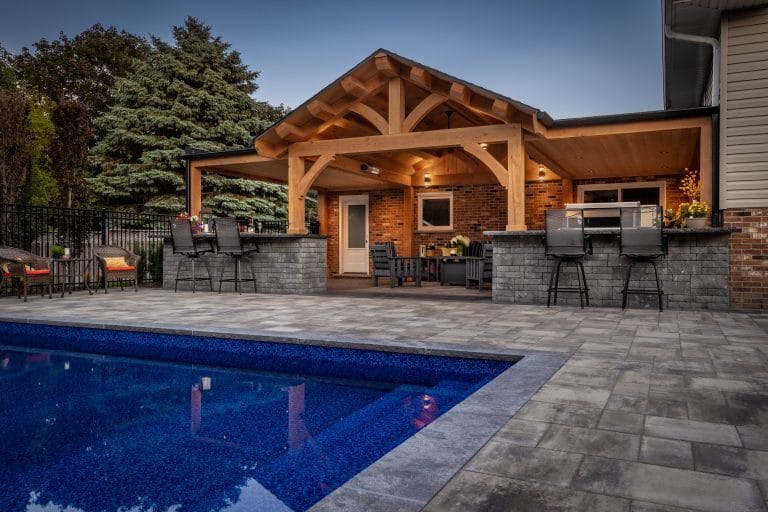
- Pergolas, pavilions, awnings, and roof structures can make the kitchen more comfortable and help protect finishes and appliances.

Outdoor Kitchen Cost by Project Type
The cost of an outdoor kitchen depends heavily on scope. A small grill station beside an existing patio is very different from a custom backyard kitchen built into a larger landscape construction project.
Use the ranges below as planning guidance. Final pricing depends on site access, grading, materials, utilities, appliances, and the level of customization.
| Outdoor Kitchen Type | Typical Budget Range | What It Usually Includes |
|---|---|---|
| Simple grill station | $10,000 to $18,000 | Built-in grill, basic counter space, limited storage, and a straightforward layout. |
| Mid-range outdoor kitchen | $18,000 to $35,000 | Grill, counters, storage, lighting, better materials, and possible refrigeration. |
| Custom outdoor kitchen | $35,000 to $50,000+ | Premium appliances, stone or porcelain surfaces, sink, fridge, gas, electrical, and more detailed hardscaping. |
| Full outdoor living kitchen | $50,000 to $80,000+ | Kitchen, covered structure, dining area, lighting, audio, heaters, custom stonework, and integration with a full backyard plan. |
If you already have a strong patio, good access, and nearby utilities, your cost may be easier to manage. If the kitchen requires a new patio, retaining walls, grading, drainage, long utility runs, or a roof structure, the budget can climb quickly.
Popular Outdoor Kitchen Layouts
The layout of your outdoor kitchen should match your available space, cooking habits, hosting style, and budget. It should also be planned around circulation, so people can move comfortably between the house, kitchen, dining area, pool, and seating zones.
Straight-Line Layout
A straight-line layout places the grill, counters, and storage along one run. It is usually the most efficient option for smaller spaces or side-yard patios.
This layout can also keep costs lower because it uses less structure, fewer corners, and a simpler utility path.
L-Shaped Layout
An L-shaped outdoor kitchen creates separate zones for cooking and prep. It gives you more counter space while still keeping the cook connected to guests.
This is a common choice for medium-sized patios and backyards where the kitchen sits along the edge of a dining or lounge area.
U-Shaped Layout
A U-shaped kitchen gives the most counter space and storage. It can work well for homeowners who cook outside often or host larger gatherings.
The tradeoff is cost and footprint. This layout needs enough space so the kitchen does not crowd the patio.
Island Layout
An island layout can create a social cooking space with seating around one side. It works best when there is room for clear movement on all sides.
This layout is often used in larger backyards where the kitchen is part of a broader entertaining area.
Galley Layout
A galley layout uses two parallel runs. It can be very functional in narrow spaces, but it needs enough aisle width so people are not squeezed between counters.
This layout can be useful when the kitchen sits between the house and a larger patio or pool area.
Factors That Influence the Cost of an Outdoor Kitchen
Outdoor kitchen cost is shaped by a few major decisions. Some are obvious, like appliance selection. Others are easier to miss, like drainage, frost movement, winter shutoffs, and how far utilities need to run.
Size and Layout
Size is one of the biggest cost factors. More length means more framing, cladding, counters, storage, labour, and surface area.
Layout also matters. Straight-line kitchens are usually more budget-friendly, while L-shaped, U-shaped, and island layouts often require more material and more detailed construction.
Before choosing a layout, think through how you will use the space. A smaller kitchen with the right prep area may serve you better than a larger kitchen with appliances you rarely use.
Materials and Durability
Outdoor materials need to handle sun, rain, freeze-thaw cycles, grease, food, and regular cleaning. This is where cheap choices can become expensive over time.
- Countertops: Natural stone, concrete, porcelain, and outdoor-rated surfaces vary widely in price and maintenance.
- Cabinetry: Stainless steel, masonry, polymer, and custom-built systems each have different costs and weather performance.
- Flooring: Pavers and hardscaping, natural stone, and concrete all affect the look, usability, and long-term durability of the area.
If your outdoor kitchen is part of a larger patio, pool, or seating plan, it is worth choosing materials that work with the full landscape, not just the kitchen itself.
Appliances and Features
Appliances are a major driver of outdoor kitchen cost. Built-in grills, fridges, side burners, sinks, ice makers, warming drawers, pizza ovens, and outdoor-rated storage can all add up quickly.
The best approach is to start with how you actually cook. If you mostly barbecue for family dinners, your must-haves may be simple. If you host often, extra refrigeration, serving space, lighting, and storage may be worth the investment.
Utilities: Plumbing, Electrical, and Gas
Utilities can change the budget more than homeowners expect. A natural gas line, electrical outlets, appliance circuits, lighting, plumbing, drainage, and winter shutoffs all need to be planned correctly.
Planning these connections early in the design phase can reduce surprises during construction. It can also help avoid cutting into finished patios or rebuilding work that was installed too soon.
In Ontario, fuel-related work should be completed by properly registered professionals. Homeowners can verify authorized fuel contractors through the TSSA Authorized Heating Fuel Contractors lookup. Electrical work should also be planned with Ontario Electrical Safety Code requirements in mind, and the Electrical Safety Authority explains when notifications and licensed contractors are required.
Covered vs. Uncovered
A covered outdoor kitchen can be more comfortable and may help protect appliances, finishes, and guests from sun and rain. It can also make the space feel more connected to the home.
Options such as pergolas, pavilions, and custom landscape carpentry add cost, but they can make the kitchen more usable. Uncovered kitchens are usually less expensive upfront, but they may need more weather-resistant materials and more frequent care.
For larger structures, permit requirements may apply. In Hamilton, for example, the city notes that accessory buildings must still meet zoning and applicable regulations even when a building permit is not required. You can review local guidance through the City of Hamilton accessory building information.
Lighting and Entertainment
Lighting improves safety, function, and atmosphere. Task lighting helps at the grill and prep areas, while pathway and ambient lighting make the whole backyard easier to use in the evening.
Entertainment features can also be included. Outdoor-rated TVs, speakers, smart controls, heaters, fans, and automation can make the area more flexible, but they also add electrical planning and product costs.
If you are planning a higher-end backyard, it may be worth reviewing options for landscaping technology for outdoor living spaces before construction begins.
Permits and Local Regulations
Permit requirements depend on your municipality and the scope of work. Plumbing, gas, electrical, roof structures, retaining walls, and grading changes can all trigger additional review.
Even when a permit is not required, zoning, setbacks, drainage, and safety requirements may still apply. This is one reason design matters before construction begins.

How to Keep Your Outdoor Kitchen Budget Under Control
A good outdoor kitchen does not need every possible appliance. It needs the right layout, enough prep space, durable materials, and smart planning.
Here are a few ways to make the budget work harder.
- Start with design before construction
- A proper design helps confirm the layout, appliance locations, utility runs, patio size, seating, and overall budget before work begins.
- Prioritize the features you will use most
- A great grill, useful counter space, and smart storage may matter more than adding every specialty appliance.
- Keep utilities practical
- Placing the kitchen closer to the home can sometimes reduce gas, electrical, and plumbing complexity.
- Build the patio correctly
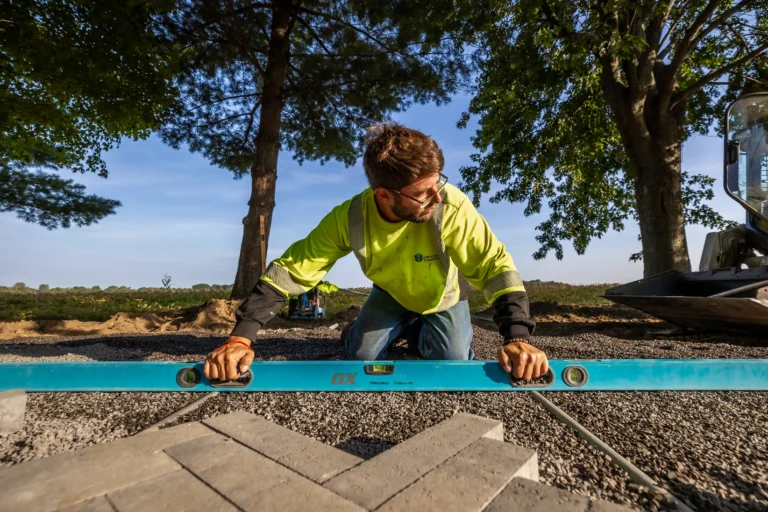
- The kitchen needs a stable surface and good drainage. Weak base preparation can lead to movement, settlement, and expensive repairs.
- Plan future upgrades
- If the full kitchen is not in the budget today, a design can allow for future appliances, lighting, shade, or seating without making the space feel pieced together later.
If you are still early in the process, it can also help to review broader backyard landscaping ideas before locking in the kitchen. Sometimes the best kitchen location only becomes clear once the full backyard layout is considered.
Is an Outdoor Kitchen Worth the Investment?
An outdoor kitchen can be worth the investment if it fits the way you live. For families who host often, cook outside regularly, or want a more functional backyard, it can become one of the most used features on the property.
The value is not only about resale. It is also about making the backyard easier to use day to day.
A kitchen is usually strongest when it is connected to other outdoor living features. That might include a dining patio, pool surround, fire feature, pergola, privacy planting, or a larger residential landscaping plan.
For homeowners in Burlington, Oakville, Ancaster, Hamilton, Dundas, Milton, Brantford, and nearby communities, outdoor kitchens can make the backyard feel more complete during Ontario’s warmer months. They also help define a clear gathering place for family and guests.
Outdoor Kitchens in Burlington and Oakville
Local site conditions matter. Lot size, access, grading, existing patios, pool location, fences, trees, and utility routes can all affect the design and final cost.
For homeowners planning outdoor kitchens in Burlington, the kitchen often needs to work with established neighbourhood lots, existing patios, and outdoor dining areas. In Oakville, many projects include a larger backyard plan with premium hardscaping, pool landscaping, and custom carpentry.
If you are planning an outdoor kitchen as part of a higher-end backyard, review the full approach to outdoor kitchens in Oakville and how the kitchen connects to the rest of the property.
Ensure a Successful Outdoor Kitchen Project
Designing an outdoor kitchen is an exciting opportunity, but the best results come from clear planning. The goal is not just to add a cooking area. The goal is to create a space that works with the rest of your backyard.
- Choose the right layout
- Select a layout that suits your space and lifestyle. Straight-line, L-shaped, U-shaped, island, and galley layouts all work in the right setting.
- Invest in durable materials
- Use outdoor-rated materials that can handle Ontario weather, cleaning, food prep, and regular use.
- Prioritize essential features
- Start with the features that matter most: grill, prep space, storage, lighting, and seating. Add extras only when they support how you will actually use the space.
- Consider multi-functional elements
- A counter can serve as prep space, buffet space, and casual seating. Built-in walls can define areas while supporting lighting, privacy, or planting.
- Plan utilities early
- Gas, water, drainage, and electrical decisions should happen before the patio and kitchen are built.
- Integrate lighting and shade
- Lighting extends evening use, while shade structures improve comfort during hot afternoons and light rain.
- Work with a professional designer
- Professional planning helps align the kitchen, budget, materials, utilities, and construction sequence. If you are comparing contractors, this landscape contractor checklist can help you ask better questions.

Frequently Asked Questions About Outdoor Kitchen Cost
How much does an outdoor kitchen cost in Ontario?
A professionally built outdoor kitchen in Ontario often costs between $10,000 and $50,000+. Simple grill stations can be closer to the lower end, while custom kitchens with premium appliances, utilities, stonework, lighting, and shade structures can cost more.
Is $20,000 enough for an outdoor kitchen?
Yes, $20,000 can be enough for a modest outdoor kitchen if the layout is simple and the site conditions are straightforward. The budget gets tighter if you need extensive hardscaping, long utility runs, custom cabinetry, plumbing, or premium appliances.
What is the most expensive part of an outdoor kitchen?
The most expensive parts are often the appliances, counters, cabinetry, utility work, and surrounding hardscaping. A covered structure can also add significant cost, especially if it needs permits, lighting, fans, heaters, or custom carpentry.
Can you build an outdoor kitchen on an existing patio?
Sometimes. The patio needs to be stable, level, properly drained, and able to support the kitchen components. If the existing patio was not built for that load or layout, it may need to be repaired, reinforced, or rebuilt.
Do outdoor kitchens need permits?
It depends on the scope and municipality. Plumbing, gas, electrical, roof structures, retaining walls, grading changes, and accessory structures may require permits or inspections. A design-build team can help review these requirements before construction begins.
Should an outdoor kitchen be covered?
A covered outdoor kitchen is not always required, but it can make the space more comfortable and protect appliances and finishes. The right choice depends on budget, sun exposure, wind, rain, and how often you plan to use the kitchen.
Key Takeaways
- Outdoor kitchen cost in Ontario typically ranges from $10,000 to $50,000+, with larger custom projects costing more.
- The biggest cost factors are size, layout, appliances, materials, utilities, shade structures, and site conditions.
- Designing the kitchen as part of the full backyard plan usually creates a better result than treating it as a standalone feature.
- Gas, electrical, plumbing, drainage, and permits should be reviewed early.
- A smaller, well-planned kitchen is often better than a large kitchen filled with features you rarely use.
Ready to Plan Your Outdoor Kitchen?
An outdoor kitchen is more than a backyard upgrade. It can change how your family cooks, hosts, relaxes, and uses the yard throughout the warmer months.
Whether you are imagining a simple built-in grill station or a complete outdoor living space with custom stonework, shade, lighting, and seating, Creative Concepts Landscapes can help you plan the project properly from the start.
Our team designs and builds outdoor kitchens, patios, pool landscapes, carpentry features, and complete backyard transformations across Burlington, Oakville, Hamilton, Dundas, Ancaster, Milton, Brantford, and surrounding areas.
Explore our landscaping projects for inspiration, or contact Creative Concepts Landscapes to start planning your outdoor kitchen and backyard project.