

Want more privacy in your backyard without feeling boxed in by fencing everywhere?
In Burlington and Oakville, vegetation can do a lot of heavy lifting.
The trick is choosing plants that work with our climate, lot sizes, and local bylaws.
This guide walks through practical ways to get more privacy using trees, hedges, shrubs and grasses.
The focus is on options that grow well in southern Ontario and fit typical Halton backyards.

Start With Your Privacy Goals
Before you pick a plant, get clear on what you want to screen.
This helps you avoid planting the wrong thing in the wrong place.
What are you trying to block?
Make a quick list of your problem views.
Common ones in Burlington and Oakville include second storey windows, neighbours’ decks, and views from laneways or parks behind the house.
If noise from a road or parking lot is an issue, you may need taller trees with denser foliage.
If it is mainly visual privacy around a sitting area, shrubs and grasses may be enough.

Year round privacy or summer only
Evergreen hedges give privacy in every season.
Deciduous shrubs and small trees lose their leaves but still give good screening from late spring to fall.
If your main concern is around the pool, hot tub, or dining area, you may be fine with privacy that lines up with your outdoor season.
If you face a busy street or walkway, year round evergreens may be worth the investment.
Space, sun and soil
Measure how much depth you can give up along the fence.
A mature cedar hedge can eventually be over a metre deep, while ornamental grasses might stay under 60 centimetres.
Most privacy plants prefer full sun or at least half a day of sun.
Between two houses the light can be limited, so shade tolerant species like yew and some native shrubs are useful.
Clay soil is also common in newer subdivisions.
Good planting technique and mulching are important, especially for cedars and larger trees.
Evergreen Workhorses For Year Round Screening
Evergreens are still the backbone of privacy planting in southern Ontario.
Here are some of the most reliable choices for Burlington and Oakville.
Eastern white cedar hedges
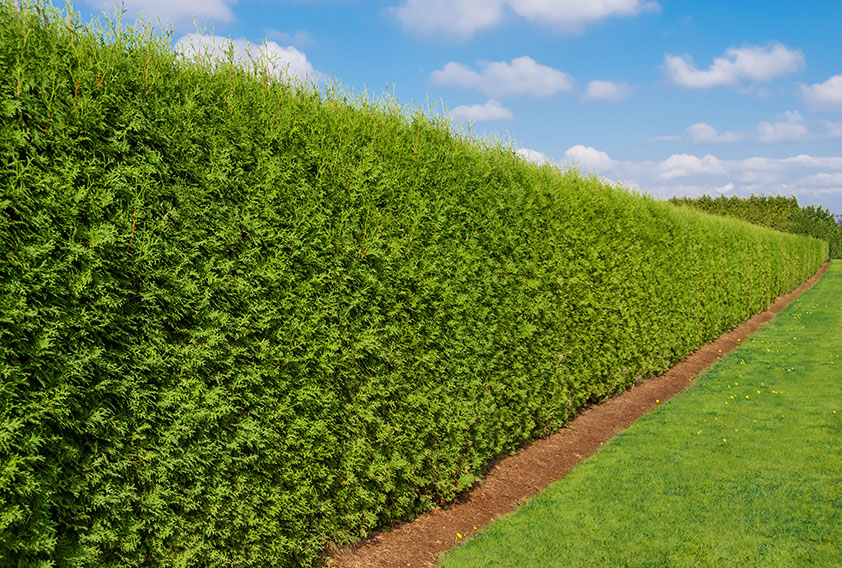
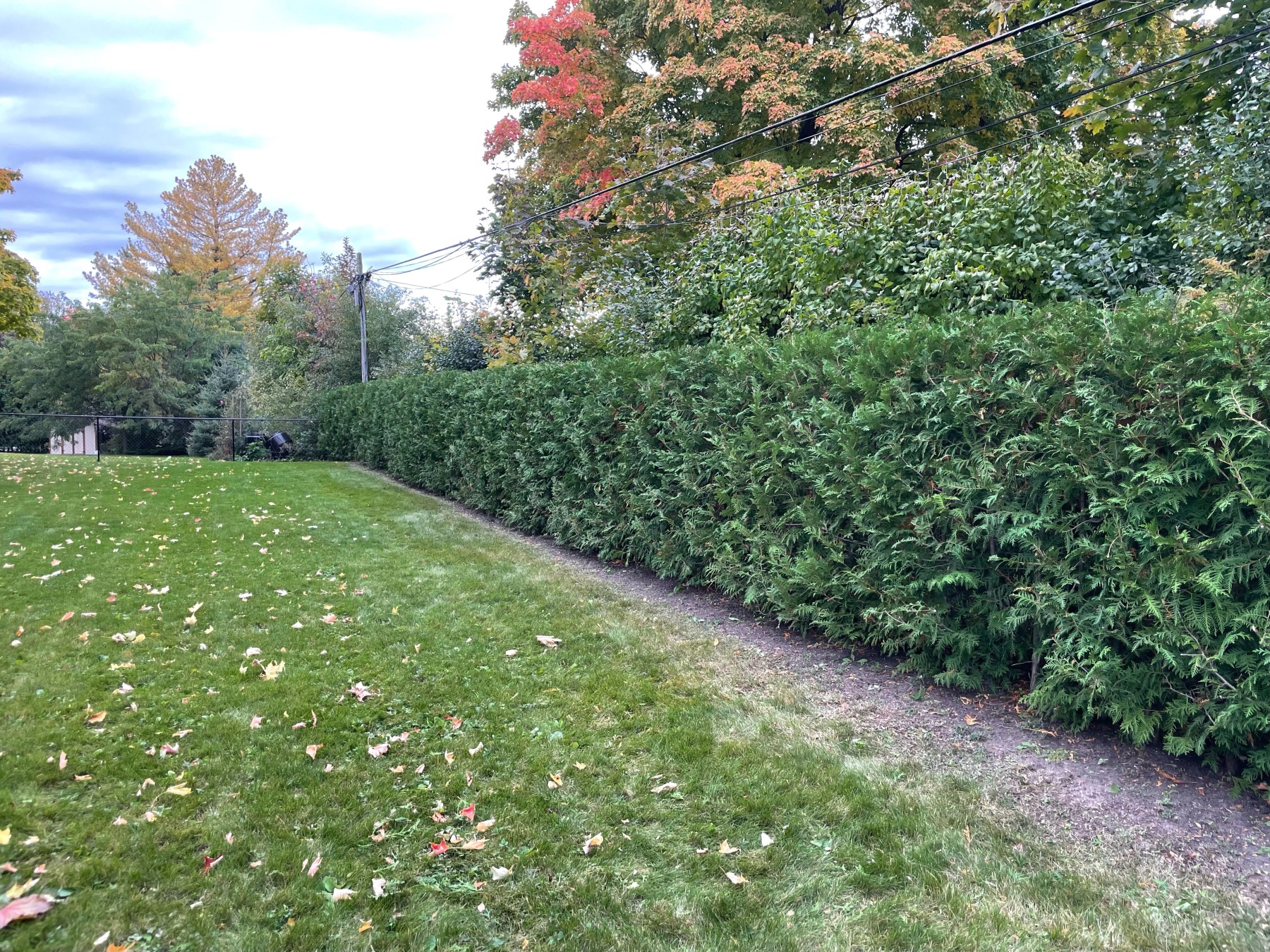
Eastern white cedar (Thuja occidentalis) is one of the classic privacy trees in Ontario.
It is native, hardy, and knits together into a dense green wall when planted in a row.
For a hedge, they are often planted about 45 to 60 centimetres apart.
Left alone they can grow quite tall, but in backyards they are usually trimmed around 2.5 to 3 metres.
White cedar prefers moist but well drained soil and full sun.
It will tolerate many southern Ontario conditions, which is why so many local nurseries and privacy tree suppliers recommend it.
If you choose a long cedar hedge, it is worth planning it as part of a proper landscape design.
A thoughtful plan helps you allow for access paths, gates and irrigation from the start.
Columnar cedars like ‘Smaragd’
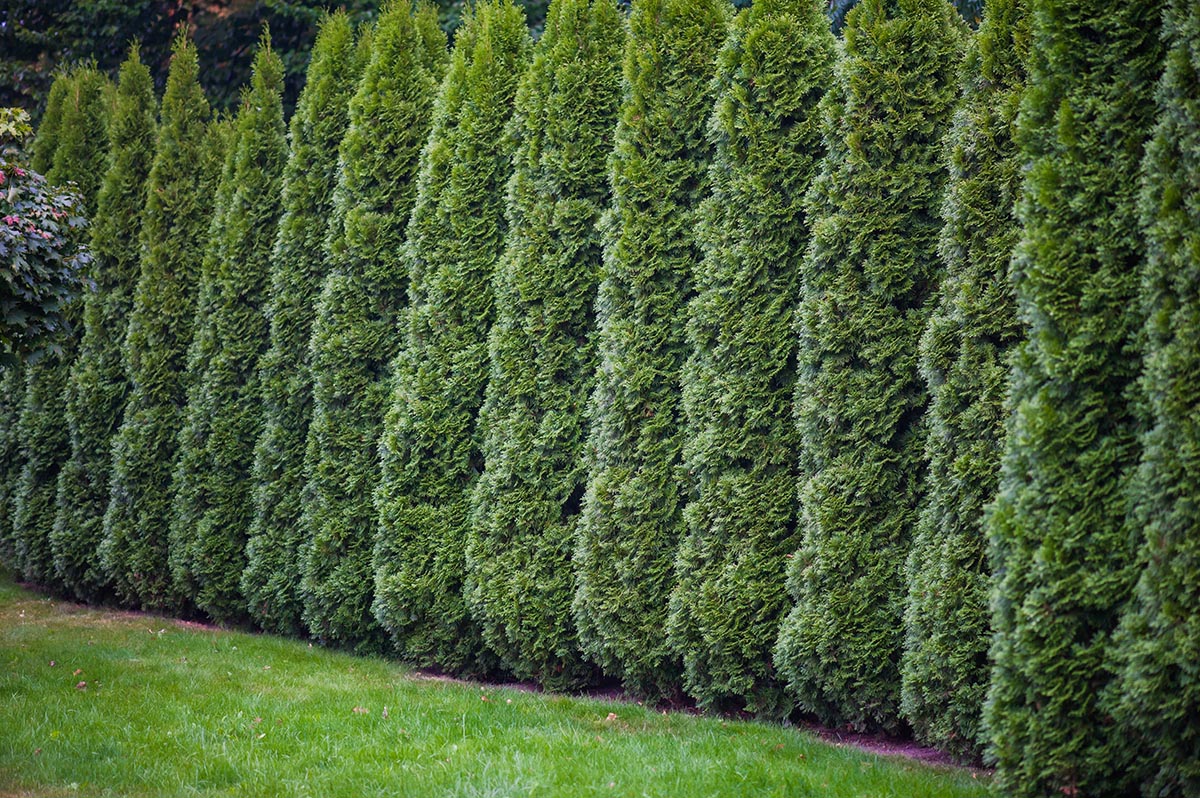
You will also see Emerald cedar, often sold under the Latin name Thuja occidentalis ‘Smaragd’, in many Burlington and Oakville yards.
These stay narrower than standard white cedar and have a tight, conical shape.
They are ideal where space is tight around a deck or patio.
Think of them as a series of green pillars framing a space, rather than a full wall of privacy.
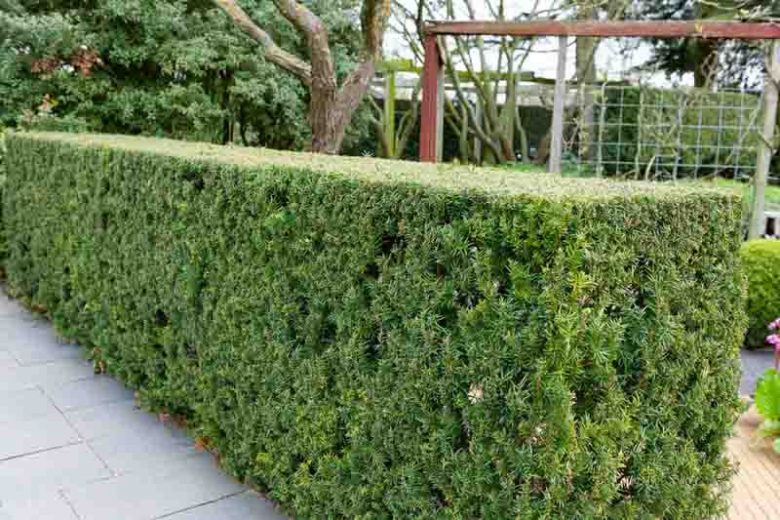
Yew hedges for a tailored look
If you prefer something more formal, yews are a good option.
Taxus x media ‘Hicksii’ is a popular hedge variety, with upright growth and dark green needles.
Yews tolerate shade better than many evergreens.
They can work well between houses or near north facing walls where cedars may thin out.
They are slower growing than cedars, which means a bit more patience at the start.
In return you get a long lived, refined hedge that can be clipped into clean lines around modern hardscapes.
Spruce screens for deeper lots
On larger properties, spruce can create serious screening and wind protection.
Common choices include Norway spruce (Picea abies), white spruce (Picea glauca) and Serbian spruce (Picea omorika).
These trees can reach 12 metres or more at maturity.
They fit best at the back of deep lots, backing onto roads, ravines or commercial areas.
Because they take real space over time, it is smart to involve a landscaping contractor if you are considering a line of spruce.
Good spacing and alignment will prevent future crowding and shading problems.

Layered Privacy With Shrubs And Small Trees
Not every backyard needs a wall of cedars.
Layering shrubs, small trees and grasses gives privacy with more colour and seasonal change.
Native serviceberry and other multi stem trees
Serviceberries are excellent for soft privacy in Halton.
They are native, support wildlife, and look good in three seasons.
Amelanchier canadensis and Amelanchier laevis are both used here as multi stem shrubs or small trees.
They reach roughly 4.5 to 6 metres tall, with white spring flowers, edible berries, and strong fall colour.
You can plant a loose row of serviceberries a metre or two off the fence for a relaxed privacy screen.
Resources like Landscape Ontario’s serviceberry overview and the Ontario government’s serviceberry page are helpful if you want to read more before you commit.
Other native shrubs that work well in informal screens include red osier dogwood (Cornus sericea), nannyberry viburnum (Viburnum lentago), and ninebark (Physocarpus opulifolius).
Groups like BurlingtonGreen share guides and sources for local native plants that are worth exploring.

Flowering hedges
Many families prefer privacy that also feels lush and colourful.
Flowering hedges are a good option in that case.
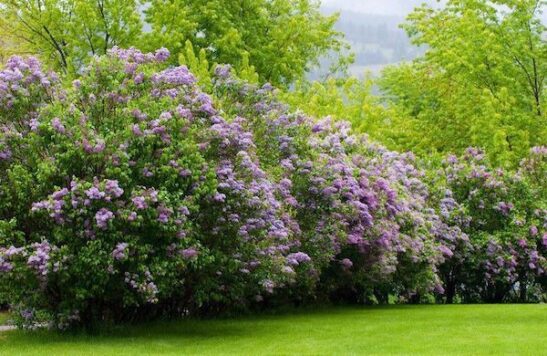
Common choices in Burlington and Oakville include common lilac (Syringa vulgaris) and panicle hydrangea (Hydrangea paniculata).
These typically grow 2 to 3 metres tall and give dense cover in leaf from late spring into fall.
They work very well along side yards, around dining terraces, and beside hot tubs.
You can underplant them with perennials or grasses to soften the base and help with soil health.
Tall ornamental grasses for tight spaces
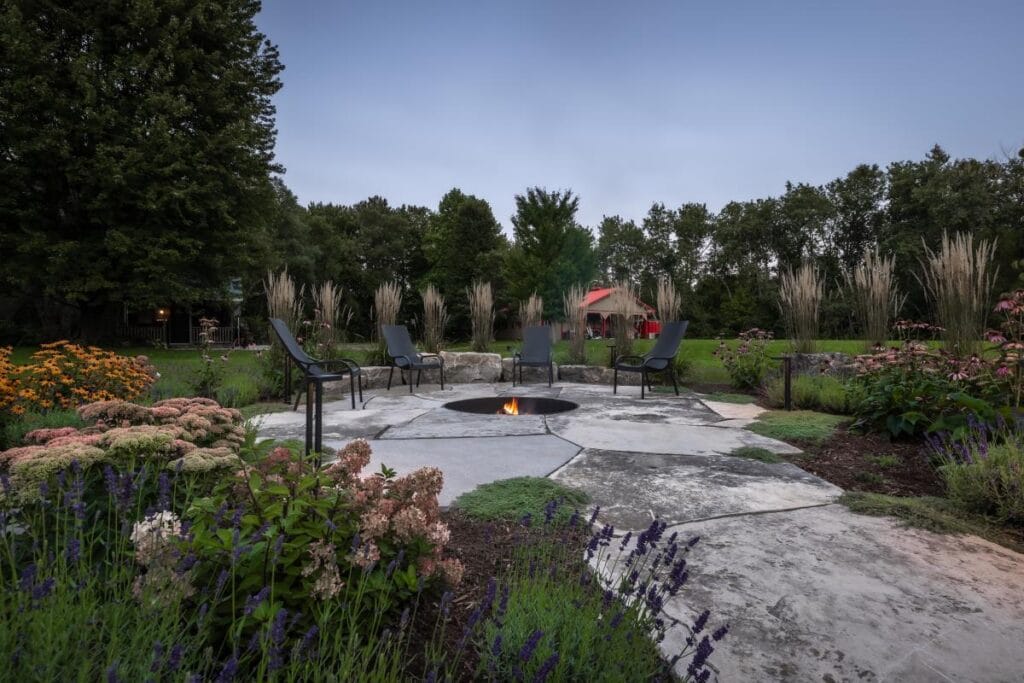
Ornamental grasses are underrated privacy tools, especially in narrow Burlington and Oakville lots.
One of the best known is Calamagrostis x acutiflora ‘Karl Foerster’, often called Karl Foerster reed grass.
It grows in narrow clumps, roughly 1.2 to 1.8 metres tall, and is hardy to Canadian Zone 3.
It likes full sun, tolerates many soil types including clay, and needs only one cut back each spring.
Planted in rows along a fence, this grass can give a surprising amount of visual privacy with very little maintenance.
Local nurseries and suppliers often describe it as a strong choice for screens and backdrops in small gardens.
Switchgrass, known as Panicum virgatum, is another good tall, clumping grass for more natural planting styles.
It is native to North America and does well in sunny, well drained spots.
Blending Plants With Structures
Most of the best privacy solutions mix vegetation with built elements.
This is where thoughtful landscape construction makes a big difference.
Fences and screens as a base layer
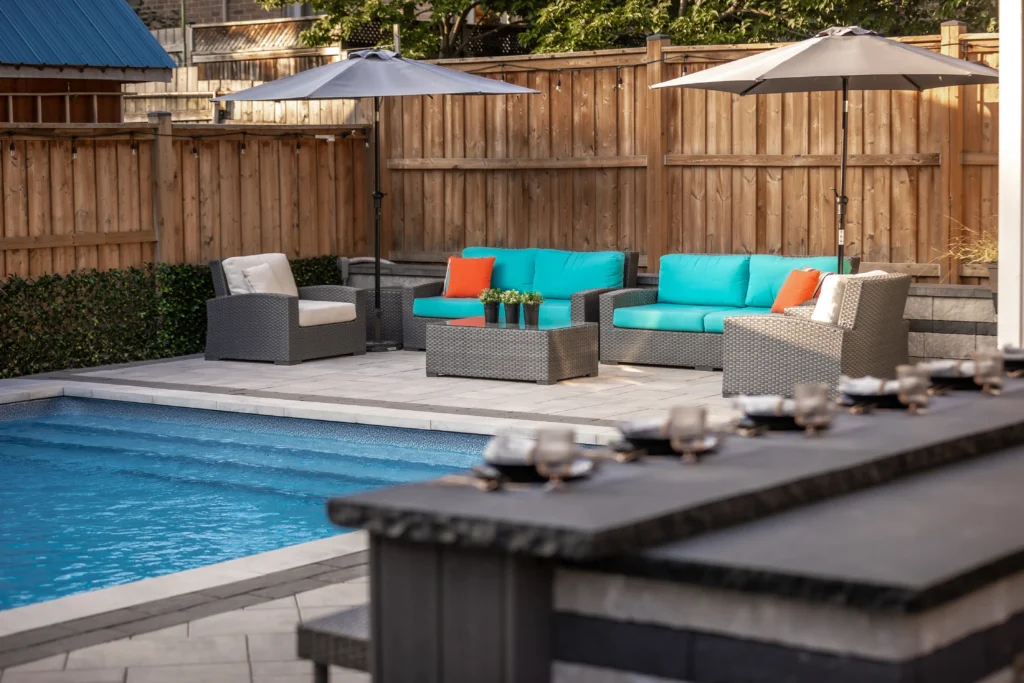
In many Burlington and Oakville neighbourhoods you already have a standard wood fence.
Plants can then add height, soften the look, and fill gaps.
Trellises or privacy screens near sitting areas can be combined with climbing plants like Clematis or Hydrangea anomala subsp. petiolaris for vertical greenery.
A narrower bed that mixes a few shrubs and grasses in front of the screen can feel more interesting than a single row of cedars.
Pergolas, pavilions and overhead cover
Where neighbours have second storey views right into your space, overhead structure helps.
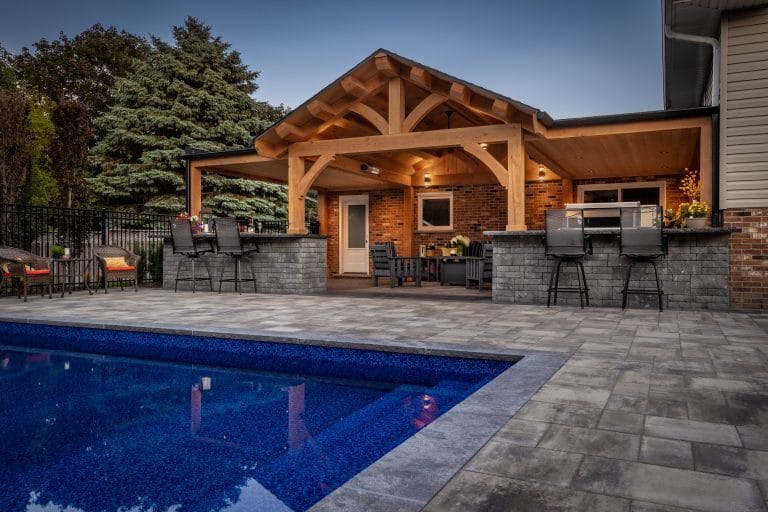
Pergolas or covered lounges near the house, combined with vines and nearby planting, can create human scale privacy where you actually sit.
If you are planning structures along with planting, it is helpful to talk through the entire layout with a landscape design professional.
That way the posts, footings, drainage and plant beds work together instead of competing for space.

Local Considerations For Burlington And Oakville
Climate and plant hardiness
Burlington and Oakville are generally in Plant Hardiness Zone 6b.
This means most plants hardy to Zone 5 or colder will be comfortable here.
Evergreens like eastern white cedar, native spruces and many ornamental grasses handle our winters well when planted correctly.
Spring and fall are usually the best seasons for planting hedges and trees, since cooler temperatures and moisture help roots establish.

Tree bylaws and property lines
Before you remove or heavily prune large trees, it is smart to check local rules.
The City of Burlington has a Tree Protection and Enhancement Policy with bylaws that cover trees on private property as well as public areas.
Oakville and Halton Region also provide guidance on planting and protecting trees in urban areas.
Local groups like BurlingtonGreen encourage residents to choose native species and offer links to the Ontario Tree Atlas and planting guides.
If you are planting right on or near the property line, it is worth having a quick conversation with your neighbour.
That can prevent future conflict about shading, root spread or hedge height.
Planning, Installation And Long Term Care
Planting a privacy hedge or layered screen is not a one season project.
It is a small system that needs planning and simple ongoing care.
A good first step is a clear concept plan for your yard that includes privacy, circulation and main use zones.
This is where working with an experienced landscaping company as your guide can save trial and error, especially on projects that also involve patios, pools or structures.
Once the design is set, quality installation and proper soil preparation matter.
Creative Concepts can support with construction, or you can handle simpler portions yourself and bring in a landscaping contractor for the heavier work.
After that, routine landscape maintenance keeps your privacy planting looking clean and healthy.
Cedar and yew hedges usually need one to two trims per year, while ornamental grasses and many shrubs just need a yearly cutback and some seasonal tidy ups.
If you prefer to focus on family time and still enjoy a private, green backyard, you can always hand those tasks off to a maintenance team.
Whether you tackle parts of it yourself or rely fully on professionals, the key is the same.
Choose plants that fit your site, give them room to grow, and think in layers rather than single rows.
That is how you get long lasting privacy that feels natural, suits Burlington and Oakville, and works with the rest of your outdoor space.