
Winter brings a picturesque blanket of snow, but the traditional methods of commercial snow removal often come at a cost to the environment. Rock salt and chemical de-icers, commonly used to clear roads and sidewalks, pose significant threats to our ecosystems. In this blog, we explore the environmental impact of conventional snow removal and delve environmentally friendly snow removal methods that can make winter more sustainable.
The Environmental Impact of Conventional Snow Removal (VIDEO)
Use of Rock Salt and Chemical De-Icers
Rock salt, or sodium chloride, is a staple in snow removal, but its effects extend beyond melting ice. As it dissolves, it can infiltrate the soil, leading to long-term damage. Chemical de-icers, while effective, often contain harmful substances that can contaminate water sources and harm vegetation.
Impact on Soil, Water, and Vegetation
The excessive use of salt and chemical de-icers can disrupt the balance of soil nutrients, rendering it inhospitable to plant life. Runoff from melting snow can carry these pollutants into nearby water bodies, affecting aquatic ecosystems and compromising water quality.
Impact on Wildlife and Pets
The impact of traditional snow removal methods extends to wildlife and pets. Animals may ingest salt or chemicals when foraging for food, leading to health issues. Pets can suffer from irritated paws or digestive problems if they come into contact with de-icers.
Environmentally friendly Snow Removal Methods

Mechanical Methods
Embracing technological advancements in snow removal equipment can significantly reduce environmental impact. Electric and hybrid snow blowers offer efficient alternatives to traditional gas-powered counterparts, emitting fewer pollutants and reducing the reliance on fossil fuels.
Heated Hardscaping and Smart Sensors
Innovative technologies are transforming the landscape of snow removal. Heated pavements use electrical or hydronic systems to melt snow, reducing the need for external de-icers. Smart sensors can detect temperature changes and precipitation, enabling more efficient and targeted use of snow removal resources.
Sand and Gravel
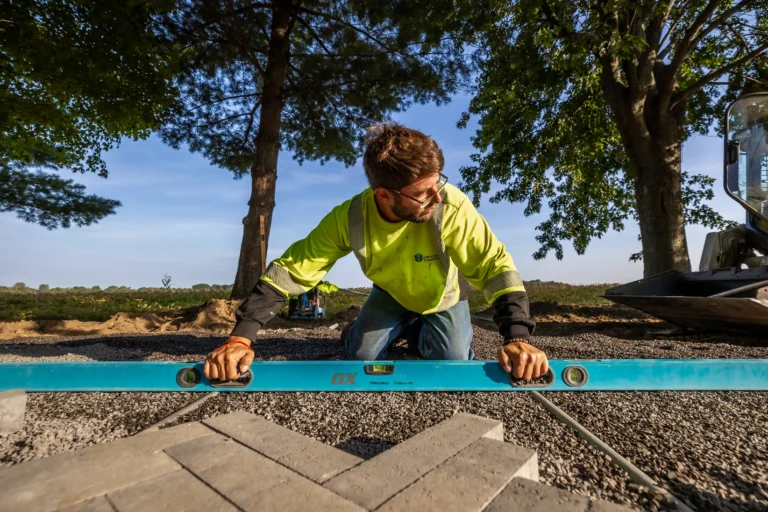
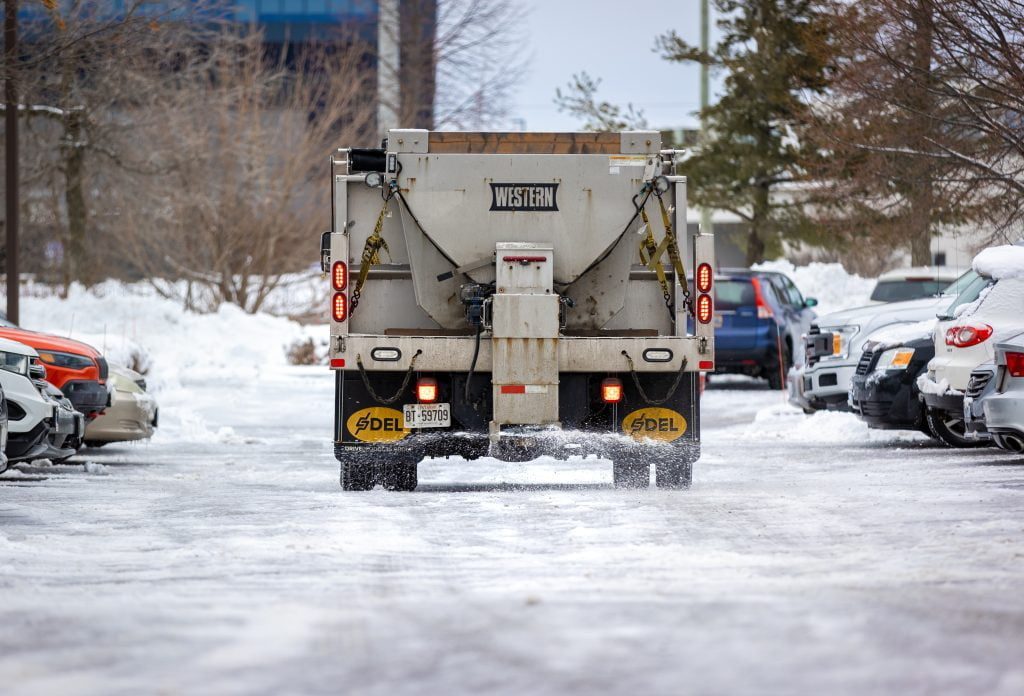
Sand and gravel, often overlooked in winter management, serve as environmentally friendly alternatives to traditional de-icing methods. Applied on icy surfaces, they provide traction, enhancing safety without the environmental impact of salt-based solutions. Unlike chemical de-icers, sand and gravel pose no harm to soil, water, or vegetation, making them a sustainable choice. Their use minimizes the risk of runoff pollution, offering a responsible and efficient approach to winter management that aligns with eco-conscious practices.
Natural De-icers
There are several natural alternatives to road salt such as salt free de-icer, pickle brine, urea, alfalfa meal, vinegar, and our liquid beet juice. We have found that liquid beet juice to be the most effective and it has gained traction for its effectiveness in combating ice without the environmental drawbacks of traditional de-icers. Let’s delve into the properties that make liquid beet juice a game-changer in sustainable snow removal.
The Power of Liquid Beet Juice in Snow Removal (VIDEO)
How Liquid Beet Juice Works as a De-Icer
Derived from beets, this liquid solution contains compounds that lower the freezing point of water, facilitating the melting of ice on roads and sidewalks. Unlike conventional salt-based de-icers, liquid beet juice doesn’t introduce harmful chemicals into the environment. It operates in a way that is both efficient and environmentally responsible.
Benefits of Liquid Beet Juice
Environmental Impact
Liquid beet juice stands out for its minimal environmental impact. It boasts low toxicity, making it safer for soil, water, and vegetation. Its biodegradability ensures that its presence in the environment doesn’t linger, contributing to a more sustainable snow removal solution.
Effectiveness
Beyond its eco-friendly profile, liquid beet juice is remarkably effective in melting ice. It not only addresses existing icy conditions but also hinders the re-formation of ice, providing longer-lasting results. Its performance remains consistent across a range of temperatures, and is effective down to -32 degrees celsius. Typical road salt becomes ineffective below -20 degrees celsius.
Cost-Effectiveness
Its long-lasting effects reduce the need for frequent reapplication, making it a potentially more economical choice compared to traditional de-icers. As communities seek both sustainability and efficiency, the cost-effectiveness of liquid beet juice becomes an attractive feature.
Staining Concerns and Liquid Beet Juice
While the use of traditional salt for de-icing can lead to unsightly stains on roads, sidewalks, and infrastructure, liquid beet juice offers a cleaner alternative. One of the notable advantages is its reduced potential for staining. Unlike salt, liquid beet juice does not leave behind persistent, visually unappealing marks on surfaces. This characteristic makes it an aesthetically pleasing choice for municipalities and property owners who prioritize the appearance of their infrastructure.
Protection of Surroundings: Liquid Beet Juice vs. Salt
Traditional salt is known for its corrosive effects on infrastructure, particularly on metal surfaces such as bridges and vehicles. Liquid beet juice, on the other hand, poses a significantly lower risk of corrosion. Liquid beet juice is gentle on concrete and vegetation compared to salt. Salt can contribute to the deterioration of concrete structures and harm nearby plants.
Liquid Beet Juice and LEED Certification
For properties seeking Leadership in Energy and Environmental Design (LEED) certification, the choice of de-icing materials plays a role in sustainable practices. The environmentally friendly nature of liquid beet juice aligns with LEED principles, contributing to points in categories such as Sustainable Sites and Materials and Resources. Municipalities and property owners using liquid beet juice in their snow removal strategies can showcase their commitment to sustainable practices, an essential criterion for LEED certification.
How is the Beet Juice Applied?
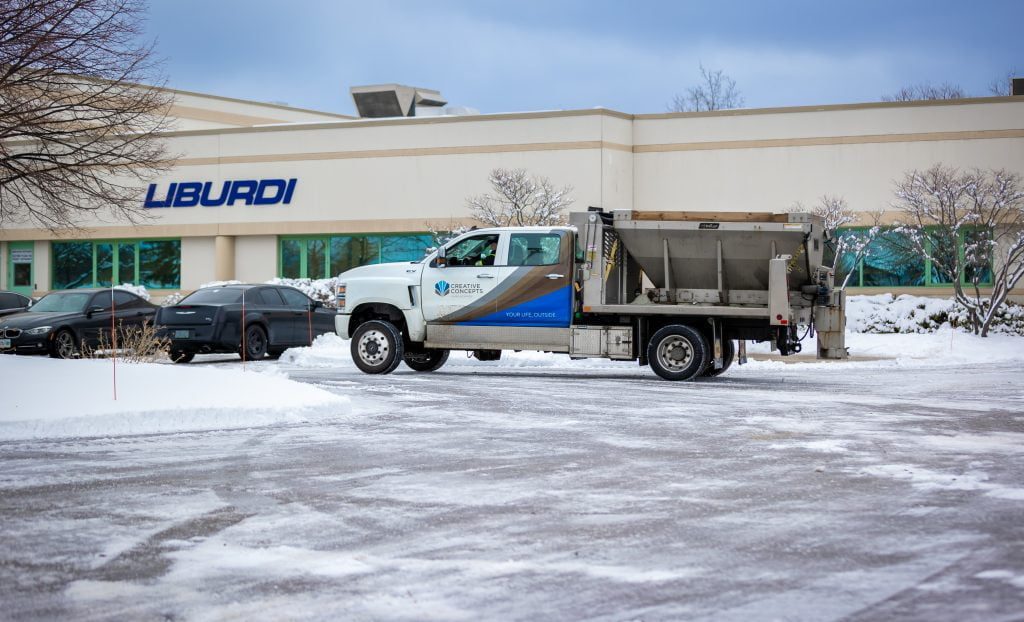
The application of beet juice de-icer involves a straightforward and effective process. Liquid beet juice is typically sprayed onto road surfaces using specialized equipment, similar to traditional liquid de-icers. Municipalities and snow removal professionals utilize tanker trucks or specially designed spray systems that evenly distribute the liquid beet juice across roadways, sidewalks, and other targeted areas.
The application process is similar to that of traditional brine solutions, where the liquid is dispersed before snowfall or icy conditions to create a preemptive barrier. The liquid beet juice, with its unique properties derived from beets, forms a thin layer on the road surface, lowering the freezing point of water and preventing the adherence of ice. This proactive approach aids in preventing ice accumulation and makes subsequent snow and ice removal more manageable.
One advantage of liquid beet juice is its ability to adhere to road surfaces, providing a longer-lasting effect compared to traditional salt-based de-icers. This adherence minimizes the need for frequent reapplication, contributing to its cost-effectiveness and efficiency in winter management.
Overall, the application of beet juice de-icer aligns with established practices in liquid de-icing, offering a sustainable and innovative solution for combating winter weather challenges on roadways and pedestrian areas.
Let’s Be Green This Winter

As winter approaches, the need for effective snow removal is inevitable. However, by embracing environmentally friendly snow removal and de-icing methods, we can mitigate the damage traditionally associated with winter maintenance.
Whether through the use of innovative technologies, community initiatives, or simple do-it-yourself approaches, each step towards greener snow solutions contributes to a more sustainable and resilient future.
Contact Creative Concepts today to learn about Environmentally Friendly Snow Removal!