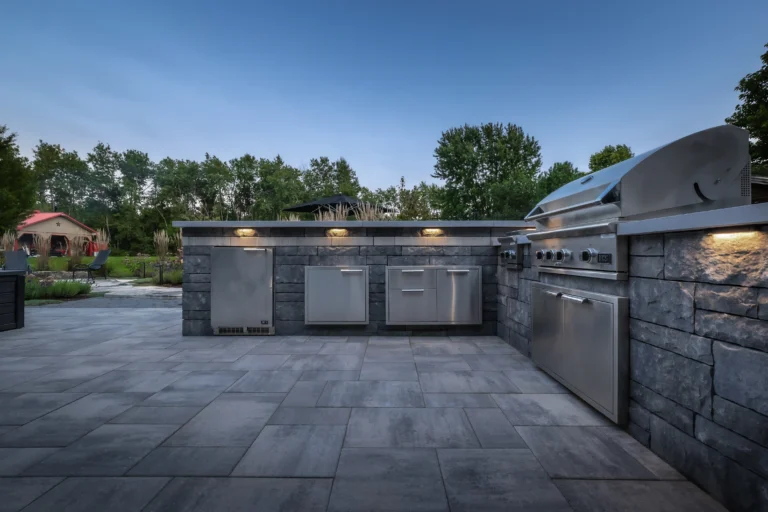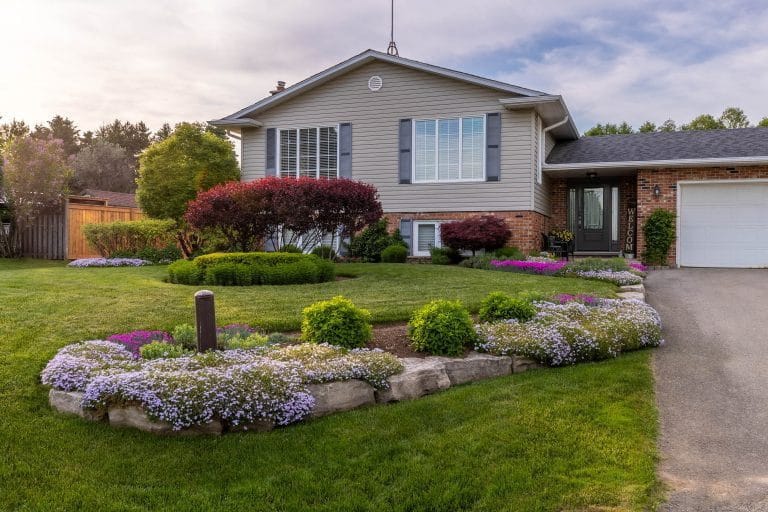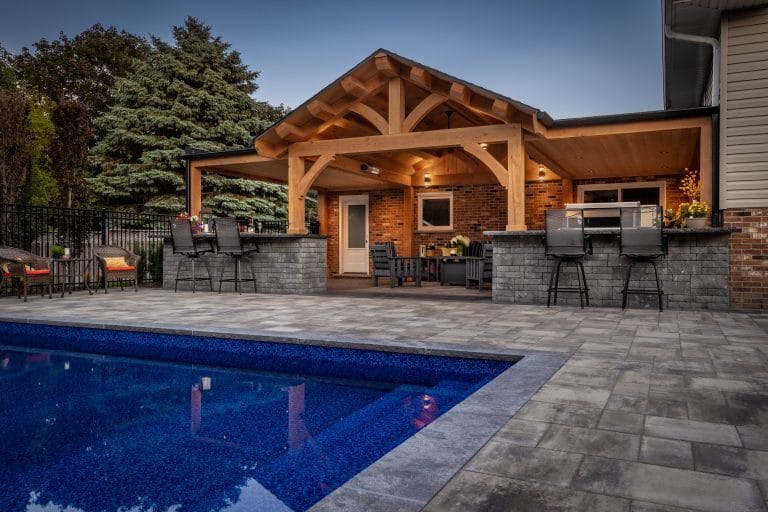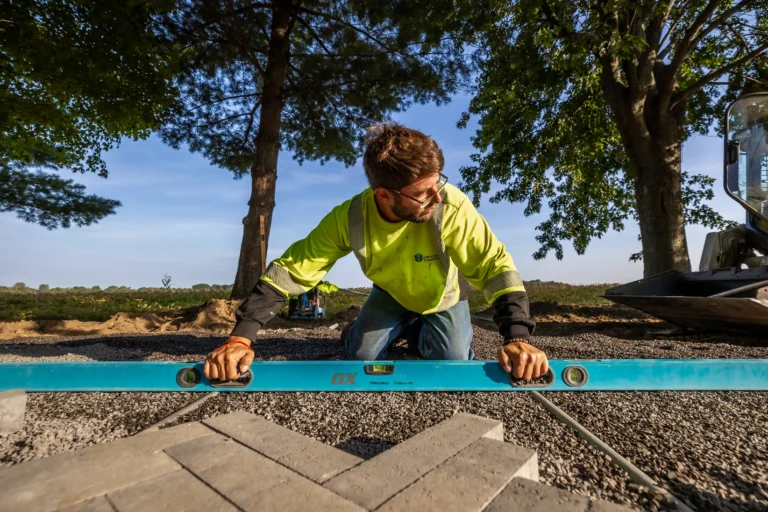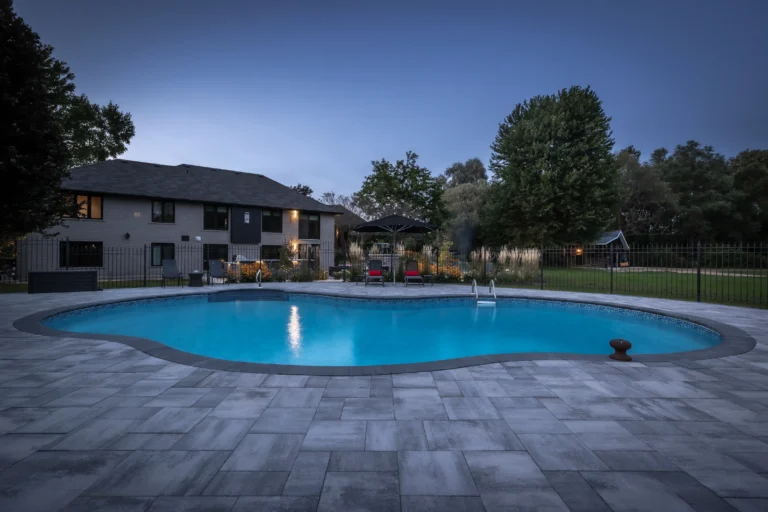


The benefits of hardscaping go well beyond appearance. Patios, walkways, steps, retaining walls and other built features can make an outdoor space easier to use, improve movement through the yard and create a practical framework for planting, lighting and drainage.
For Ontario homeowners, good hardscape design must also account for winter conditions, soil movement, grading and water flow. The value comes from how the entire system is planned and built, not simply from covering more of the yard with stone.
Article Summary
Hardscaping adds the durable, non-living structure that helps a landscape function. When it is properly designed, it can create usable outdoor rooms, improve access, control grade changes, reduce mud and support long-term curb appeal.
- Hardscaping includes patios, walkways, driveways, steps, retaining walls, pool surrounds and built-in outdoor features.
- Proper grading and base preparation matter as much as the surface material.
- Hardscaping can support drainage, but poorly planned paving can increase runoff or direct water toward the house.
- The best landscapes balance hard surfaces with trees, gardens, lawn and other softscape elements.

What Is Hardscaping?
Hardscaping refers to the built, non-living parts of a landscape. These features create surfaces, edges, changes in elevation and outdoor structures that shape how people move through and use the property.

Common hardscape features include:
- Interlocking stone, natural stone or concrete patios
- Walkways, garden paths and front entrance landings
- Driveways and driveway borders
- Steps, stairs and transitions between grades
- Retaining walls, seat walls and raised planters
- Pool decks and pool surrounds
- Fire pits, outdoor fireplaces and built-in seating
- Stone edging, curbs and garden borders
Decks, fences, pergolas and privacy screens are also built landscape features, although Creative Concepts generally groups them under landscape carpentry. On larger projects, these features should still be coordinated through the same landscape design so that materials, elevations and circulation work together.
Benefits of Hardscaping for Ontario Homeowners
1. It Creates More Usable Outdoor Space
A lawn may look open, but it does not always provide a comfortable surface for dining, cooking or gathering. A properly sized patio creates a stable place for furniture and gives the backyard a clear purpose.
Hardscaping can also turn awkward areas into useful zones. A level terrace, pool deck or small seating area can make a sloped or narrow property easier to enjoy.

2. It Improves Access and Circulation
Walkways and steps create clear routes between doors, driveways, patios, pools and garden areas. This reduces worn paths through the lawn and helps people move through the property without stepping over uneven ground.
Good circulation is especially important around front entrances, side yards and pools. The width, slope, surface texture, lighting and landing locations should be planned around how the route will actually be used.

3. It Defines Outdoor Rooms
Hardscape edges help organize a yard into areas for dining, cooking, sitting, swimming and gardening. Changes in material, elevation or direction can separate these zones without closing them off.
This structure also helps the planting feel intentional. Trees, shrubs and garden beds can soften walls and patios while framing views and creating privacy.

4. It Can Support Better Drainage and Grade Management
Hardscaping can help manage a difficult slope, stabilize changes in elevation and direct surface water toward an appropriate outlet. Retaining walls, steps, swales, drains and properly pitched surfaces often work together as part of the same plan.
However, hardscaping does not automatically improve drainage. Large impermeable surfaces can increase runoff if they are pitched incorrectly or added without considering downspouts, neighbouring grades and soil conditions. Homeowners dealing with standing water should review the full range of yard drainage solutions before choosing a surface.
Where site conditions allow, permeable paving can let rainwater pass through the surface into a prepared stone base. The Sustainable Technologies Evaluation Program explains that permeable pavement can reduce runoff and restore some natural infiltration when it is properly designed and maintained.

5. It Reduces Mud and Wear in High-Traffic Areas
Paths, landings and patio surfaces protect areas that would otherwise become compacted, muddy or thin. This is useful near gates, doors, sheds, pools and outdoor kitchens where people regularly cross the same section of lawn.
Hardscaping can reduce lawn maintenance in these zones, but it is not maintenance-free. Joints, drainage openings and edges still need occasional attention.

6. It Provides Durable Structure Through the Seasons
Stone, concrete and paver systems can perform well in Ontario when the excavation, base, compaction, edge restraint and drainage are appropriate for the application. The visible material is only one part of the finished system.
Freeze and thaw cycles can expose weak base preparation. Settlement, rocking units, open joints and drainage problems often begin below the surface, which is why a detailed scope of work matters when comparing contractors.
7. It Improves Curb Appeal and the Sense of Completion
A well-planned front walkway, driveway border or set of stone steps can make the entrance feel connected to the architecture of the home. In a backyard, coordinated patios, walls and planting can make the property feel complete rather than assembled one feature at a time.
Hardscaping may also support resale appeal, but no specific return is guaranteed. The strongest value comes from useful layouts, durable construction and materials that suit the home instead of short-lived trends.

Hardscape Features That Work Well in Ontario
Patios and Outdoor Living Areas
Patios can support dining, lounge seating, outdoor kitchens and fire features. The layout should allow enough room for furniture, circulation and doors without making the paved area larger than the household needs.
Walkways, Steps and Front Entrances
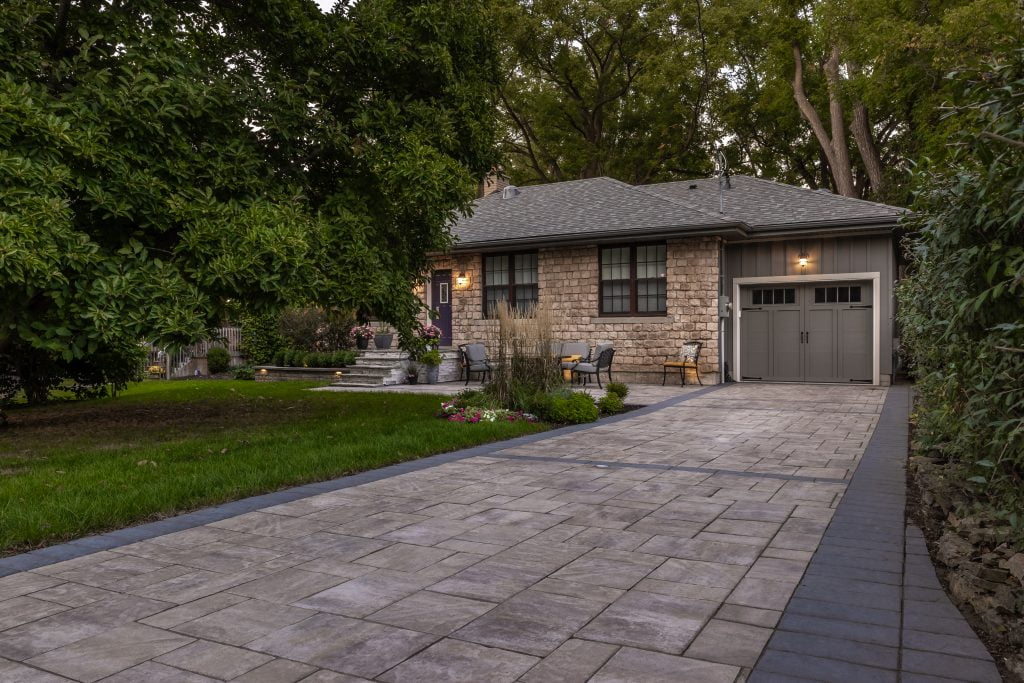
These features improve everyday access and have a large visual impact because they connect the street, driveway and front door. A specific example is Creative Concepts’ Hamilton interlock and hardscape project, which combines a driveway, walkway, retaining walls, gardens and lighting.
Retaining Walls and Terraces
Retaining walls can create usable levels and support planting on sloped properties. They also require careful attention to drainage, loading, height and nearby structures. The guide to retaining walls in Ontario explains the main design and planning considerations.
Driveways and Pool Surrounds
These surfaces carry heavier loads or frequent foot traffic, so the base design and material choice must suit the use. Pool surrounds also need comfortable surface temperatures, slip awareness, drainage and clean transitions to coping, lawns and planting beds.
Hardscaping and Softscaping Work Best Together
Hardscaping gives the landscape structure. Softscaping brings shade, seasonal change, habitat, texture and colour. Most properties need both.
Too much paving can make a yard feel harsh and may increase runoff or summer heat. Too little structure can leave furniture sitting on uneven ground and create unclear paths. A balanced plan uses only as much hardscape as the property needs, then integrates trees, gardens and lawn around it.
Planning a Hardscaping Project in Burlington or Southern Ontario
Before choosing pavers or stone, start with how the property works. For homeowners considering landscaping in Burlington, the following steps are especially important:
- Document existing grades and drainage. Identify low points, slopes, downspouts, window wells and where water currently travels.
- Plan the full layout. Consider future pools, structures, outdoor kitchens, gardens and access routes before building the first patio.
- Check municipal requirements. Burlington’s site alteration screening process includes work such as yard landscaping or infilling, patios, retaining walls and pools. Depending on the scope and site, a permit may be required.
- Protect trees. Excavation, grade changes, hardscaping and material storage near a regulated tree may trigger Burlington’s tree protection requirements.
- Arrange utility locates. Ontario One Call states that the excavator must request public utility locates before digging and should submit the request at least five business days in advance for a single property.
- Coordinate design and construction. A complete landscape construction plan should connect grading, drainage, base preparation, lighting, planting and built features.

How Much Maintenance Does Hardscaping Need?
Hardscaping usually needs less routine care than lawn or high-maintenance planting, but it still needs periodic inspection. The amount depends on the material, use, drainage and surrounding trees.
- Sweep and wash surfaces as needed.
- Remove weeds or moss before roots spread through joints.
- Keep drains, permeable joints and outlets clear.
- Watch for settlement, rocking units or separated edges.
- Repair failed joints or damaged units before the problem expands.
- Follow the material manufacturer’s guidance before sealing or using de-icing products.
Frequently Asked Questions About Hardscaping
What is the difference between hardscaping and landscaping?
Hardscaping covers built features such as patios, walkways, walls and steps. Landscaping is the broader term and includes hardscaping, planting, grading, drainage, lighting and ongoing care.
Is hardscaping low maintenance?
It can reduce mowing, mud and wear in busy areas. However, surfaces still need cleaning, joint care, drainage maintenance and occasional repairs.
Can hardscaping solve a drainage problem?
Sometimes, but only when the design addresses the source and destination of the water. Adding more hard surface without a drainage plan can make the problem worse.
Does hardscaping increase property value?
Useful and well-built outdoor features can improve curb appeal and make the property more attractive to some buyers. The result depends on design quality, condition, local demand and whether the project suits the home.
Do I need a permit for a patio or retaining wall?
Requirements vary by municipality, location and scope. Burlington homeowners should use the City’s site alteration screening checklist and confirm whether tree, grading, zoning, building or conservation approvals apply before work begins.
Key Takeaways
- The main benefits of hardscaping are better function, access, organization, durability and curb appeal.
- Drainage and base preparation are more important than surface appearance alone.
- Hardscaping works best when it is balanced with trees, gardens and other softscape features.
- Municipal approvals, tree protection and utility locates should be checked before excavation.
- A complete plan helps patios, walls, steps, planting and future features work together.
Plan Hardscaping Around the Whole Property
The best hardscaping projects begin with the property, the household and the long-term plan. A patio should connect naturally to the house. Steps should land where people need them. Walls should manage grades and water, not simply create another visual feature.
Creative Concepts Landscapes designs and builds coordinated outdoor projects across Burlington, Oakville, Hamilton, Dundas, Ancaster, Milton and Brantford. To discuss the layout, construction and long-term goals for your property, request a consultation.