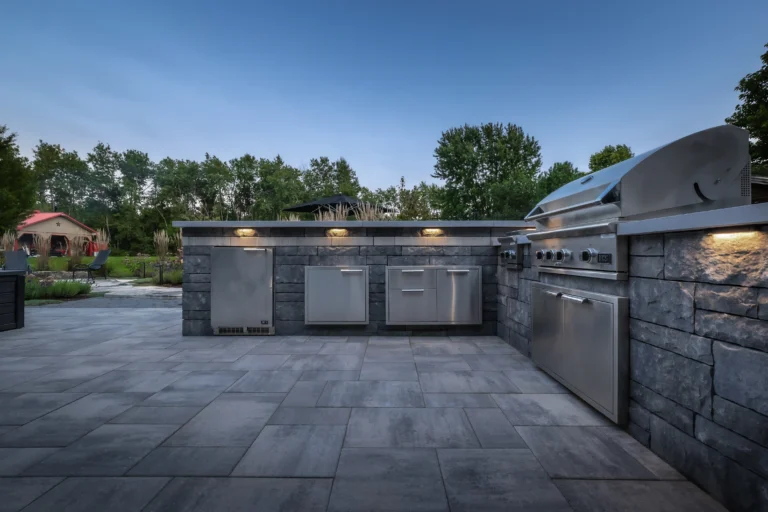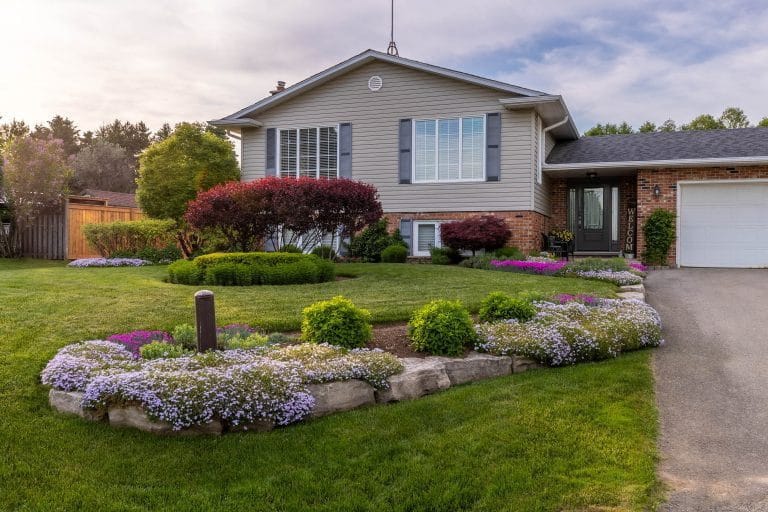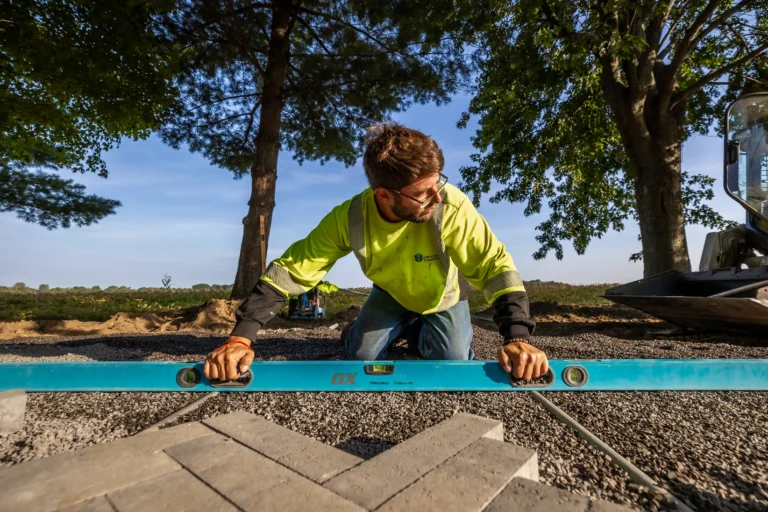


Permeable pavers can make a driveway, patio or walkway part of a property’s stormwater plan. Instead of sending every rainfall across a sealed surface, a properly designed permeable paving system lets water enter through open joints and move into layers of clear stone below.
Article Summary
Permeable pavers are designed to reduce surface runoff by storing, filtering and sometimes infiltrating rainwater beneath the pavement. They can work well in Ontario, but performance depends on the soil, slope, water table, base design, drainage outlet and ongoing maintenance.
What Are Permeable Pavers?
Permeable pavers are part of a paving system that allows rain and melting snow to pass through the surface. With most permeable interlocking concrete pavers, the concrete units are not porous. Water travels through wider joints filled with small, clean stone.
Below the pavers, an open-graded stone base creates structural support and temporary water storage. Depending on the site, water may soak into the native soil, leave through a perforated underdrain, or be detained and released through a controlled outlet.
This is an important distinction. Choosing a paver labelled “permeable” is not enough on its own. The entire system, including the joints, bedding, base, subgrade and drainage details, must be designed to move and manage water.
How Permeable Pavers Work
A conventional driveway or patio usually sheds water across its surface. Permeable paving accepts water at the surface and directs it into a stone reservoir below.
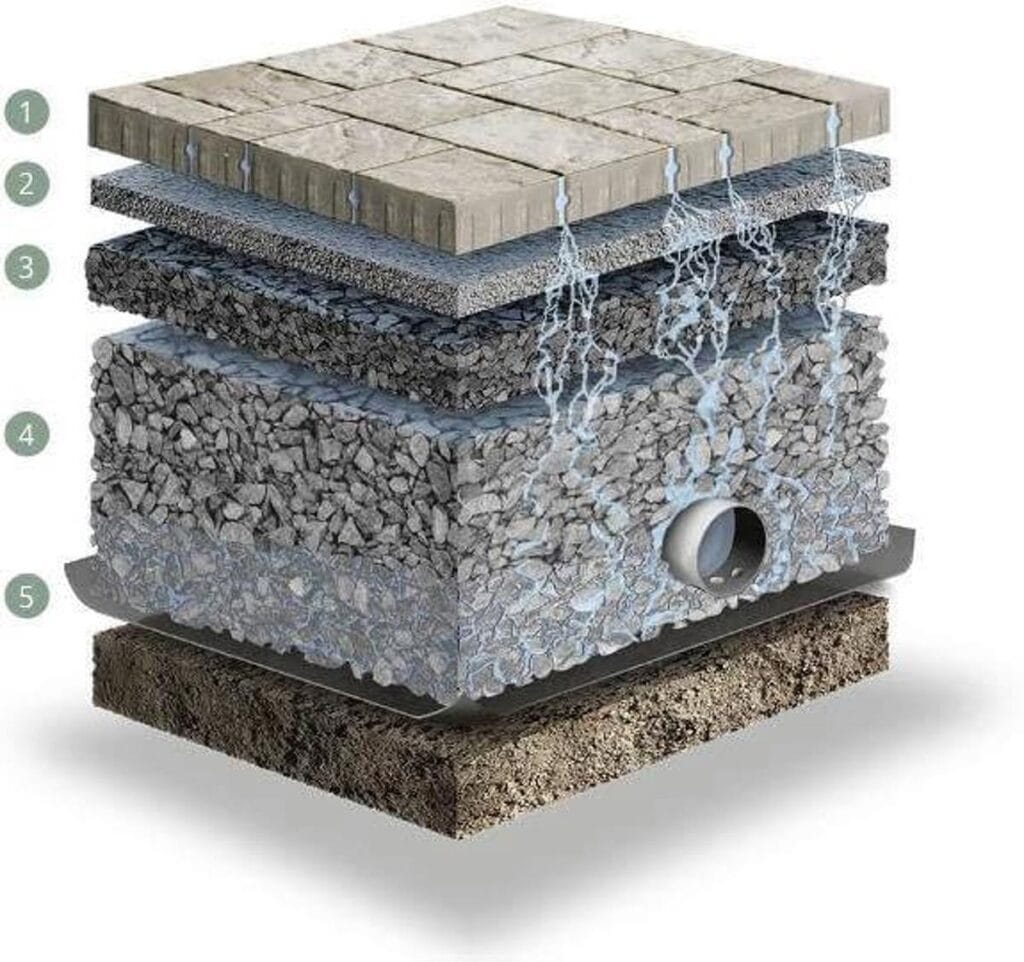
A typical permeable interlocking concrete pavement includes:
- A durable concrete paver surface with open joints
- Clean, angular joint stone that allows water to pass through
- A thin bedding layer of open-graded aggregate
- A deeper base and sub-base of clear crushed stone
- Edge restraints that hold the paving system in place
- An underdrain, liner or overflow where the site design requires one
The Sustainable Technologies Evaluation Program explains that permeable pavement can be designed for full infiltration, partial infiltration, or detention and filtration without infiltration. That flexibility is useful on Ontario properties where native soils and groundwater conditions vary.
Types of Permeable Paving
Permeable Interlocking Concrete Pavers
These pavers use enlarged joints and small crushed stone to create drainage openings. They are a common choice for residential driveways, patios, walkways and parking areas because individual units can be lifted and replaced when repairs are needed.
Pervious Concrete and Porous Asphalt
These materials contain interconnected voids that let water pass through the pavement itself. They can suit larger paved areas, but mix design, placement and maintenance are specialized.
Permeable Grid Systems
Concrete or plastic grid systems create load-bearing cells that can be filled with aggregate or, in some applications, vegetation. They are often considered for overflow parking, access routes and lower-traffic areas.
Benefits of Permeable Pavers in Ontario
The main benefit is better control of rainfall where it lands. A properly designed system can reduce the amount and speed of runoff reaching a low point, neighbouring property or municipal storm sewer.
- Less surface runoff: Water enters the pavement instead of immediately flowing across it.
- Temporary water storage: Voids in the stone reservoir hold water during and after a storm.
- Flexible drainage design: The system can infiltrate water, discharge it through an underdrain, or combine both approaches.
- Reduced surface ponding: Open joints can help limit puddles when the system is sized and maintained properly.
- Winter performance: Faster surface drainage may reduce refreezing and lower de-icing demand in some conditions.
- Design choice: Homeowners can choose from many paver sizes, patterns and finishes without giving up stormwater function.
Permeable paving can support a broader plan for yard drainage solutions, but it does not replace proper grading, roof-water management or a safe overflow route. A property with recurring flooding needs a complete drainage assessment rather than a surface-only fix.
Where Permeable Pavers Work Best
Permeable pavers are often well suited to driveways, walkways, patios, courtyards and lower-traffic parking areas. They are especially useful where paved space is needed but the owner also wants to limit runoff.
For a residential project, the system may become part of a larger landscape construction plan that coordinates the driveway or patio with grading, retaining walls, planting, drainage and site access. On a commercial site, permeable parking stalls may sometimes be combined with conventional drive aisles.

When Permeable Pavers May Need a Different Design
Not every property should use the same permeable paving detail. Soil infiltration, groundwater, bedrock, slope, building foundations and the quality of incoming runoff all affect the design.
A designer may recommend an underdrain or impermeable liner when water cannot safely infiltrate into the ground. Extra review may also be needed where the pavement receives runoff from other surfaces, sits near a foundation, carries heavy vehicles, or is exposed to sediment and contaminants.
Permeable paving also needs a planned overflow. During a major storm, water must still have a safe route away from buildings and vulnerable areas.
Permeable Paver Installation Steps
Successful permeable paver installation starts below the surface. The exact section should be based on the intended loads, native soil, drainage strategy and municipal requirements.
- Assess the site: Review elevations, soils, drainage patterns, foundations, groundwater constraints and vehicle loads.
- Choose the drainage approach: Decide whether the system will fully infiltrate, partly infiltrate with an underdrain, or use a liner and controlled outlet.
- Excavate and protect the subgrade: Remove unsuitable material while preventing sediment from contaminating the open stone.
- Install drainage components: Add an underdrain, outlet, observation port or liner when specified by the design.
- Place the open-graded base: Install clean, angular stone in properly compacted lifts while preserving void space for water storage.
- Add the bedding layer: Use the specified small clear aggregate rather than conventional bedding sand.
- Lay and restrain the pavers: Set the pavers to the required pattern, slope and edge condition.
- Fill the joints: Sweep clean, washed aggregate into the openings and compact the system as specified.
Geotextile is not an automatic requirement between every layer. It can help in certain soil conditions, but poorly selected or poorly placed fabric may collect sediment and restrict water movement over time.

Are Permeable Pavers More Expensive?
Permeable pavers usually cost more upfront than asphalt and may cost more than a conventional interlock installation. The project requires deeper excavation in many cases, clean open-graded aggregate, careful sediment control and a drainage design suited to the site.
The final cost depends on the paved area, access, disposal, soil conditions, base depth, paver selection, vehicle loading and whether the system needs an underdrain, liner or outlet. A direct comparison should include the full drainage scope, not just the visible paving surface.
Permeable paving may reduce the need for some separate drainage infrastructure, but that is a project-specific design outcome rather than a guaranteed saving. Homeowners comparing materials can also review the differences between an interlock driveway and asphalt.
Ontario Rules, Stormwater Fees and Rebates
There is no single Ontario rule that gives every permeable paving project the same permit treatment, rebate or stormwater credit. Municipal driveway bylaws, zoning, grading requirements, conservation authority rules and site plan conditions can all affect a project.
For homeowners planning landscaping in Burlington, the City states that a driveway modification permit is required before altering an existing driveway unless the work is subject to site plan approval. The City also regulates driveway width, curb work, hardscaping and tree impacts, so material choice does not replace the need to confirm the permitted layout.
Current stormwater programs also differ by municipality:
- Hamilton: The City’s Rain Ready Rebate includes permeable paving among eligible runoff-reducing improvements. Eligibility and funding should be confirmed before work starts.
- Oakville: Oakville introduced a dedicated stormwater fee in 2026, but residential charges are based on home type rather than the specific paving installed on an individual property.
- Toronto: City Council directed staff in 2025 to indefinitely suspend further consideration and engagement on a stormwater charge.
Before budgeting around an incentive or credit, check the current program directly with the municipality. A permeable driveway can still provide drainage value even when it does not change the property’s stormwater fee.
Maintenance and Winter Care
Permeable pavers are not maintenance-free. Fine sediment can fill the joints and reduce how quickly water enters the system, so routine surface care protects long-term performance.
- Keep soil, mulch, leaves and construction debris off the pavement.
- Do not stockpile landscaping materials or dirty snow on the permeable area.
- Vacuum sweep the surface periodically when recommended for the system.
- Replace missing joint aggregate with the material specified for the pavers.
- Inspect for ponding, settlement, displaced edge restraints and blocked outlets.
- Avoid filling the joints with conventional sand or polymeric sand.
Permeable pavers can be plowed, but operators should use equipment and settings that avoid catching raised edges or removing joint stone. The surface may drain meltwater more effectively than sealed pavement, but ice can still form during Ontario freeze-thaw conditions.

Are Permeable Pavers Right for Your Property?
Permeable paving is worth considering when you need a durable hard surface and want runoff managed within the landscape. The best candidates have enough space for the required base, a workable drainage outlet, controllable sediment and a clear maintenance plan.
Before choosing the system, ask:
- Where does water travel across the property now?
- Will the pavement receive runoff from a roof or another hard surface?
- How close is the work to the house or neighbouring property?
- What vehicles and loads will use the area?
- Can water safely infiltrate, or is an underdrain needed?
- What permit, grading or conservation requirements apply?
- Who will maintain the joints and drainage components?
Reviewing completed landscape projects can also help you think about how paving, planting, retaining walls and drainage should work together rather than as separate decisions.
Key Takeaways
- Permeable pavers manage water as a complete surface and base system.
- Most interlocking permeable systems drain through stone-filled joints, not through solid concrete units.
- The stone reservoir can infiltrate, detain or redirect water depending on site conditions.
- Clean, open-graded aggregate is essential. Conventional bedding sand and polymeric joint sand can block drainage.
- Permeable paving can reduce runoff, but it cannot guarantee that a property will never flood.
- Municipal permits, rebates and stormwater fees vary across Ontario.
- Regular inspection and sediment control help prevent clogging.
Frequently Asked Questions About Permeable Pavers
Are permeable pavers themselves porous?
Some paving products are porous, but most permeable interlocking concrete pavers are solid units. Water passes through open joints filled with clean, small aggregate.
Can permeable pavers be used for a driveway?
Yes. The paver thickness, stone base, edge restraints and drainage design must be selected for vehicle loads. Local rules still govern driveway width, curb changes and permitted parking configurations.
Do permeable pavers clog?
They can clog when soil, sand, mulch and other fine material accumulate in the joints. Good site protection, periodic cleaning and correct joint aggregate reduce that risk.
Do permeable pavers help with flooding?
They can reduce runoff and surface ponding, but they are only one part of a drainage system. Severe flooding may also require grading changes, downspout management, drains, swales, storage or a controlled outlet.
Do permeable pavers need polymeric sand?
No. A permeable interlocking system normally uses clean, washed crushed stone in the joints. Polymeric sand would reduce the openings needed for water flow.
Do I need a permit for a permeable driveway in Ontario?
Permit requirements depend on the municipality and the scope of work. Widening a driveway, changing a curb, altering grading or working near regulated land can trigger approvals even when permeable materials are used.
Plan Permeable Paving Around the Whole Property
The best permeable paving projects start with the site rather than the product catalogue. The paving pattern matters, but so do elevations, soil, base depth, roof runoff, foundations, winter maintenance and the destination of overflow water.
Creative Concepts Landscapes designs and builds permeable paving as part of coordinated residential and commercial projects across Burlington, Oakville, Hamilton, Dundas, Ancaster, Milton, Brantford and surrounding areas. To review the site and discuss a suitable system, you can request a consultation.